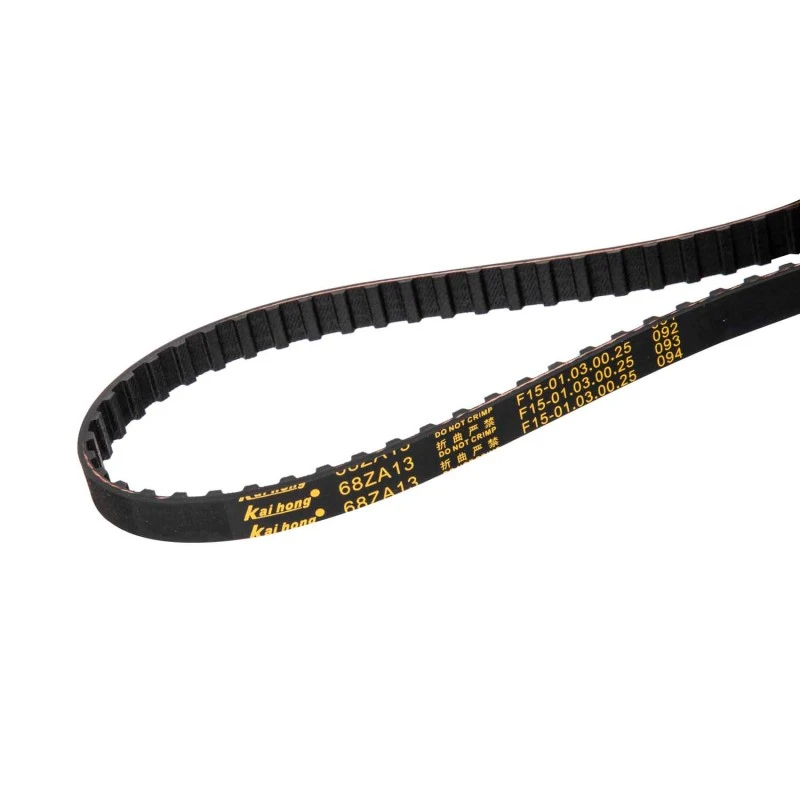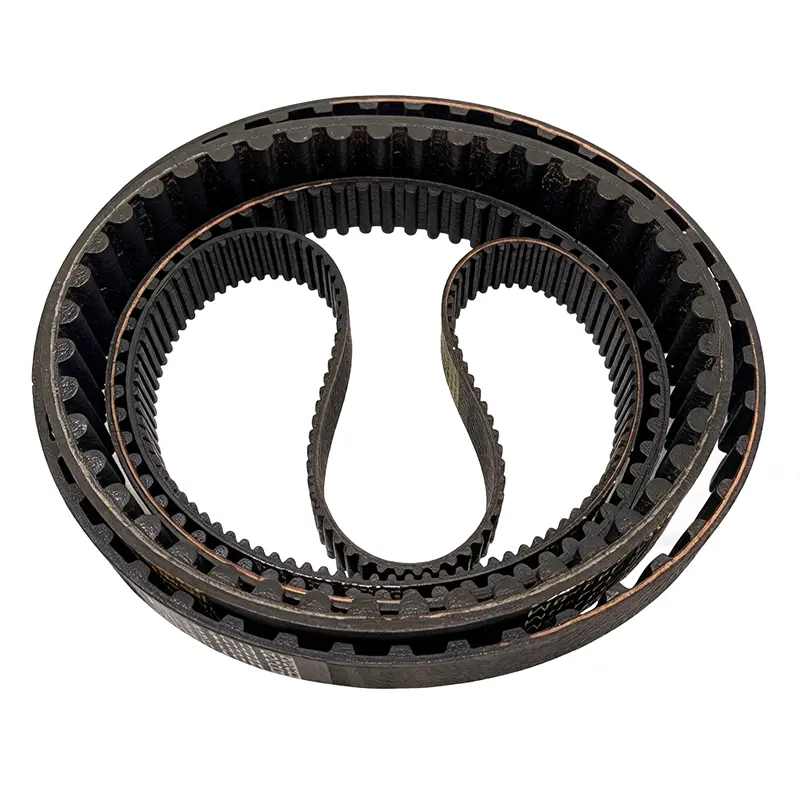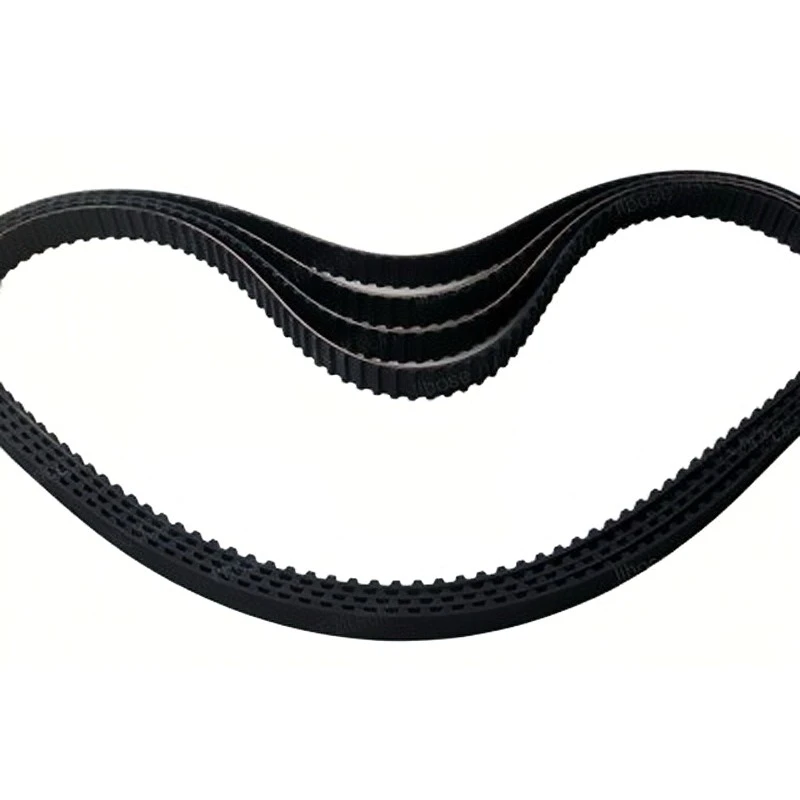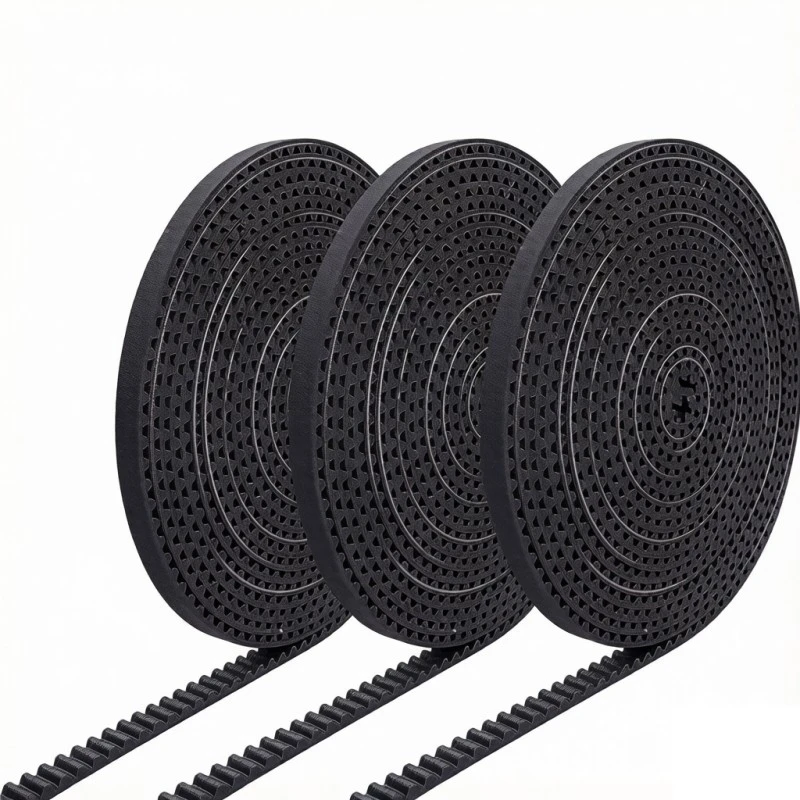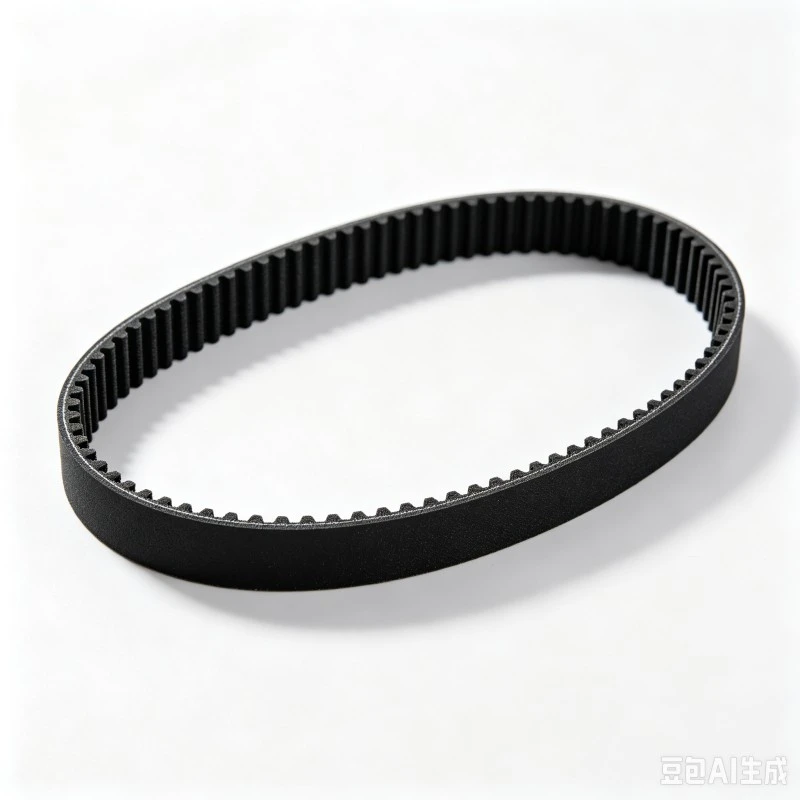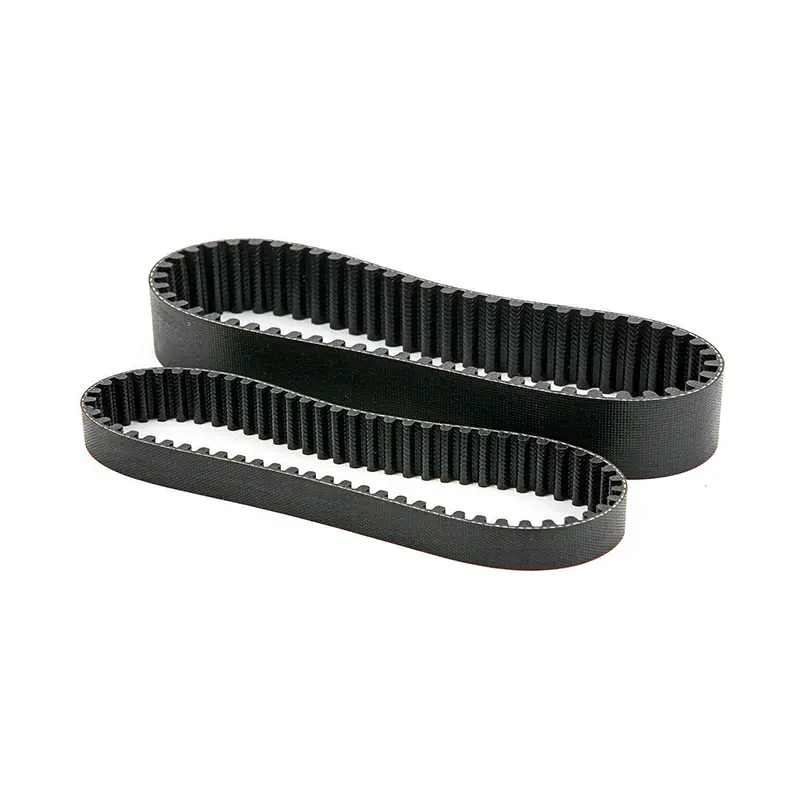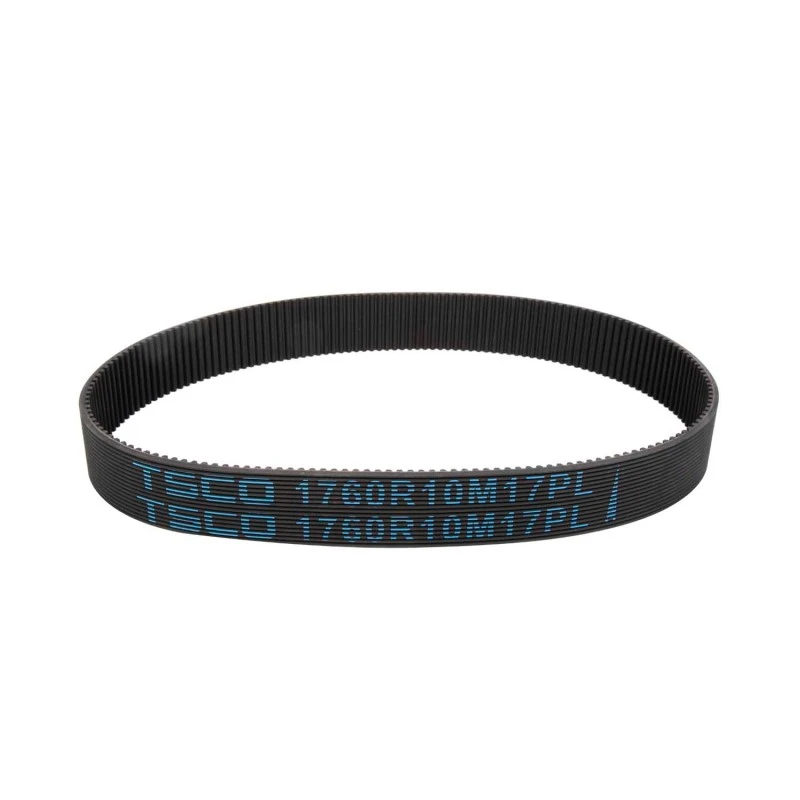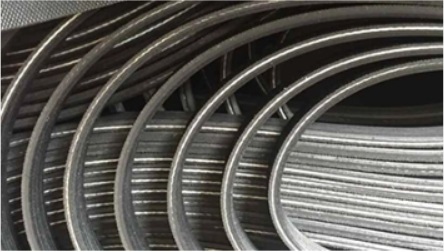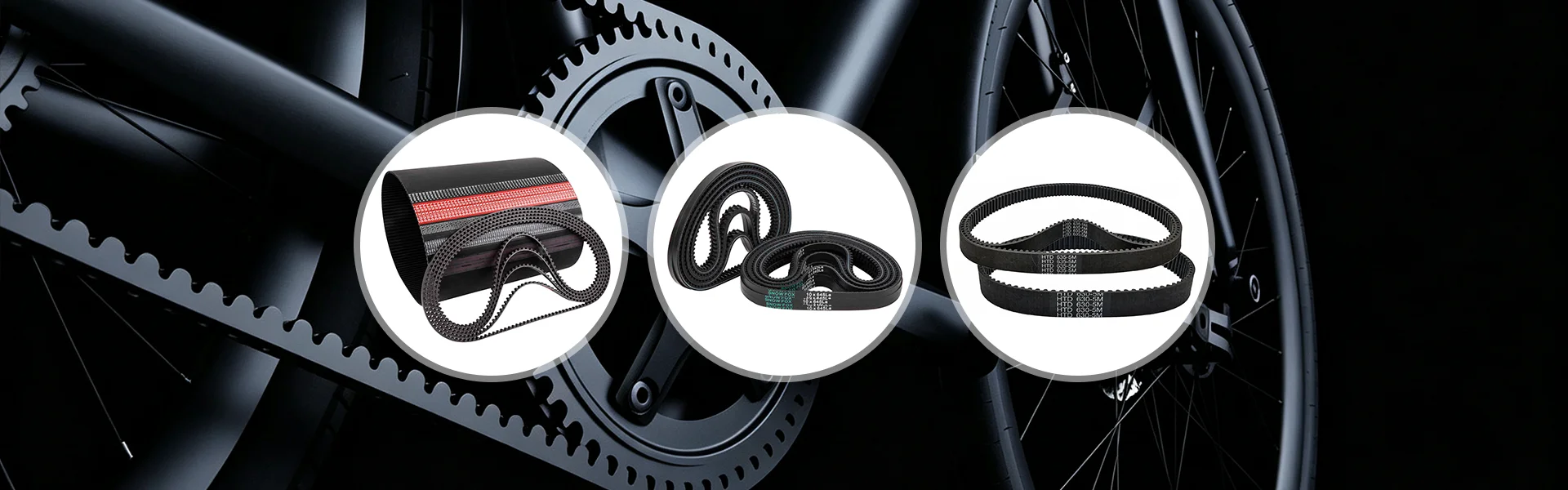


In high-precision motion control systems and high-speed automated machinery, eliminating tooth play while maximizing torque density within a small mounting space is a primary engineering goal. Specifying an advanced s-type timing belt provides an ideal synchronous drive solution, offering tight tooth meshing, high repeat positioning accuracy, and up to 99% transmission efficiency across a wide speed spectrum.
The S-profile represents an advanced evolutionary branch of the curvilinear tooth family. Unlike fully circular arc HTD teeth, the S-profile incorporates a smooth arc-transition tooth root combined with a flat (slightly crowned) tooth crest—commonly recognized in precision engineering as a flat-topped arc tooth profile.
This specific physical geometry delivers three primary mechanical performance enhancements:
The flat tooth crest establishes direct contact with the bottom of the pulley groove, distributing driving forces across the full tooth flank rather than concentrating destructive bending stress strictly at the root.
Combining arc roots with flat crests significantly reduces tooth-side clearance within pulley grooves. This tight engagement minimizes rotational play and improves repeat positioning accuracy in dynamic servo drives.
At the same pitch, the S-profile delivers roughly 30% higher power transmission capacity than standard curvilinear profiles. This allows engineers to reduce required belt width by 30% to 40%, creating significantly lighter and more compact overall machine enclosures.
Implementing a high-efficiency s-type timing belt provides significant mechanical and operational benefits across automated production equipment.
The unique meshing geometry provides class-leading load capacity for a given drive width, displaying virtually zero loss in power transmission capability even during high-speed rotation.
Low-elongation fiberglass tensile members experience reduced bending stress over small pulley diameters, yielding significantly longer operational life without requiring periodic re-tensioning.
Smooth tooth entry and close tip-to-groove engagement damp the polygonal effect, reducing running noise below that of full-arc profiles in noise-sensitive plant environments.
Operating without metal-to-metal friction, oiling systems, or rust contamination, this maintenance-free component eliminates messy chain lubrication routines and unexpected downtime.
Kaihong manufactures standard S-profile synchronous belts across multiple metric pitch series to support micro-positioning and heavy-duty industrial drives:

| Type | Pitch (mm) | Belt Thickness (mm) | Tooth Height (mm) |
| S3M | 3.0 | 2.0 | 1.14 |
| S5M | 5.0 | 3.5 | 1.91 |
| S8M | 8.0 | 5.3 | 3.05 |
| S14M | 14.0 | 10.2 | 5.30 |
Note: Specialized micro pitches (such as S1.5M, S2M, and S4.5M) are also produced for medical devices, optical devices, and miniature financial automation.
Due to its high torque density, minimal backlash, and precise positioning capabilities, a high-durability s-type timing belt is extensively specified in advanced automation:
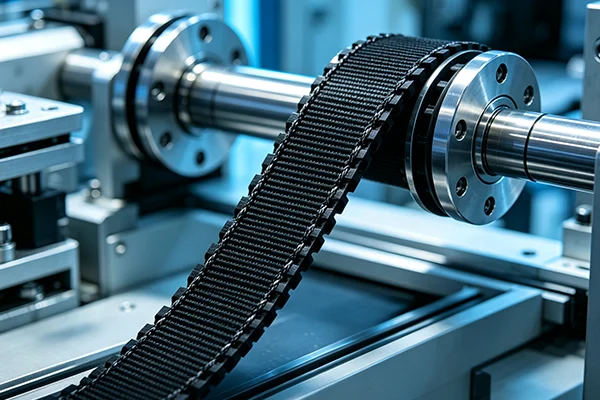
Powers multi-axis machining centers, CNC spindle drives, electric actuators, and linear module stages requiring high repeat positioning accuracy.
Installed in industrial robotic joint actuators, automated storage and retrieval systems (AS/RS), and high-speed sorting shuttles.
Provides clean, lubricant-free drive power across semiconductor wafer handling equipment, medical diagnostic devices, and pharmaceutical packaging lines.
Drives automatic sliding doors, commercial vending equipment, financial cash-processing machinery, and high-speed printing units.
Following proper engineering selection guidelines and sheave matching rules ensures long drive life and prevents tooth climbing.
1. Select Pitch Section: Determine pitch (S3M, S5M, S8M, or S14M) based on design torque and operating speed. Use small pitches for compact space and S8M/S14M for heavy torque.
2. Calculate Pitch Length: Compute pitch length from shaft center distance and pulley tooth counts, then round to a standard tooth count.
3. Determine Belt Width: Check width load-rating tables against design power, incorporating a 20% to 30% operational safety margin.
Although S-profile belts and HTD belts may share the same pitch distance (for example, S8M and HTD 8M are both 8.0 mm pitch), their underlying tooth curvature and flank angles are fundamentally different and must never be interchanged. Additionally, specialized micro sizes like S1.5M and S4.5M have no HTD equivalents and must always be matched with original S-profile sheaves.
Shorten shaft center distance completely before fitting belts onto pulleys. Never lever or pry belts over sheave flanges using screwdrivers or prying tools, as prying snaps internal fiberglass tensile filaments and causes premature tensile breakage under load.
The S-profile's flat-topped tooth crest seats firmly against the flat bottom of the pulley groove, while its arc-transition root reduces lateral tooth clearance. This combined contact fit reduces rotational play (backlash) during direction changes, improving servo-driven positioning accuracy.
Because the flat crest profile distributes tooth loading across a larger contact area, root stress concentrations are significantly lower. This higher torque capacity allows a narrower s-type timing belt to carry the same horsepower load as a wider conventional tooth belt.
Kaihong offers custom options including extra-wide widths, non-standard pitch lengths, thickened or grooved backings, surface perforations, integrated guide cleats, food-grade polyurethane (PU) formulations, antistatic (conductive) compounds, and high-temperature rubber formulations built to customer drawings or samples.
Looking for reliable, high-precision synchronous timing belts for new machine development or global replacement supply? Certified to ISO 9001:2015 and ISO 14001:2015, Kaihong maintains strict full-process quality inspection across raw materials, in-process molding, and batch pitch sampling.
Contact Our Technical Team: Submit your required pitch specifications (S3M, S5M, S8M, S14M), belt widths, pitch lengths, or annual purchase forecasts today to receive free drive sizing assistance and a direct factory quote within 24 hours.
Address
No. 48 Guangming Middle Road, Sanmen County, Taizhou City, Zhejiang Province, China
Tel