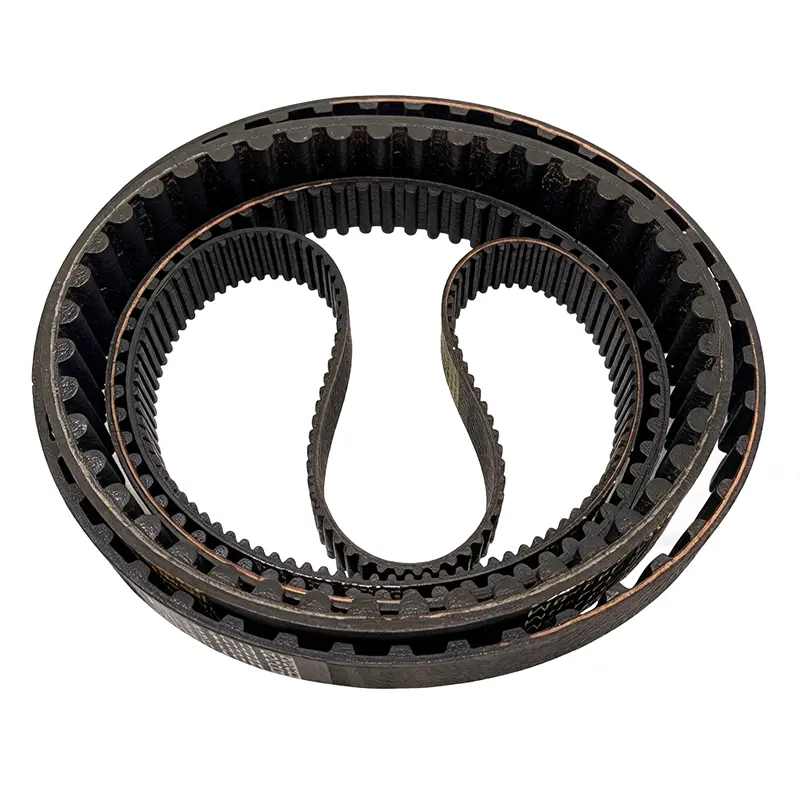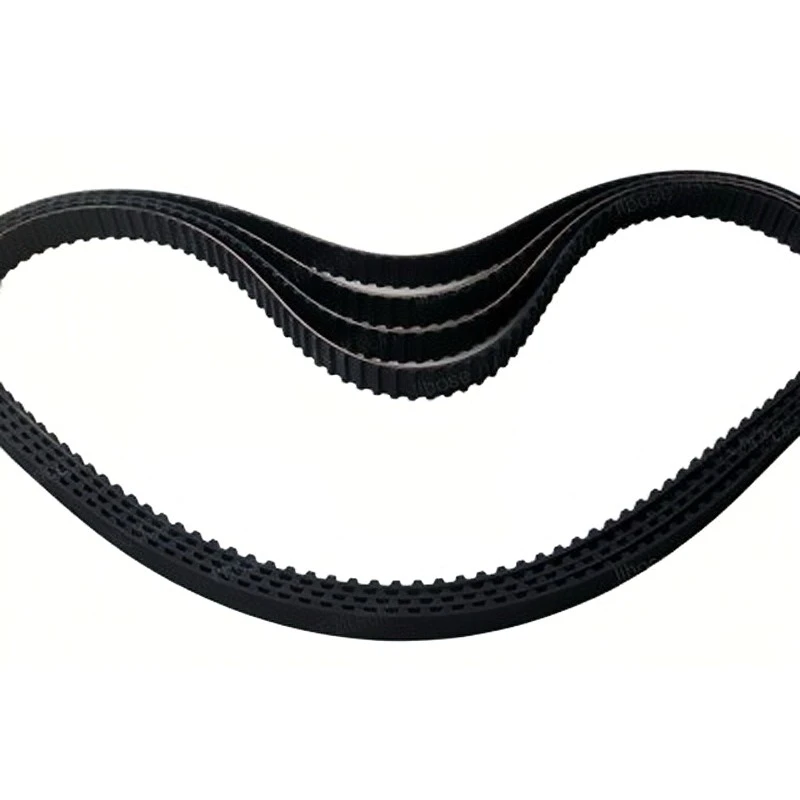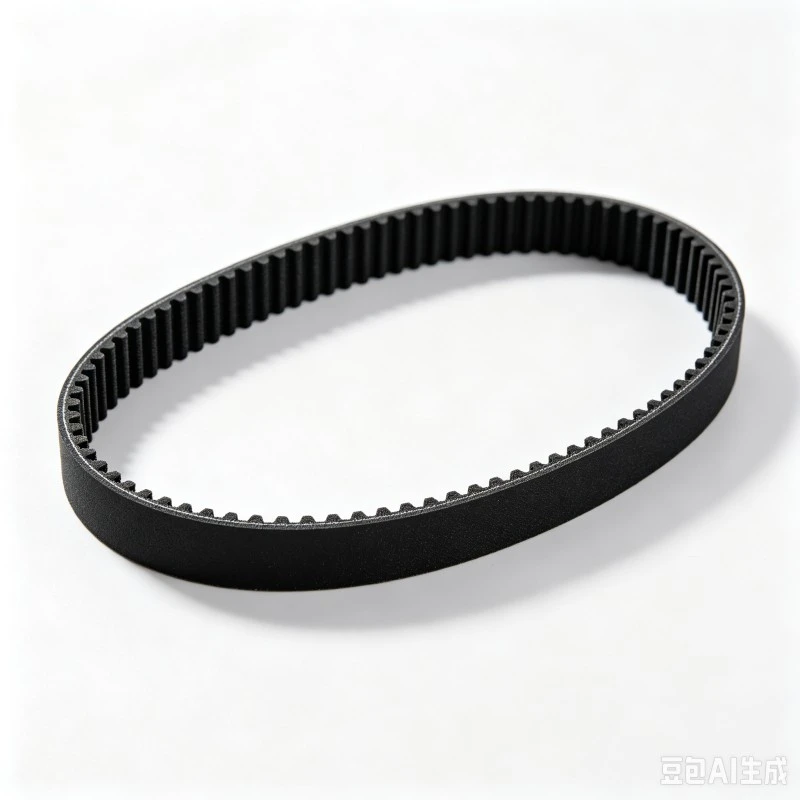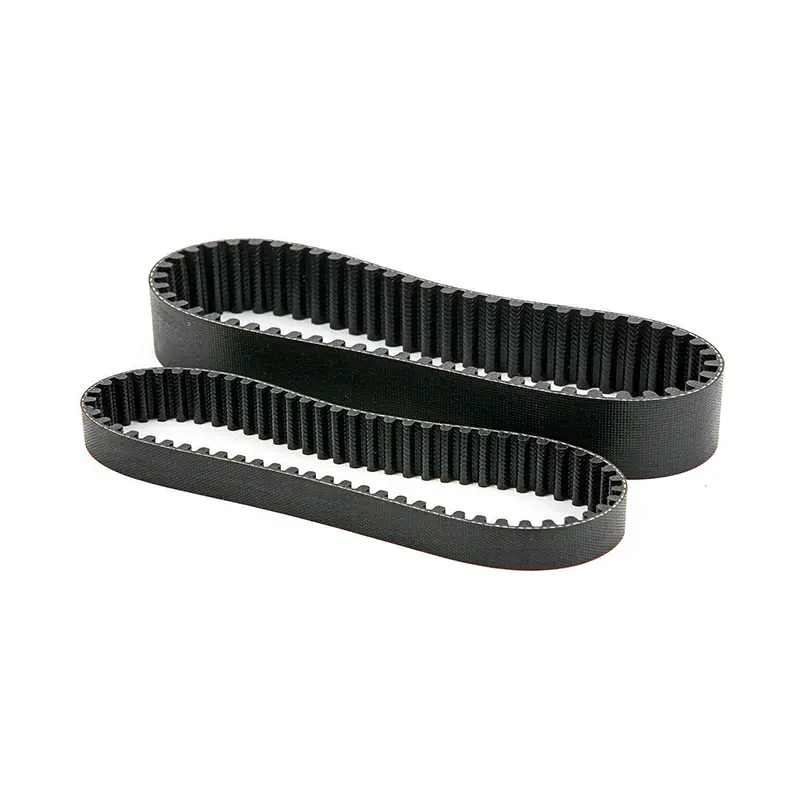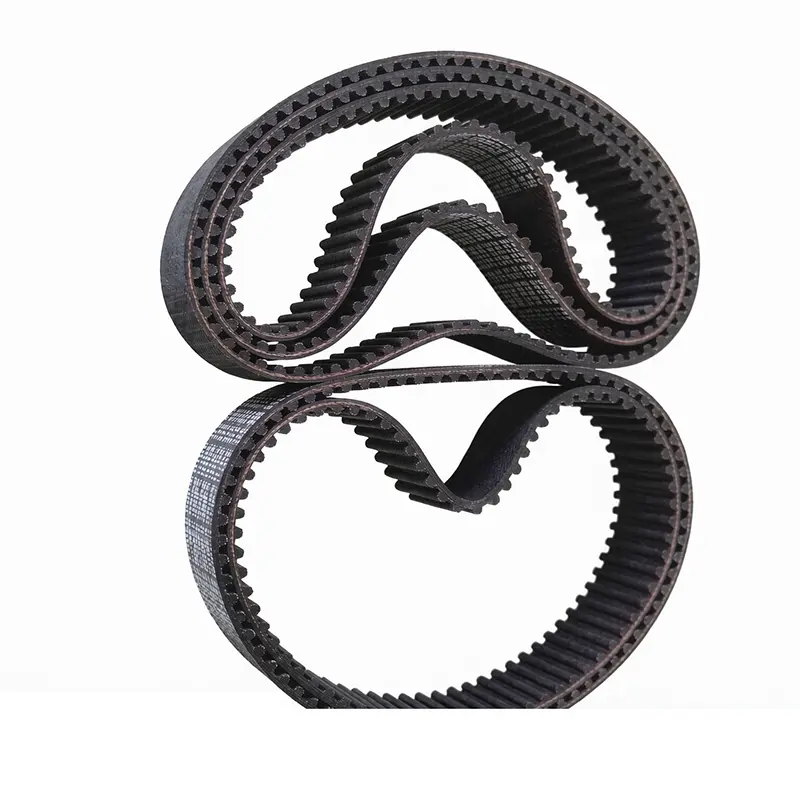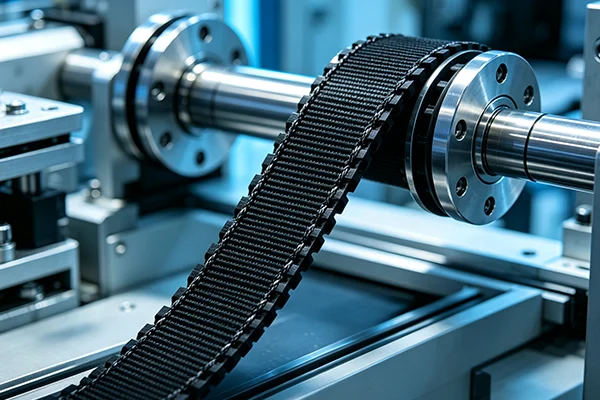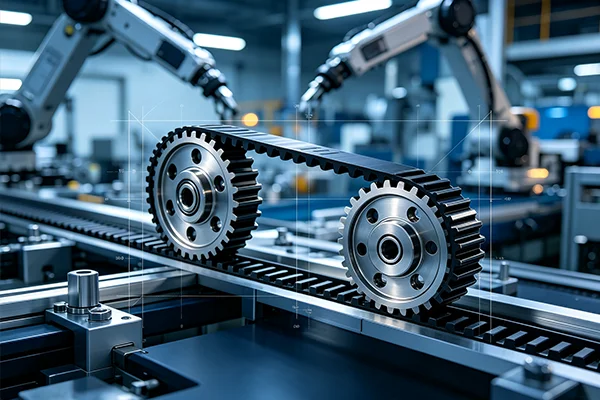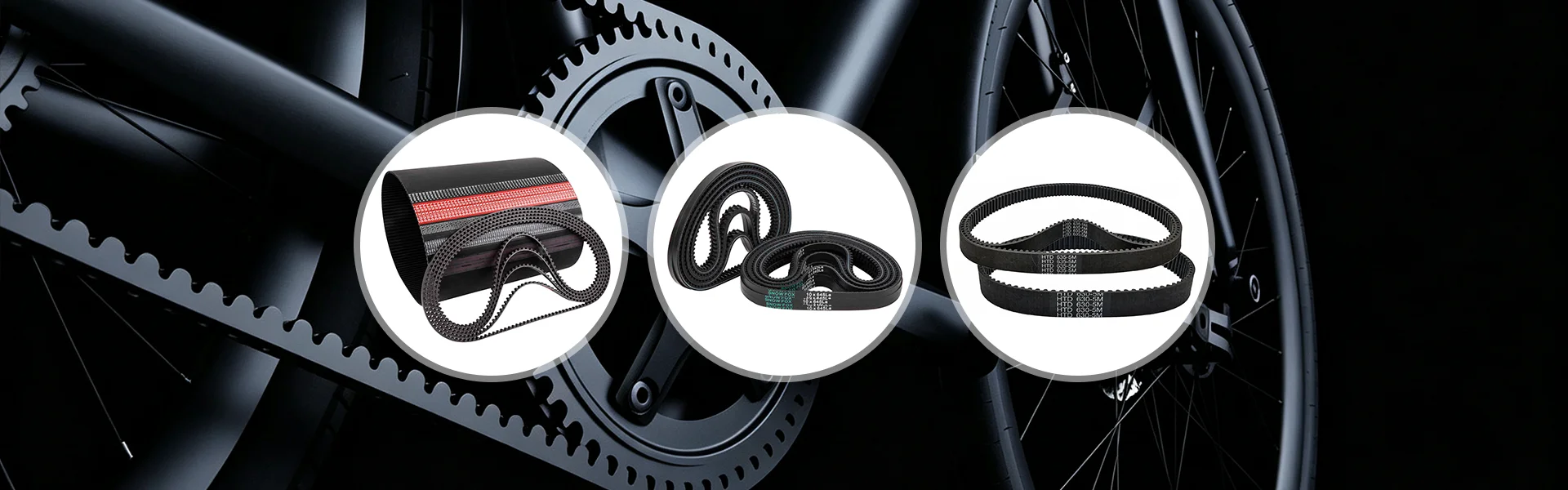
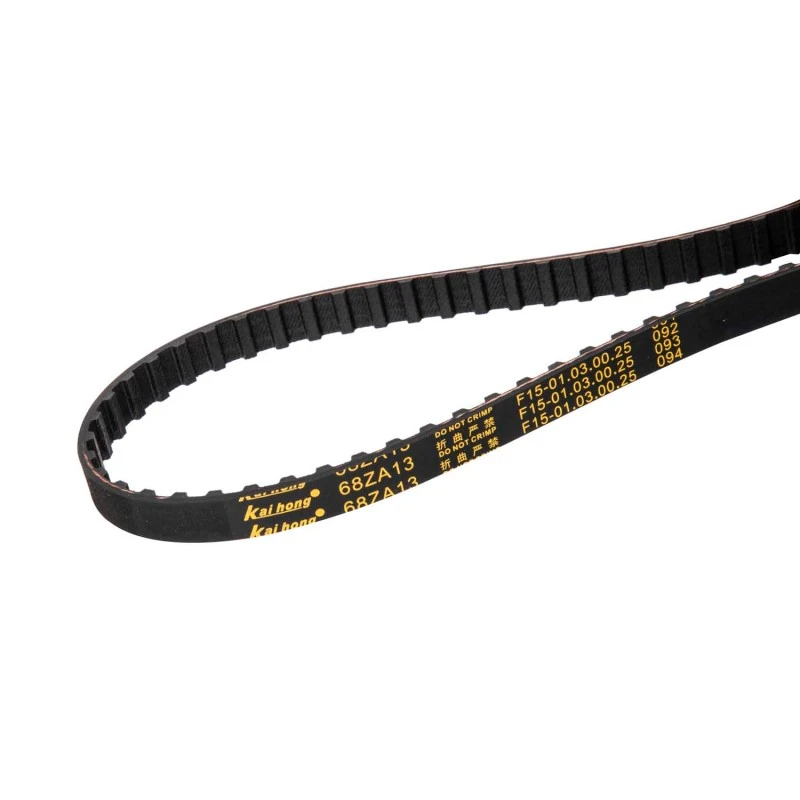
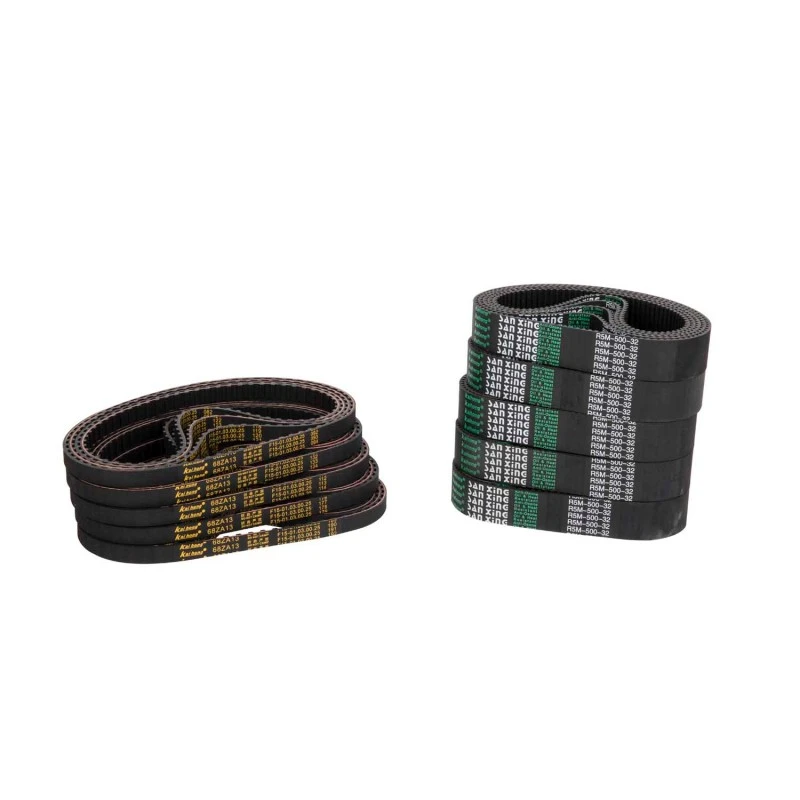
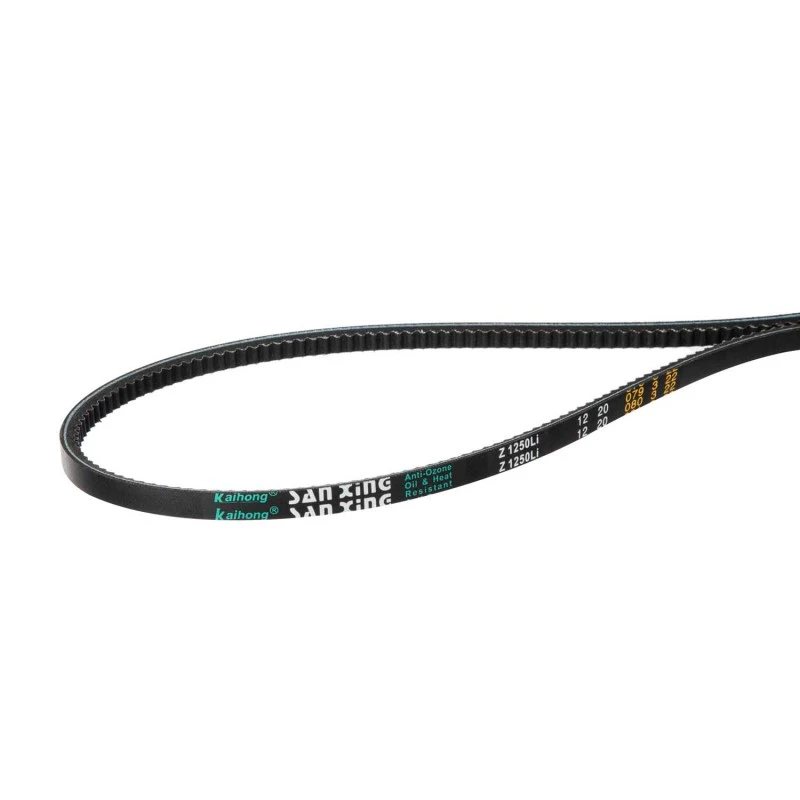
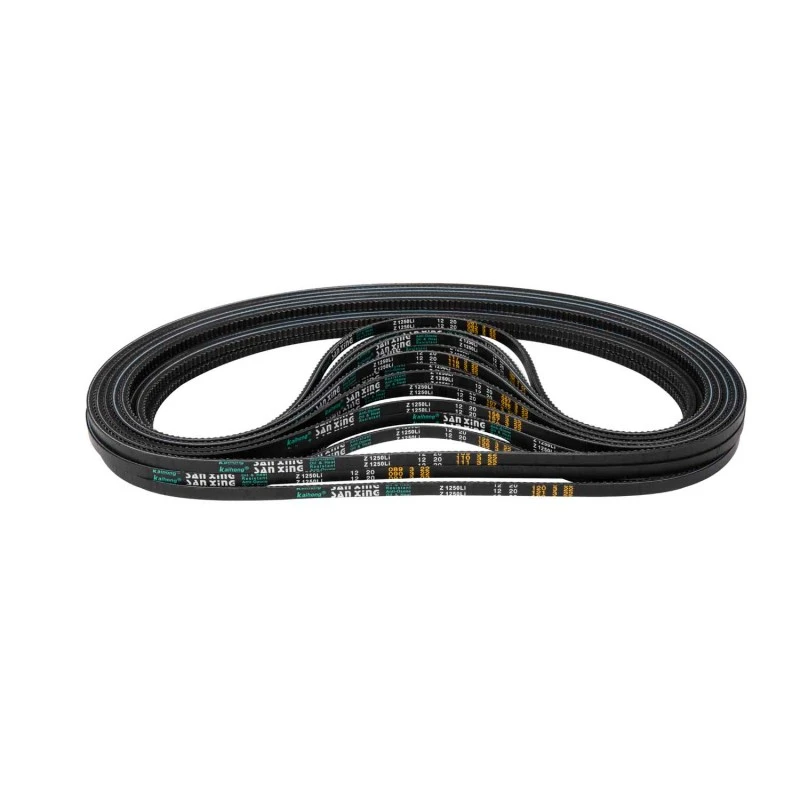
Unlike chain or gear drives, the Automotive Timing Belts construction combines flexible rubber materials with high-strength tensile cords and a precision-molded tooth profile. This allows the drive system to operate with lower mechanical noise while maintaining the required timing relationship between rotating engine components.
Kaihong manufactures automotive power transmission products under ISO9001 and ISO14001 certified management systems. Depending on the application, CR or HNBR compounds, fiberglass cords, and aramid/Kevlar reinforcement can be selected to meet different temperature, oil-resistance, strength, and durability requirements.
The primary purpose of the timing drive is to maintain the phase relationship between the crankshaft and camshaft. The crankshaft completes two revolutions for every one revolution of the camshaft in a conventional four-stroke engine.
The toothed structure provides positive engagement with the pulley, preventing the type of uncontrolled slipping associated with friction-drive belts. This helps maintain accurate opening and closing of intake and exhaust valves throughout the engine operating cycle.
Automotive engines continuously change speed during starting, acceleration, cruising, and deceleration. These variations place repeated loads on the belt and its tensile members.
The high-strength cord layer supports dimensional stability under these changing conditions. Fiberglass reinforcement is commonly used for its strength-to-weight characteristics, while aramid or Kevlar options can be supplied for applications requiring higher tensile performance.
Rubber-based synchronous drives naturally absorb small levels of vibration generated during engine operation. Combined with the precision tooth profile and nylon tooth-facing fabric, this helps reduce engagement noise compared with conventional metal drive systems.
The result is smoother operation and lower noise contribution from the engine timing drive.
|
Automotive Timing Beits |
|||
|
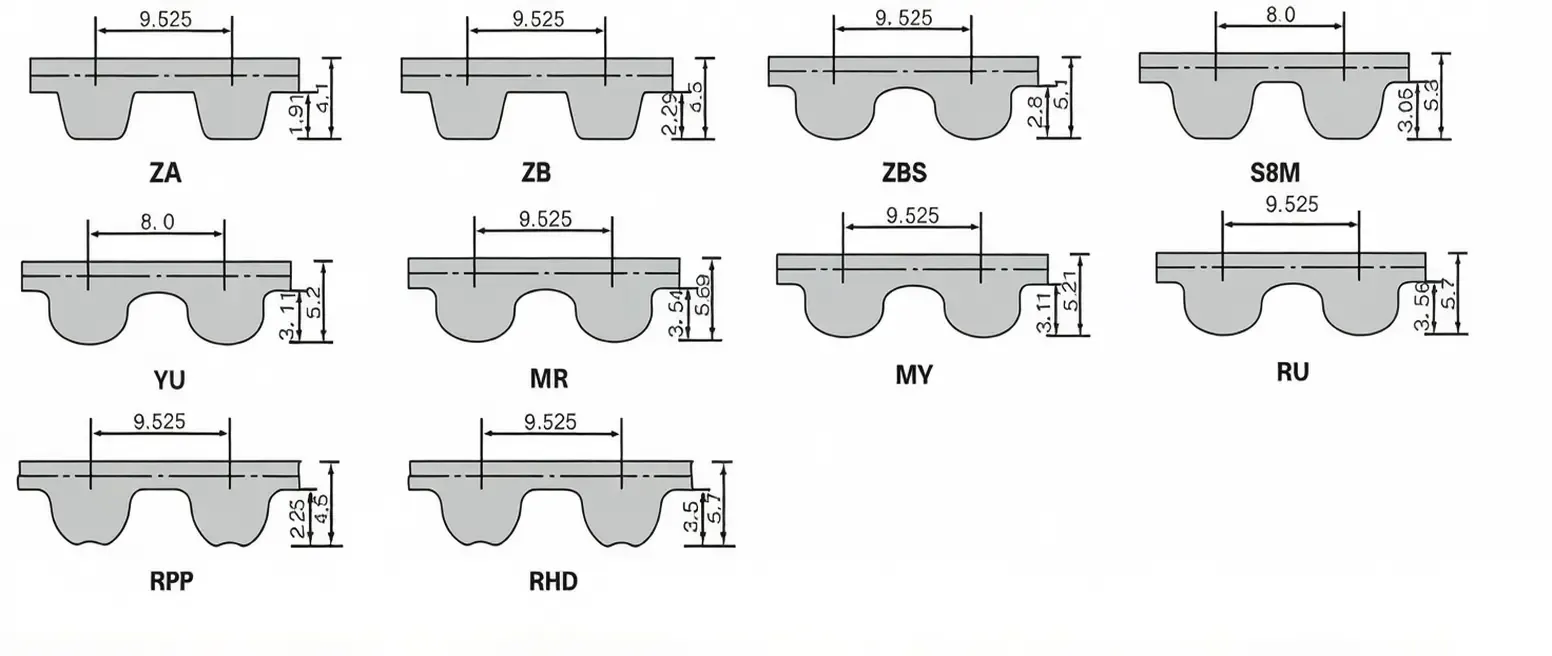
Production Range |
|||
|
Seciion |
Pici/mm |
Tooth height/mm |
Thickness/mm |
|
ZA |
9.525 |
1.91 |
4.1 |
|
ZB |
9.525 |
2.29 |
4.5 |
|
ZBS |
9.525 |
2.8 |
5.1 |
|
S8M |
8 |
3.05 |
5.3 |
|
YU |
8 |
3.11 |
5.2 |
|
MR |
9.525 |
3.54 |
5.69 |
|
MY |
9.525 |
3.11 |
5.21 |
|
RU |
9.525 |
3.56 |
5.7 |
|
RPP |
9.525 |
2.25 |
4.5 |
|
RHD |
9.525 |
3.5 |
5.7 |
The main body can be manufactured using Chloroprene Rubber (CR) or Hydrogenated Nitrile Butadiene Rubber (HNBR), depending on the required operating environment.
HNBR provides enhanced resistance to heat, oil exposure, ozone, and aging. For demanding automotive applications, the material can withstand short-duration under-hood temperature peaks of up to approximately 150°C, subject to the specific formulation and operating conditions.
The tensile member forms the structural reinforcement inside the belt. Specially treated fiberglass provides a balance of tensile strength and dimensional stability, while aramid or Kevlar reinforcement can be selected for higher-performance applications.
The cord controls belt elongation and helps maintain the designed tooth pitch throughout service.
The tooth surface is covered with nylon-impregnated fabric. This layer reduces friction between the belt teeth and pulley grooves while improving wear resistance.
It also contributes to smoother tooth engagement and helps reduce operating noise.
The outer backing protects the internal structure against oil mist, coolant splashes, dust, and other contaminants found inside the engine compartment.
Maintaining the integrity of this outer layer helps protect the tensile cords and rubber matrix during long-term operation.
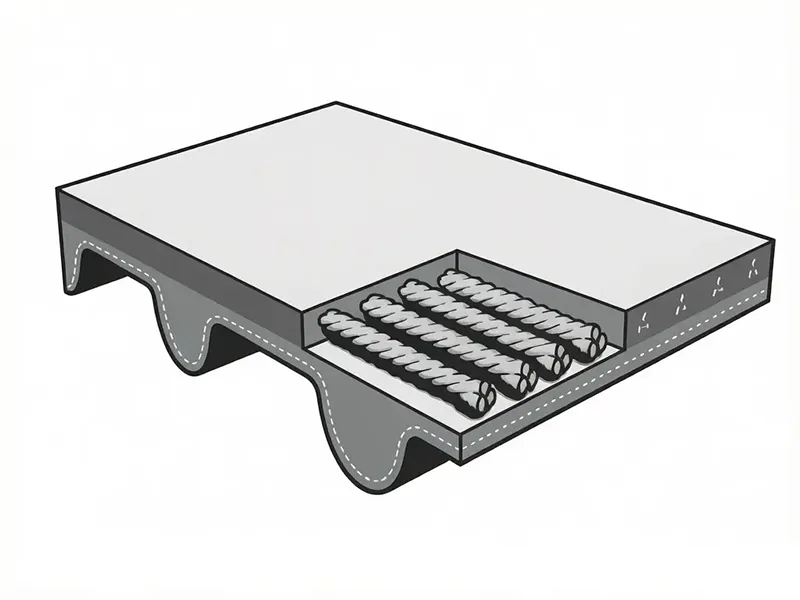
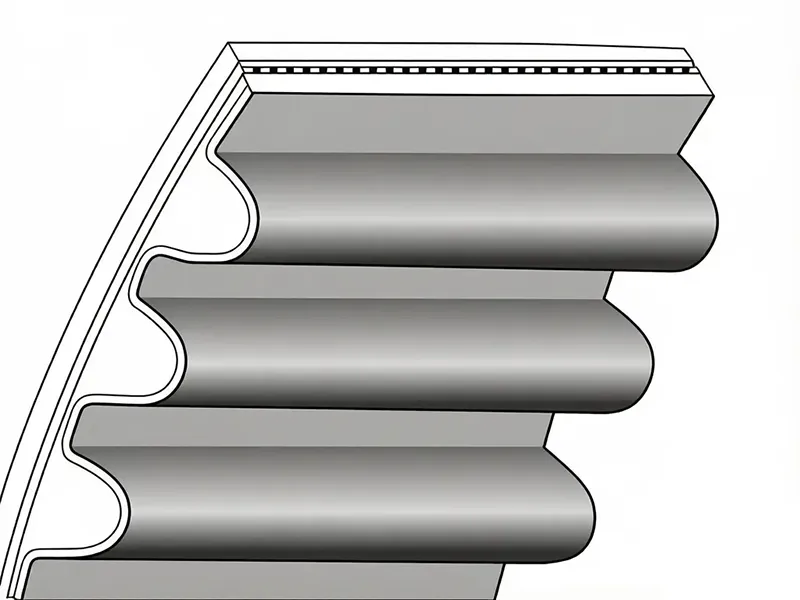
CR is a practical material option for automotive timing applications requiring balanced flexibility, mechanical strength, and environmental resistance. It is suitable for many conventional engine applications.
HNBR is intended for more demanding temperature and chemical exposure conditions. Its improved resistance to heat, oil, ozone, and aging makes it suitable for modern engine compartments with higher thermal loads.
Fiberglass cords provide high tensile strength with relatively low elongation. Their dimensional stability helps preserve tooth pitch and maintain accurate synchronization.
Aramid or Kevlar reinforcement is available for applications requiring enhanced tensile performance and resistance to high mechanical loads.
The toothed profile engages directly with the timing pulley rather than depending primarily on friction. This maintains a fixed transmission ratio and helps prevent timing deviation during acceleration and changing engine speeds.
The low-friction tooth-facing fabric and lightweight belt construction help reduce mechanical losses within the timing drive. Under suitable application conditions, the supplied product data indicates transmission efficiency can exceed 98%.
Actual efficiency depends on belt specification, pulley design, engine speed, tension, temperature, and the complete drive system.
Compared with heavier metal drive components, the relatively low mass of a rubber synchronous belt can reduce rotational inertia. This characteristic is particularly relevant to compact, downsized, and turbocharged engines where responsive operation is important.
High-strength tensile cords resist excessive elongation during long-term operation. Maintaining the designed pitch is essential because even small dimensional changes can affect the synchronization between engine components.
Overhead Camshaft engines rely on accurate timing between the crankshaft and camshaft. The belt provides the mechanical connection required for synchronized valve operation.
Double Overhead Camshaft engines require precise coordination between the crankshaft and multiple camshafts. A correctly specified synchronous belt can maintain the required timing relationship throughout the engine operating range.
The Automotive Timing Belts can be applied to timing systems used in passenger vehicle internal combustion engines, where low noise, stable synchronization, and compact construction are important considerations.
Commercial vehicle engines require durable components capable of operating under extended mileage and varying loads. Suitable belt materials and reinforcement can be selected according to engine requirements.
The low-noise characteristics of synchronous belt technology can also make it suitable for selected auxiliary drive applications in hybrid vehicle systems. The specific belt should always be matched to the manufacturer's design requirements.
High under-hood temperatures accelerate material aging. Selecting a suitable CR or HNBR compound according to the actual thermal environment is important for long-term reliability.
Oil contamination can affect rubber properties and belt surface performance. Engine oil leaks should be corrected promptly rather than relying on the belt's oil resistance as a substitute for proper maintenance.
Worn, damaged, or incorrectly aligned timing pulleys can create abnormal tooth loading and accelerate belt wear. Pulley condition should therefore be checked whenever the belt is replaced.
Incorrect installation can alter belt tension or timing position. The belt should be installed according to the engine manufacturer's specified timing marks, tension values, and replacement procedures.
Automotive Timing Belts should be replaced according to the vehicle or engine manufacturer's recommended mileage and time interval. Service intervals vary considerably between engine designs.
During replacement, technicians should inspect timing pulleys, tensioners, idlers, and other related components. Replacing worn components at the same service interval can help prevent premature belt failure.
Visible oil, coolant, or chemical contamination should be investigated before installing a replacement belt. The source of contamination should be corrected to prevent repeated damage.
The belt should never be forcibly stretched, twisted, or installed with unsuitable tools. Excessive handling force can damage the tensile cords or tooth structure even when no external damage is immediately visible.
Kaihong operates its manufacturing processes under ISO9001 quality management and ISO14001 environmental management systems. Production control covers material preparation, belt forming, tooth molding, curing, dimensional inspection, and finished-product evaluation.
The combination of controlled rubber compounds, high-strength tensile cords, nylon tooth fabric, and protective backing is designed to maintain consistent belt dimensions and mechanical performance.
For OEM manufacturers, automotive parts distributors, and replacement-parts suppliers, Kaihong can provide different material and reinforcement configurations according to engine application requirements.
Sample orders can generally be prepared within 2–3 days, depending on the required specification and availability.
The standard mass-production lead time is approximately 45 working days, depending on order quantity, belt size, tooling requirements, and production scheduling.
Standard export cartons are used for shipment. The supplied standard carton dimension is 470 × 400 × 460 mm.
Orders can be shipped by sea, air, UPS, DHL, TNT, or FedEx according to quantity, destination, and delivery requirements.
If defective belts are confirmed after receipt, Kaihong provides replacement support according to the agreed quality and order terms.
The standard material combination includes CR rubber and fiberglass cord. HNBR and aramid/Kevlar reinforcement options are also available for applications requiring enhanced heat resistance or tensile performance.
Yes. Customer brands and logos can be printed according to the agreed OEM or private-label requirements.
The supplied MOQ is one sleeve for each size. For double-sided timing belts, the MOQ is two sleeves, with a minimum order value of US$1,000 per order.
The standard sleeve width is 450 mm. For double-sided timing belts, the supplied sleeve width is 200 mm.
The Automotive Timing Belts should be matched according to the engine model, original belt number, tooth profile, tooth count, belt length, width, material requirements, and pulley configuration. Providing the original part number is recommended when requesting a replacement.
Service life depends on the engine design, belt material, temperature, mileage, contamination, installation quality, and maintenance schedule. Replacement should follow the engine manufacturer's specified service interval rather than relying only on visible belt condition.
Address
No. 48 Guangming Middle Road, Sanmen County, Taizhou City, Zhejiang Province, China
Tel