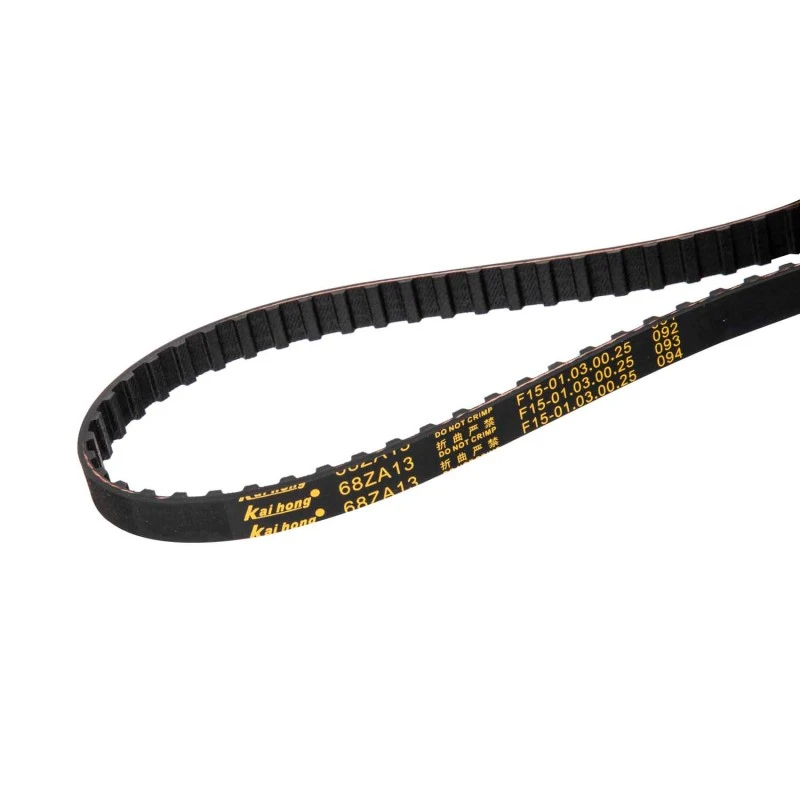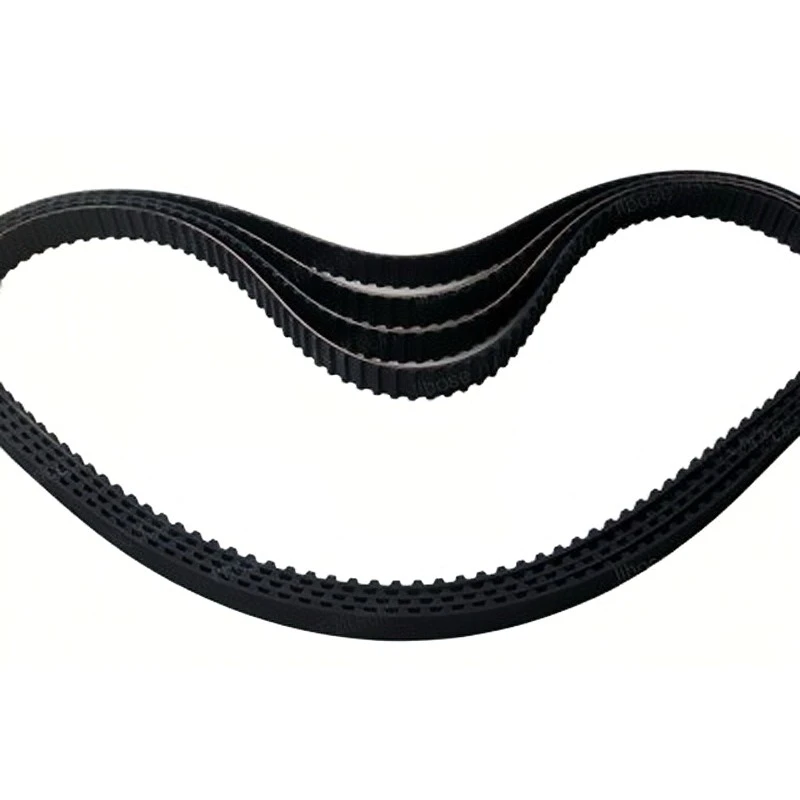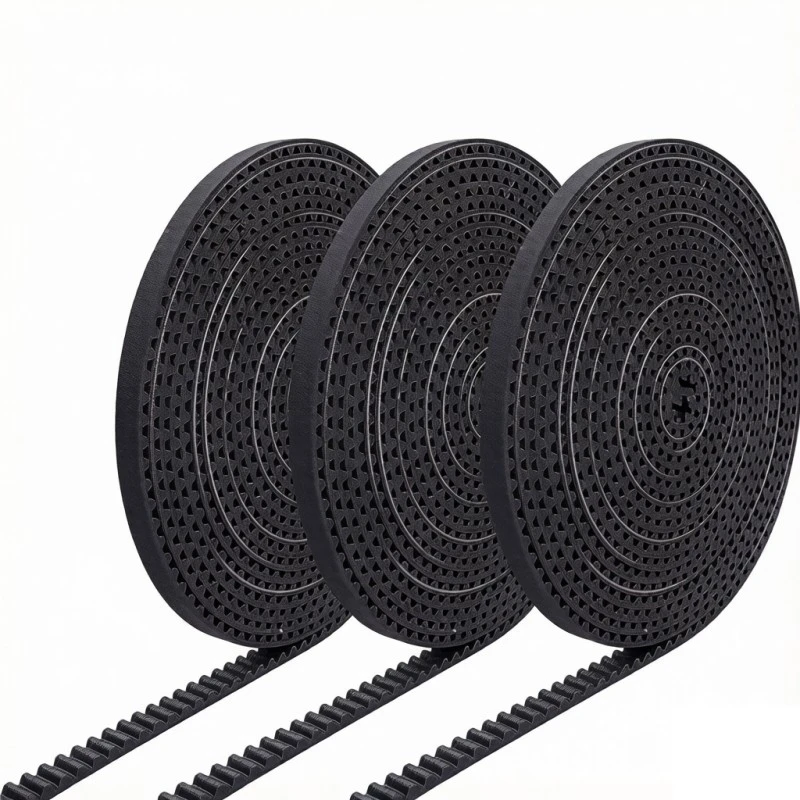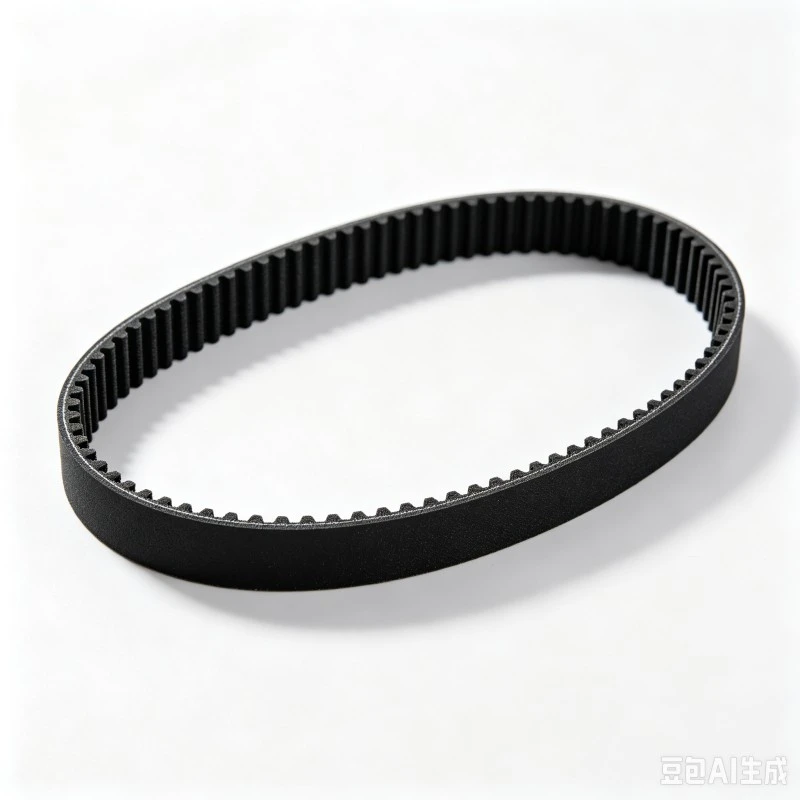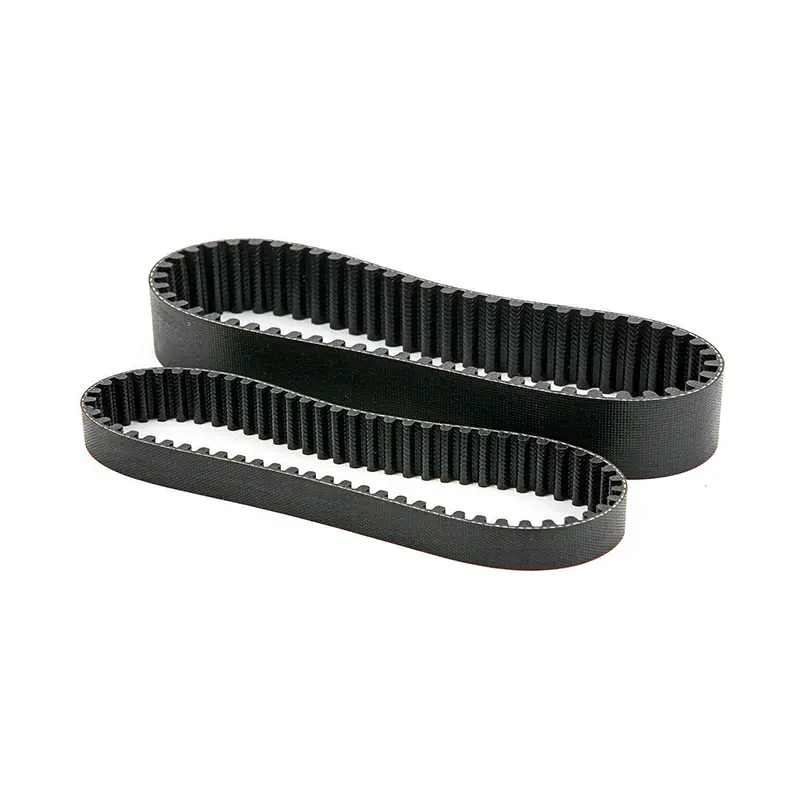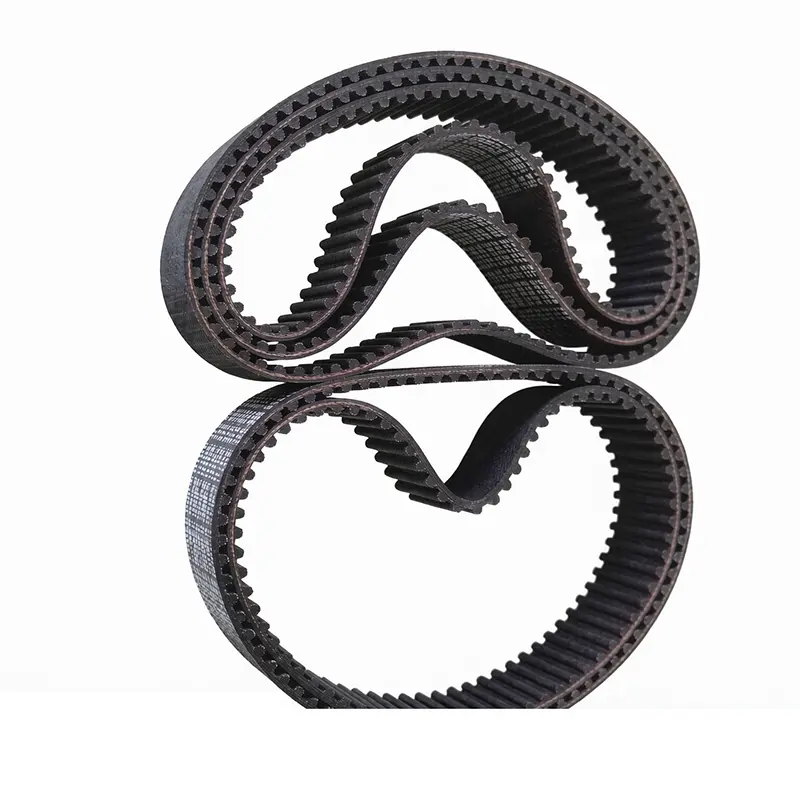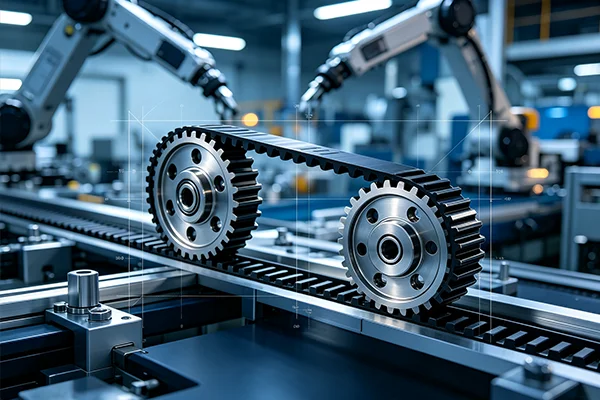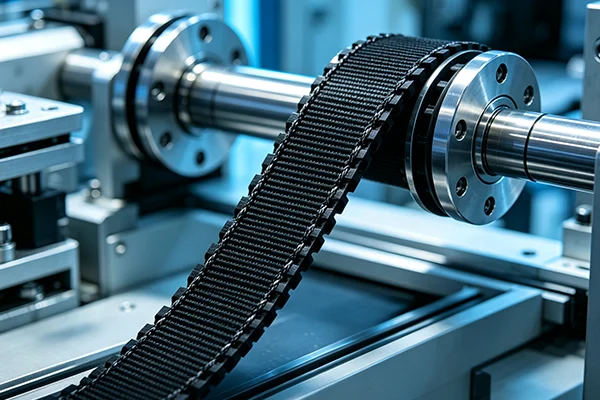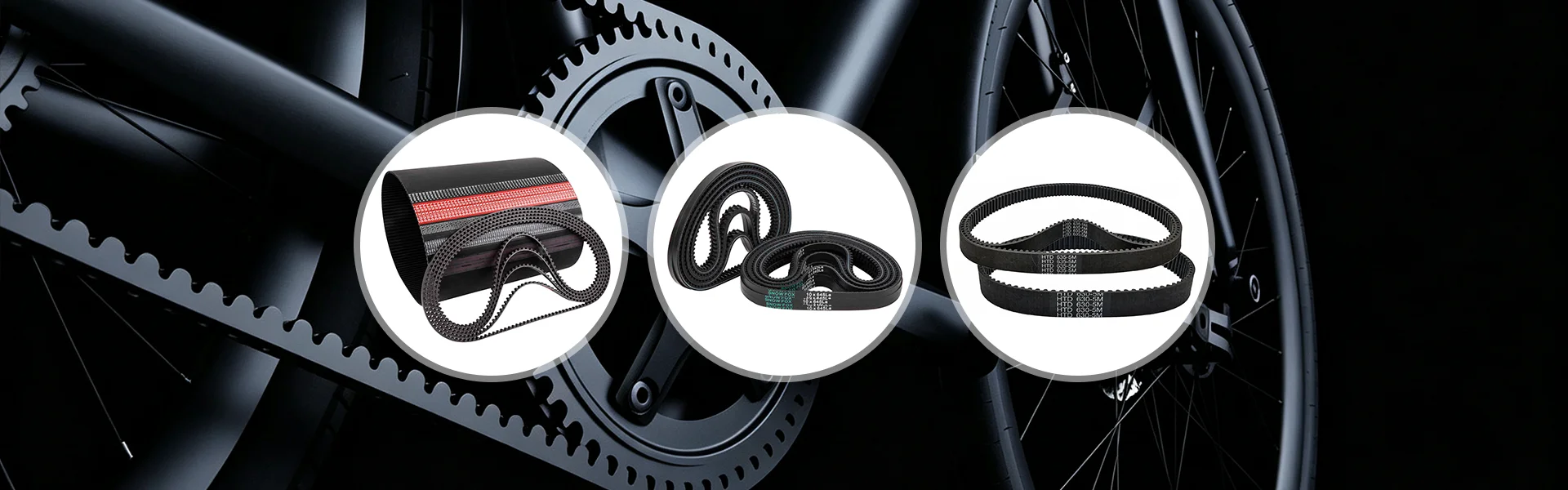
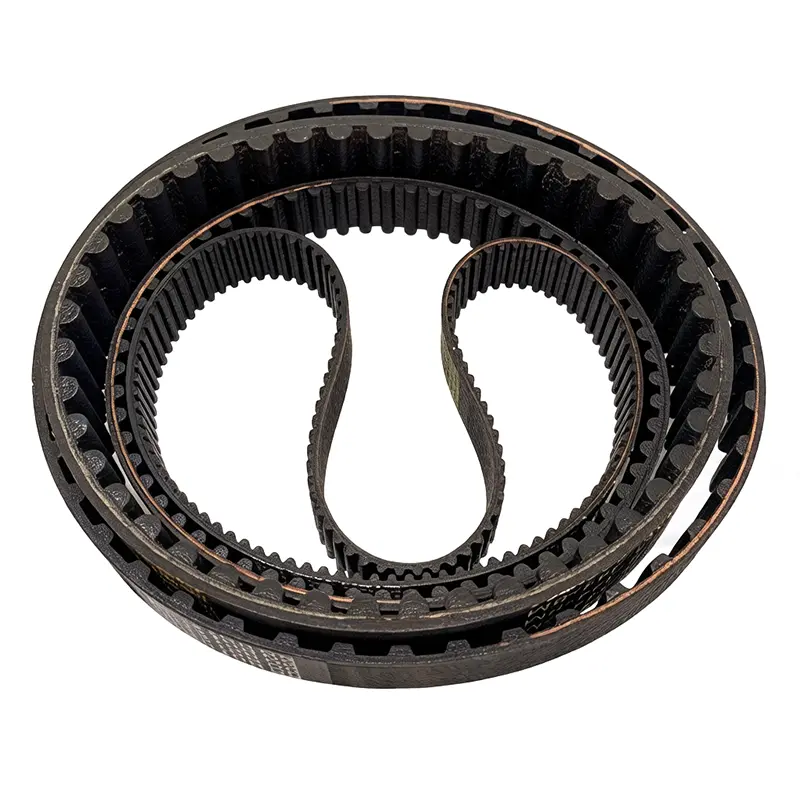
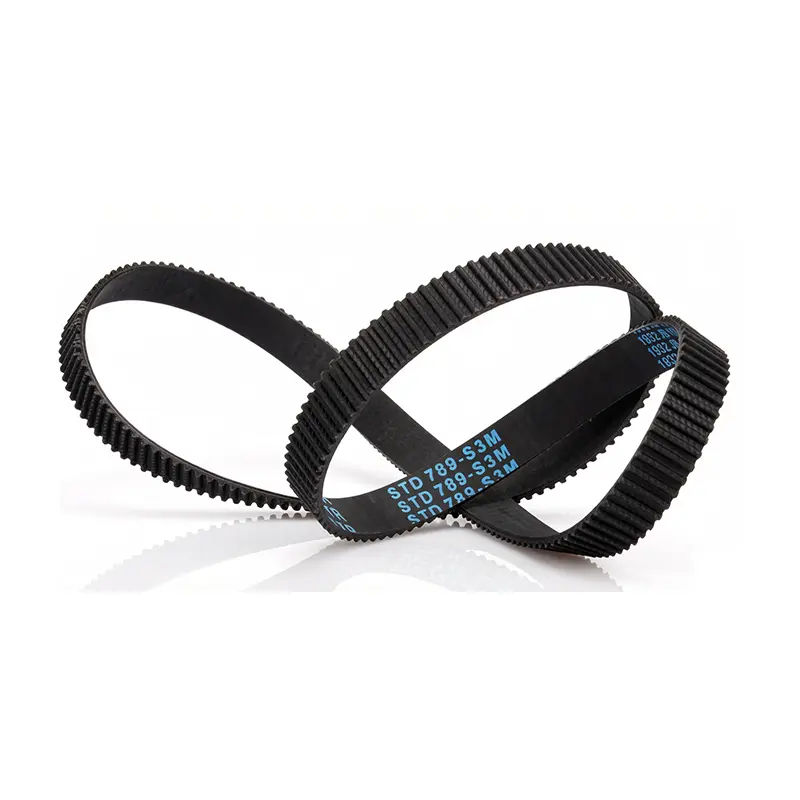
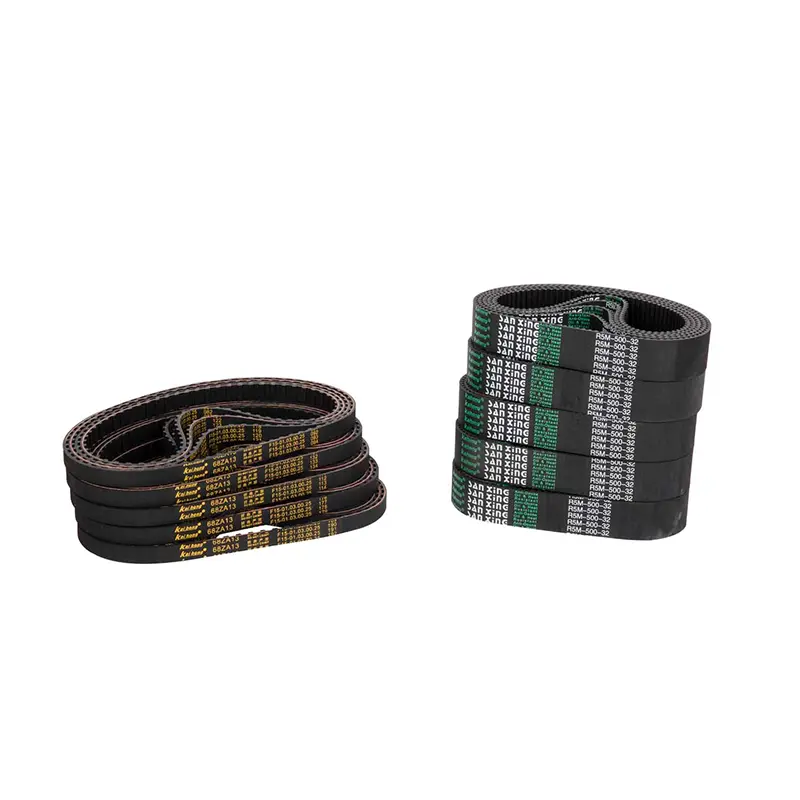
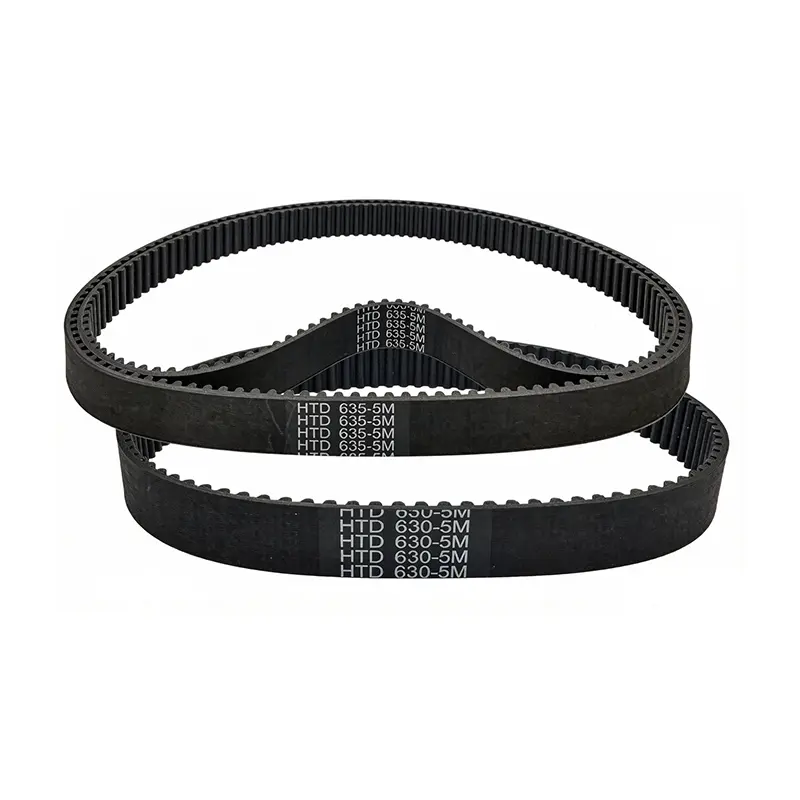
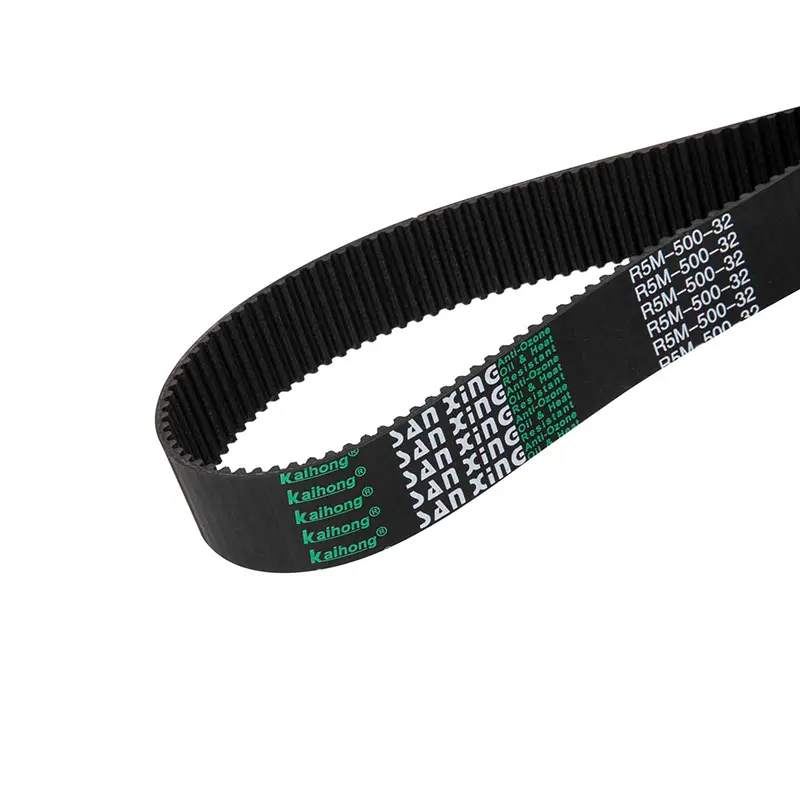
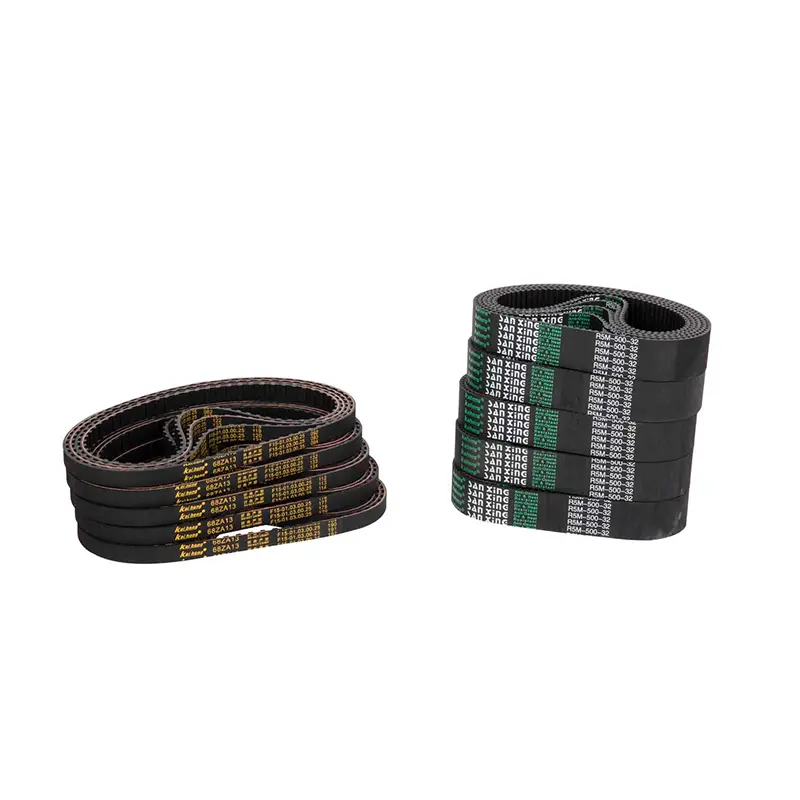
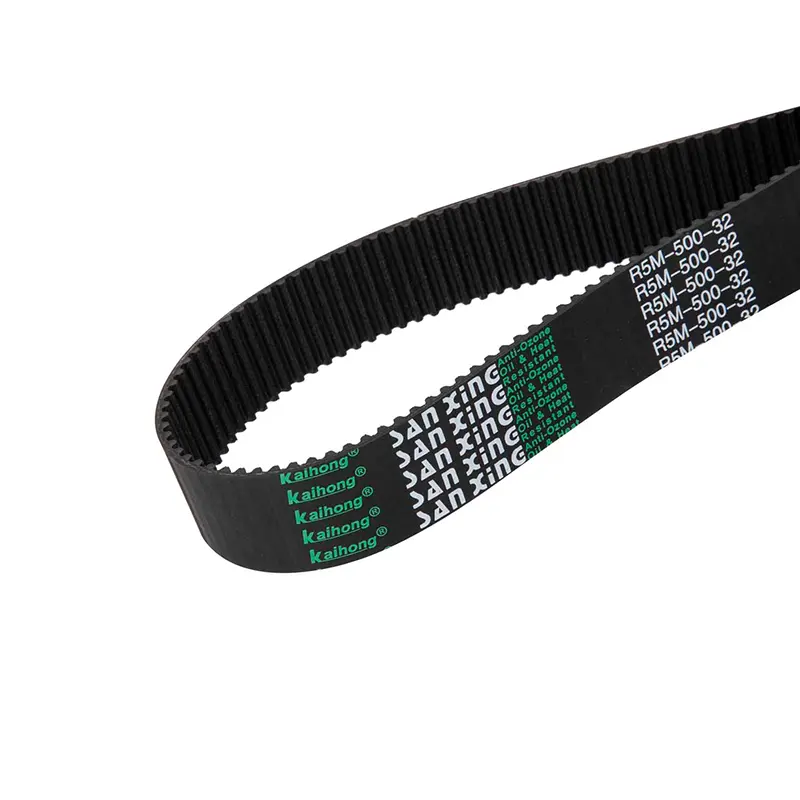
Kaihong Curvilinear Tooth Timing Belts are designed for power transmission systems that require accurate synchronization, stable torque transfer, and controlled running noise. The arc-shaped tooth geometry provides a larger tooth-pulley contact area than conventional trapezoidal profiles, helping distribute load more evenly during operation.
The range covers HTD, S, and RPP profiles, with pitches from 3 mm to 14 mm. Different tooth geometries allow engineers to select a suitable solution for CNC equipment, packaging machinery, conveyors, textile machines, printing systems, and heavy industrial drives.
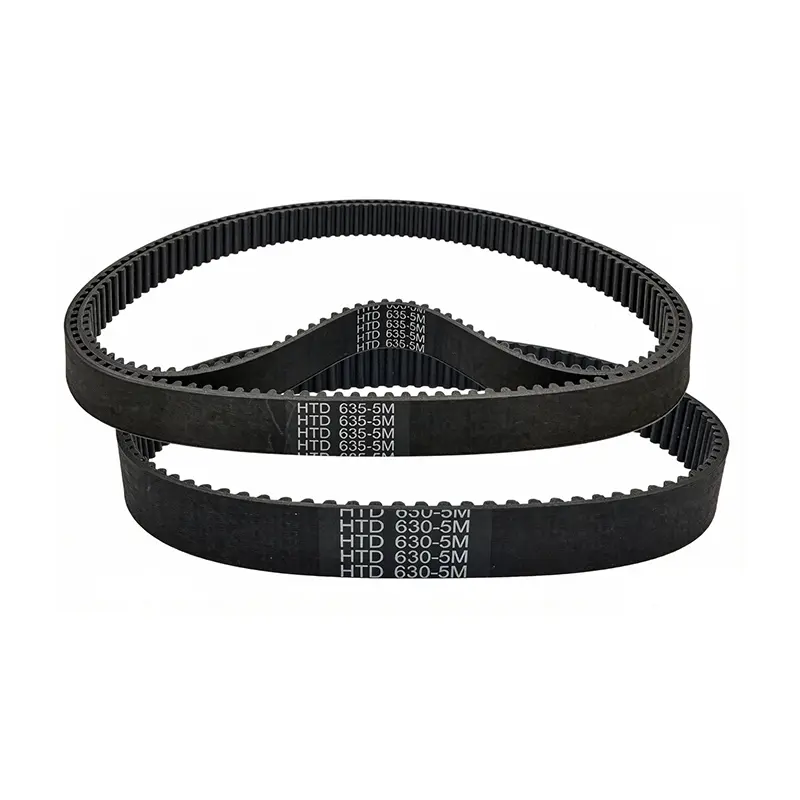
HTD belts use a full-radius tooth profile for general industrial synchronization. Available sizes include 3M, 5M, 8M, and 14M, covering applications from compact machinery to high-torque drives.
The S profile combines a curved tooth shape with a relatively flat tooth top. S3M, S5M, S8M, and S10M are available for applications where smooth engagement and reduced vibration are important.
RPP uses a parabolic tooth profile designed for higher load transmission. The available range includes RPP5M, RPP8M, RPP10M, RPP12M, and RPP14M.
The RPP10M and RPP12M sizes are particularly useful for selected heavy-duty applications where extended pitch options are required.
|
Type |
Pitch Pb (mm) |
Tooth Height ht (mm) |
Belt Height hs (mm) |
|
HTD 3M |
3 |
1.22 |
2.40 |
|
HTD 5M |
5 |
2.06 |
3.60 |
|
HTD 8M |
8 |
3.36 |
5.80 |
|
HTD 14M |
14 |
6.02 |
10.00 |
|
S3M |
3 |
1.14 |
2.40 |
|
S5M |
5 |
1.91 |
3.40 |
|
S8M |
8 |
3.05 |
5.30 |
|
S10M |
10 |
3.81 |
6.63 |
|
RPP5M |
5 |
2.06 |
3.60 |
|
RPP8M |
8 |
3.36 |
5.80 |
|
RPP10M |
10 |
4.27 |
7.00 |
|
RPP12M |
12 |
4.80 |
8.25 |
|
RPP14M |
14 |
6.02 |
10.00 |
The non-linear tooth geometry increases the contact area between the belt and pulley. This distributes transmission forces across the tooth surface and reduces localized stress.
High-strength tensile members maintain belt dimensional stability under continuous loading. This helps preserve the designed pitch relationship during repeated acceleration and deceleration.
A nylon-66 fabric covering is applied to the tooth surface to reduce friction and improve resistance to tooth wear. It also contributes to smoother engagement between belt and pulley.
The rubber body combines flexibility with mechanical strength, allowing the belt to operate around relatively small pulley diameters without excessive bending stress.
Positive tooth engagement prevents the belt from slipping under normal operating conditions. This is important for equipment where the relationship between the driving and driven shafts must remain consistent.
The gradual engagement of the curved teeth reduces sudden impact between the belt and pulley. This can help lower vibration and operating noise compared with less optimized tooth profiles.
The larger tooth contact area helps spread transmission forces over multiple engagement surfaces. This makes the design suitable for applications involving continuous torque and repeated load changes.
The curved tooth root reduces sharp stress concentration compared with conventional geometries. Combined with the reinforced rubber structure, this supports longer operating life under suitable working conditions.
The flexible tooth structure allows the use of smaller pulley diameters in suitable applications. This can help engineers reduce drive size where installation space is limited.
RPP8M and RPP14M profiles can be used in CNC machine tools, laser cutting equipment, and other positioning systems requiring stable synchronized movement.
The Curvilinear Tooth Timing Belts are suitable for filling, sealing, sorting, and conveying equipment where compact drives and continuous operation are required.
The low-friction tooth covering and stable synchronization make them suitable for textile machinery operating for extended periods.
Accurate timing between rotating components is important in printing systems. The positive tooth engagement helps maintain consistent shaft synchronization.
Low-noise transmission is beneficial for medical and laboratory equipment where vibration and acoustic disturbance need to be controlled.
RPP10M, RPP12M, and RPP14M profiles can be selected for demanding equipment such as grinding mills and woodworking machinery, subject to the required torque and belt width.
Kaihong can manufacture special belt lengths and tooth counts according to customer drawings or equipment requirements.
Double-sided arc-tooth belts are available for systems requiring synchronized transmission from both sides of the belt.
Surface options such as PAZ and APL can be considered for applications requiring additional abrasion resistance or specific running characteristics.
For high-speed or precision applications, Kaihong recommends selecting a matched belt and pulley profile rather than mixing different tooth geometries.
Drive pulleys should remain properly aligned. Angular or parallel misalignment can cause edge wear and uneven tooth loading.
Use an appropriate tension meter or the equipment manufacturer's specified tension value. Excessive tension can increase bearing load, while insufficient tension may cause vibration and unstable operation.
Always use the correct belt and pulley tooth profile. Mixing HTD, S, and RPP profiles may result in poor engagement and premature wear.
Standard CR rubber belts are generally suitable for approximately -20°C to +80°C. Applications outside this range should be evaluated before selection.
Check for tooth wear, cracking, edge damage, abnormal noise, and tracking deviation during scheduled maintenance. Replace the belt if significant deterioration is found.
Kaihong supports standard and customized timing belt requirements for machinery manufacturers, distributors, and replacement-parts suppliers. Customers can provide the required pitch, tooth count, belt width, length, pulley profile, or original belt sample for specification confirmation.
For OEM projects, Kaihong can provide customized belt lengths, tooth counts, double-sided designs, special surface coatings, and matched pulley solutions. Technical recommendations can also be provided according to transmission speed, working load, pulley diameter, and installation space.
For replacement orders, supplying an original belt sample or detailed dimensions helps ensure accurate profile and size matching. This reduces the risk of selecting an incompatible tooth geometry and supports stable operation after installation.
ISO9001 and ISO14001 certified management systems are applied to the company's production and environmental management processes, supporting consistent product supply for long-term B2B cooperation.
HTD uses a full-radius profile for general-purpose power transmission. S profiles use a curved tooth with a flatter top and are suited to applications requiring smooth engagement. RPP uses a parabolic profile and is designed for higher-load transmission.
Yes. Kaihong can supply RPP10M and RPP12M according to the stated pitch and tooth dimensions, as well as matching pulleys where required.
Some belts may have the same pitch, but tooth geometry can differ between profiles. For high-speed or precision equipment, Kaihong recommends checking the pulley profile before replacement and using a matched belt-pulley combination when necessary.
For standard CR rubber construction, the supplied reference range is approximately -20°C to +80°C, with linear speeds up to 40 m/s depending on belt specification and application.
Yes. Kaihong supports custom lengths, tooth counts, double-sided designs, special coatings, and other OEM requirements based on drawings or samples.
Maintain correct alignment and tension, use the matching pulley profile, keep the belt away from unsuitable chemicals or excessive heat, and inspect the belt periodically for tooth and edge damage.
For Curvilinear Tooth Timing Belts selection, samples, matched pulleys, or OEM production, provide your pitch, tooth count, belt width, application speed, and load requirements to Kaihong.
With ISO9001 and ISO14001 certifications, Kaihong provides synchronized belt solutions for precision machinery, automated production lines, and heavy-duty industrial equipment.
Address
No. 48 Guangming Middle Road, Sanmen County, Taizhou City, Zhejiang Province, China
Tel