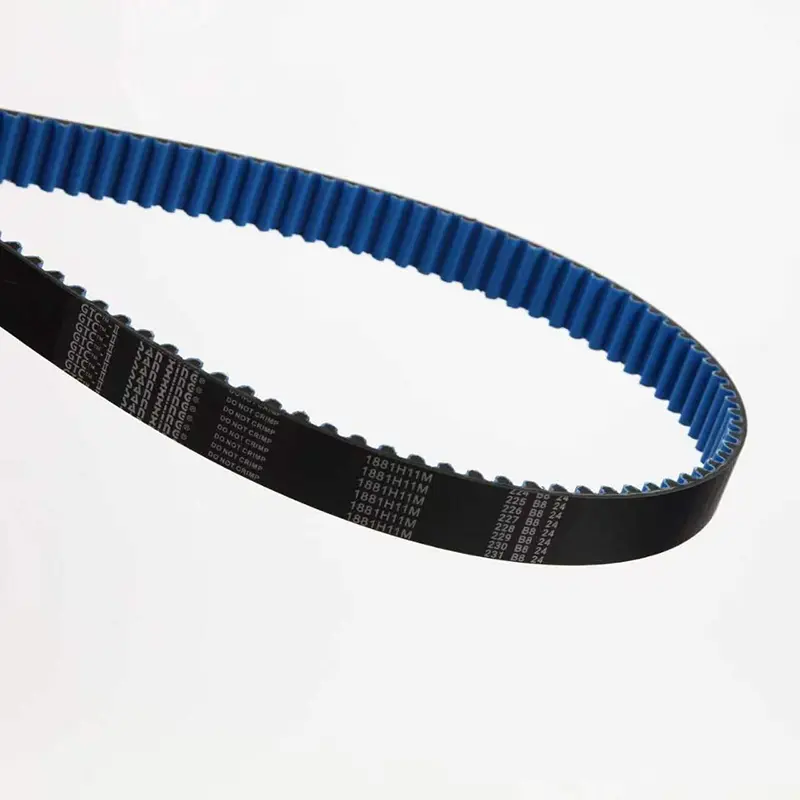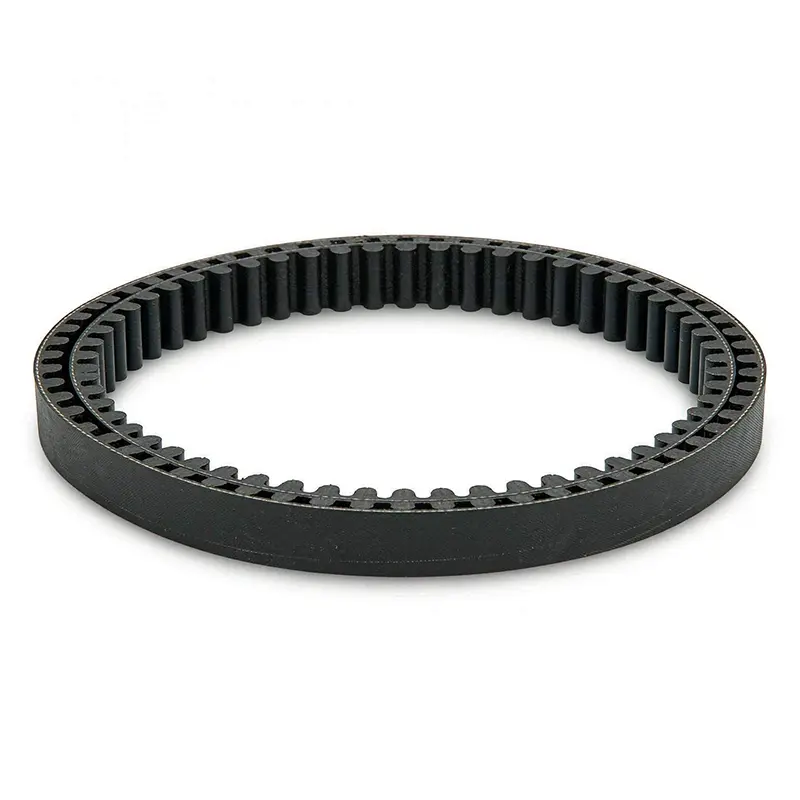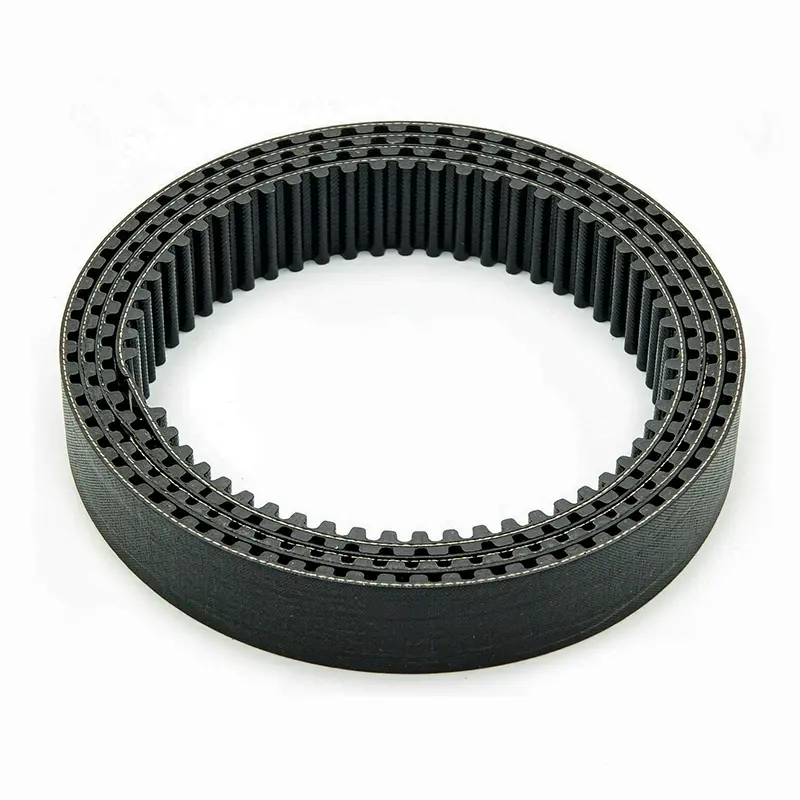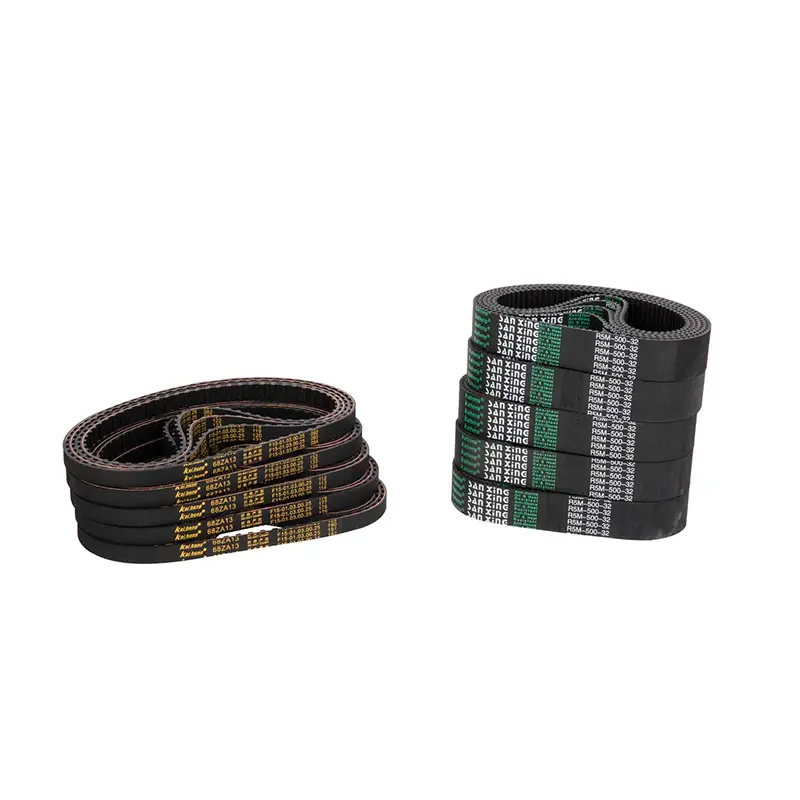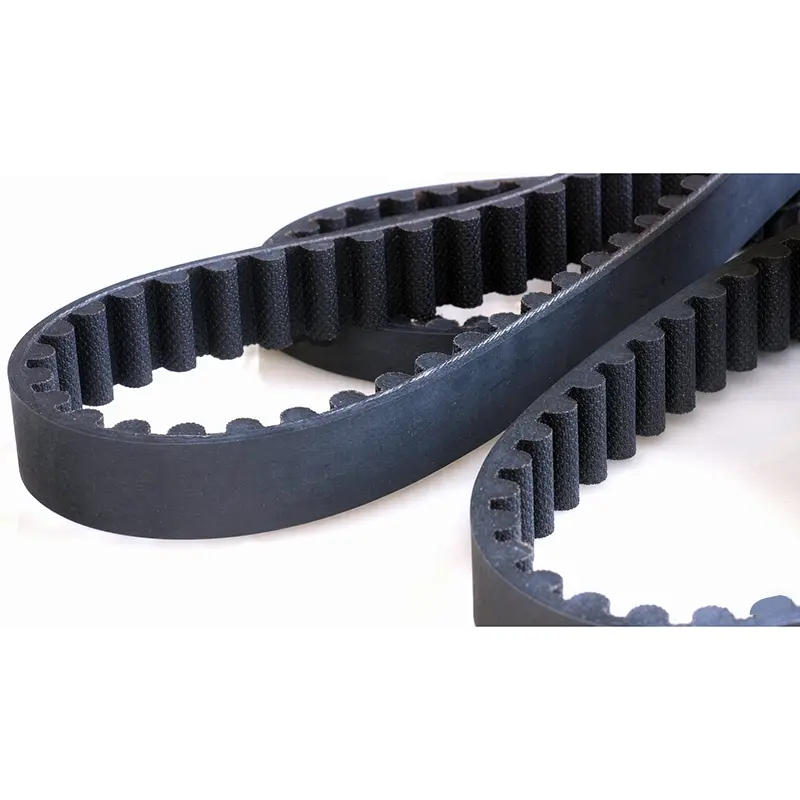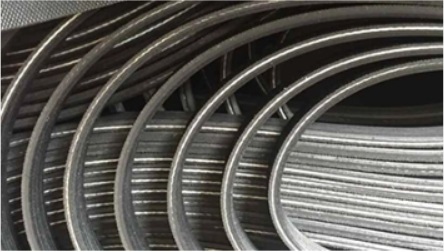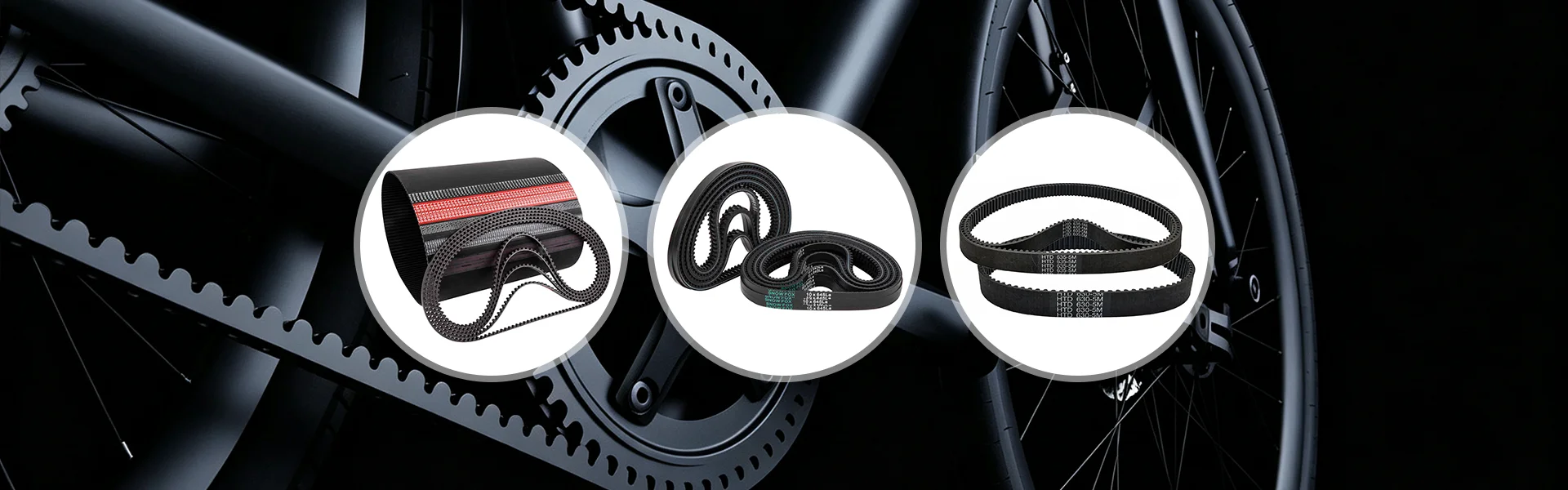
In classification, timing belts are generally distinguished by tooth profile, belt body material, cord type, and structural form, with each category corresponding to a different load-carrying method and application boundary. During procurement, checking dimensions without considering category placement often leads to problems such as a matching tooth profile paired with an unsuitable material, or the wrong cord type causing a sharp drop in small-pulley life.
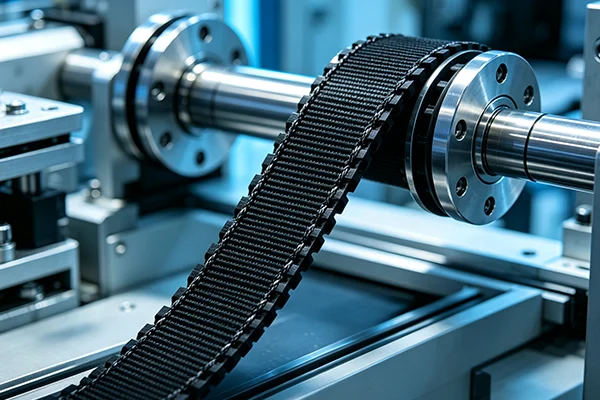
A timing belt transmits power through the meshing of teeth with pulley grooves, and pitch deviation directly manifests as meshing interference or tooth climb. During incoming inspection, batch consistency of pitch deserves more attention than the nominal value of a single belt: if the pitch range across multiple belts in the same batch is too large, the phase deviation of each axis in multi-axis drives accumulates, appearing as declining synchronization after the equipment has run for a period.
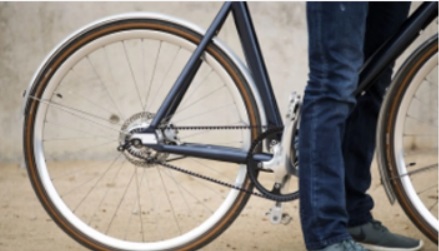
The tooth root stress distribution of curvilinear teeth is more uniform than that of trapezoidal teeth, and at the same tooth height they can withstand greater tooth root shear load. When replacing chains or transmitting higher torque, curvilinear teeth are the more reliable choice; trapezoidal teeth are mostly used in light-load, low-speed, or space-constrained small drives. The two tooth profiles cannot be mixed on the same pulley, and the original pulley groove profile must be verified during replacement.
If the old pulley groove already shows step-shaped wear, the actual meshing position of a new belt shifts, and no degree of pitch accuracy can compensate. Before replacing a timing belt, the pulley groove condition should be checked at the same time; pulleys with obvious wear need to be replaced as well, otherwise the new belt's life will be significantly shortened.
The belt body material of a timing belt determines the upper temperature limit and media resistance. CR (chloroprene rubber) and HNBR (hydrogenated nitrile rubber) are the two common types. CR belt bodies offer good flexibility and controllable cost within the normal industrial temperature range; HNBR belt bodies are more outstanding in heat and oil resistance, suitable for conditions near heat sources or with oil mist. Selection should be based on the actual temperature range of the equipment, rather than assuming “all rubber belts will work.”
CR belt bodies are suitable for general drive scenarios with no obvious oil contamination and moderate temperature fluctuation. If the equipment experiences short-term high-temperature exposure, confirm the heat resistance grade of the compound and shorten the first inspection interval to observe whether the belt back shows signs of hardening.
HNBR belt bodies perform more stably under continuous oil mist or higher ambient temperatures, suitable for drive layouts near gearboxes or hydraulic stations. However, HNBR costs more than CR; in oil-free, room-temperature conditions, choosing it is performance redundancy, and procurement should judge whether it is needed based on actual exposure conditions.
The cord of a timing belt carries the entire tensile load, and fiberglass cord and aramid cord are the two common types. Fiberglass cord has lower cost and low elongation, suitable for conventional drives with fixed center distance; aramid cord offers better flexibility and fatigue resistance, suitable for routing layouts with small pulleys and multiple driven pulleys. Cord type is not visible on the belt body exterior, so it should be explicitly confirmed with the supplier during procurement rather than judged by price alone.
When the pulley diameter approaches the minimum allowable value stated by the supplier, the bending fatigue life of fiberglass cord drops noticeably. Such layouts should prioritize confirming aramid cord specifications, or require the supplier to provide flex fatigue test data, focusing on the tensile retention rate after the specified number of cycles.
Aramid cord has a slightly higher elongation rate than fiberglass cord, and the initial tension setting must follow the corresponding tension table provided by the supplier. If the empirical values for fiberglass cord are retained, either tooth jump from insufficient tension or accelerated bearing wear from over-tensioning may occur.
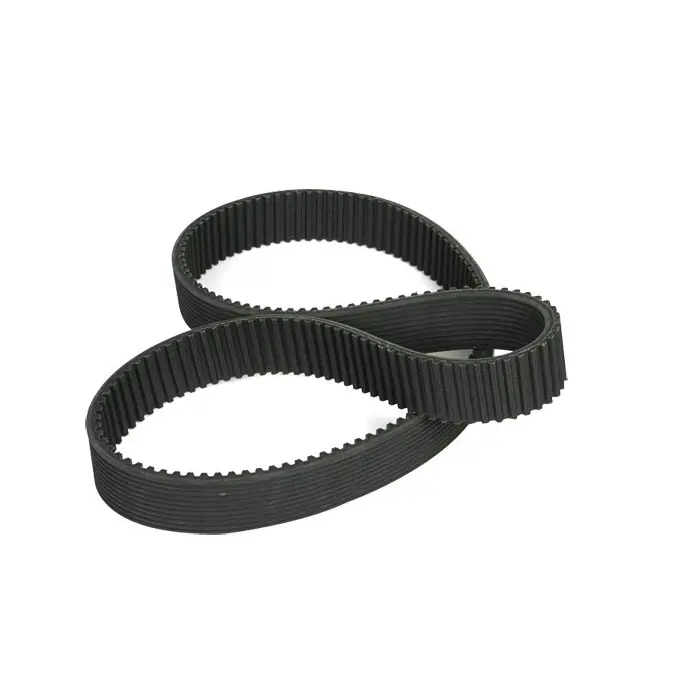
Double-sided timing belts have teeth on both sides and can drive multiple driven pulleys in serpentine routing layouts, or achieve reverse rotation transmission. This structure is clearly advantageous in multi-axis synchronization scenarios such as textile machinery and packaging equipment: one belt drives multiple axes simultaneously, with the phase of each axis constrained uniformly by the belt body, avoiding synchronization drift among multiple independent belts caused by elongation differences.
When replacing a double-sided belt, an incorrect routing sequence results in insufficient wrap angle on some pulleys or incorrect tooth surface contact direction. Before installation, obtain the routing diagram from the equipment manufacturer and confirm the tooth surface orientation and pulley meshing direction pulley by pulley.
Some double-sided belts have the same tooth specification on both sides, while others differ (such as curvilinear teeth on one side and trapezoidal teeth on the other). During procurement, the tooth profiles on both sides must be verified against the original design; mixing pulleys of different tooth specifications causes poor meshing on one side.
The tension setting of a timing belt is more sensitive than that of a V-belt: insufficient tension causes tooth jump and abnormal tooth surface wear, while excessive tension directly increases the radial load on pulley bearings. A timing belt does not rely on high tension to maintain friction drive the way a V-belt does, so the initial tension is usually lower than that of a V-belt of the same specification—a point easily overlooked in replacement scenarios.
Set tension with a tension gauge according to the tension table provided by the equipment manufacturer or belt supplier, rather than judging by hand feel. A new belt undergoes initial stretch after 24 to 48 hours of operation and must be rechecked once; if tension drops noticeably, investigate installation deviation rather than simply adding tension.
If the equipment uses multiple timing belts in parallel, they should be replaced as a set, with each belt length confirmed within the matching tolerance. Replacing a single belt causes different elongation rates between old and new belts, uneven load distribution, and the new belt may actually fail earlier.
Tooth surface wear means the meshing clearance has already increased; increasing tension only accelerates pulley bearing wear and cannot restore tooth profile accuracy. Belts with obvious wear should be replaced, and the pulley grooves should be checked at the same time for corresponding wear.
Replacement is possible in scenarios with no oil contamination and temperatures not exceeding the CR temperature limit, but the actual operating temperature of the equipment must be confirmed. If oil mist or sustained higher temperatures are present, the life of a CR belt body will be noticeably shorter than that of HNBR, and the inspection cycle should be shortened after replacement for observation.
Request the pitch inspection records and belt body hardness data for the batch to be supplied with the goods. For multi-axis synchronization scenarios, it is recommended to stipulate in the contract the pitch length range across multiple belts in the same batch, avoiding phase deviation caused by elongation differences.