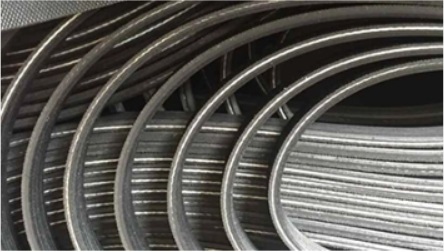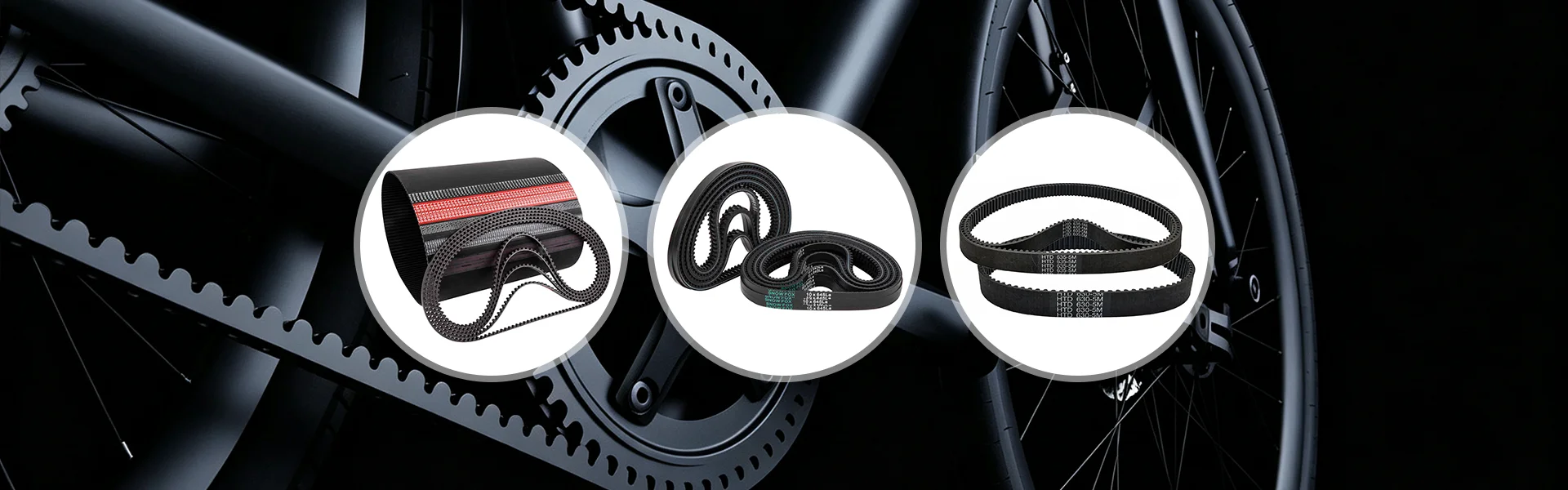
V-belts serve as the fundamental friction-based power transmission components in industrial drive systems; however, improper selection—regarding cross-section specifications, structural design, or compatibility with pulleys—can lead to operational risks. Kaihong holds both ISO 9001:2015 and ISO 14001:2015 certifications.
A, B, C, D, and E types correspond to decreasing transmitted power from large to small, while Y and Z types are mostly used in small equipment or appliances. Selection should not rely on motor power alone but must also consider small pulley diameter and speed. When the small pulley diameter is on the small side, a larger cross-section results in higher bending stress and actually shorter life; in this case, narrow V-belts or raw edge belts are the more suitable direction.
V-belts transmit force through friction between the wedge flanks and the groove; after groove wear, the belt sinks deeper, the effective diameter decreases, and the result is unstable speed or slippage. Before replacing a belt, check whether the groove has developed dish-shaped wear. Pulleys with obvious wear must be replaced as well, otherwise the new belt's wedging position cannot return to the design state.
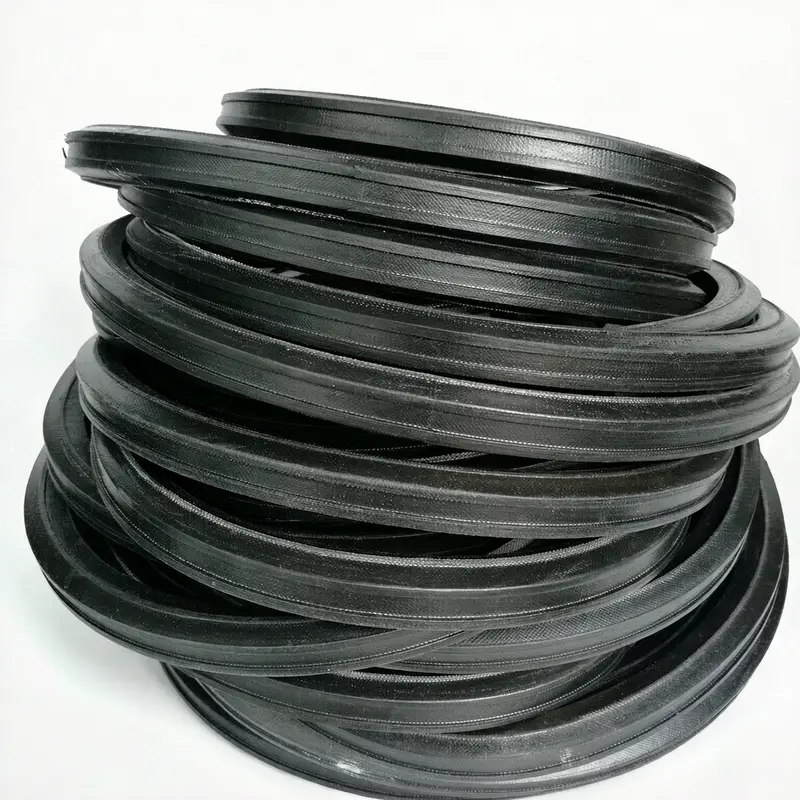
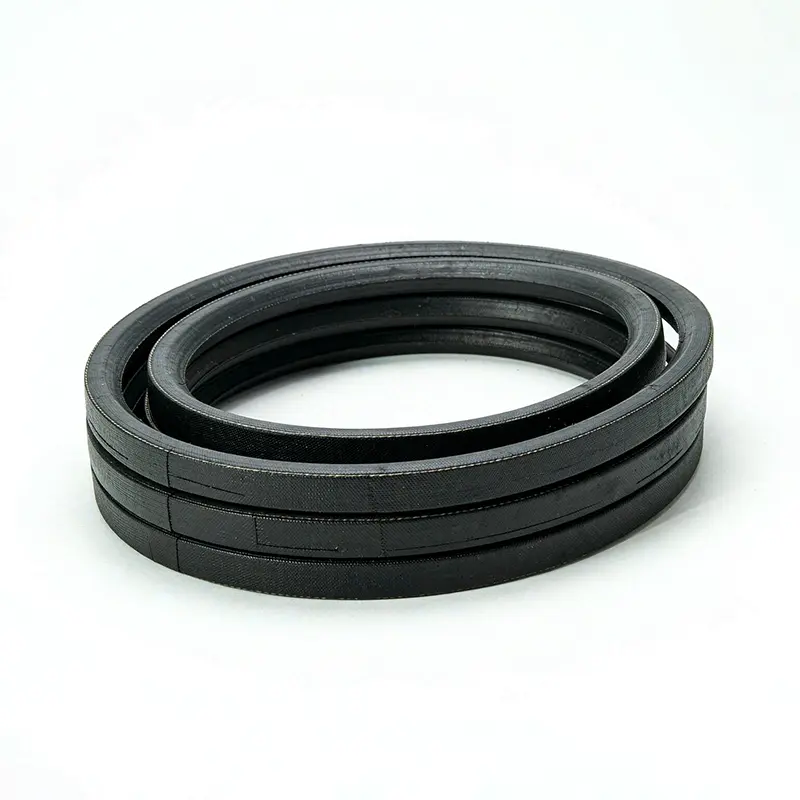
The flanks of a wrapped V-belt are covered with a fabric layer, giving a relatively stable friction coefficient and lower running noise, suitable for conventional industrial environments. The flanks of a raw edge V-belt are exposed rubber, with a higher friction coefficient, permitting smaller pulley diameters and higher transmission ratios. The choice between the two depends on pulley size constraints and whether higher slip resistance is required.
Without the constraint of a fabric layer, raw edge belts develop lower internal stress when bending over small pulleys, and their bending fatigue life is superior to wrapped belts of the same cross-section. Compact drive layouts with limited space should prioritize raw edge construction, but note that raw edge belts are more sensitive to groove surface roughness, and worn old pulleys will accelerate raw edge wear.
The fabric layer of a wrapped belt to some extent blocks oil and dust from directly contacting the rubber body, performing more stably in environments with more dust or occasional oil splash. If the equipment has continuous oil mist, the oil resistance grade of the rubber compound still needs to be confirmed for wrapped belts; the fabric layer itself does not provide oil protection.
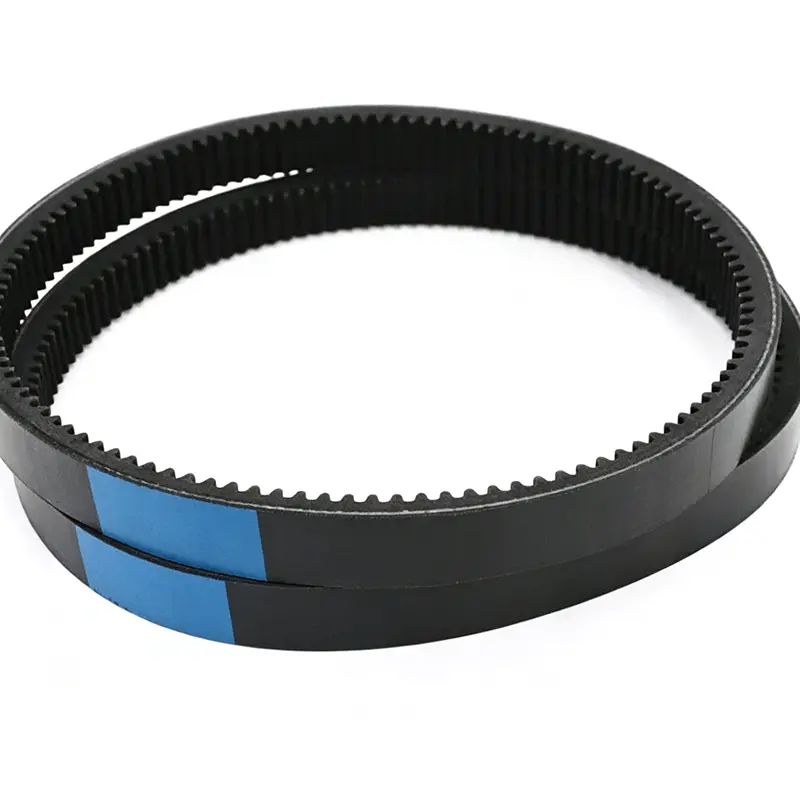
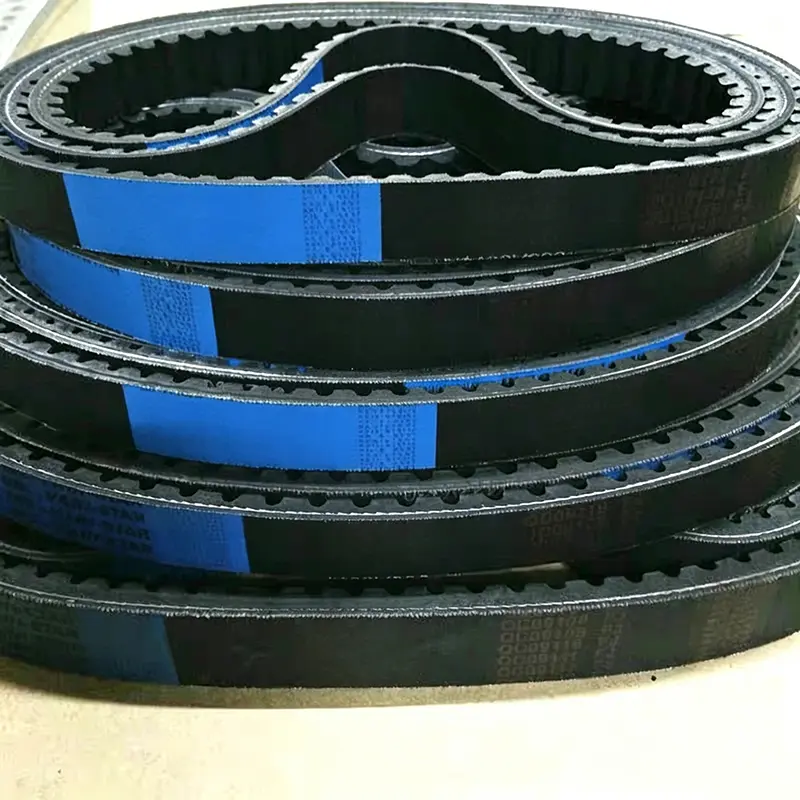
Cogged raw edge V-belts (commonly called toothed V-belts) have transverse cogs on the belt bottom or flanks, intended to reduce bending stiffness so the belt bends more easily over small pulleys. This construction is clearly advantageous on equipment with limited pulley diameter, such as machine tool spindles and small compressors. During procurement, note that the cogs serve to improve flexibility, not to increase friction; cogged belts still must match standard V-belt pulley grooves.
The cogs of a cogged raw edge belt do not participate in wedge-driven force transmission, and the slip criteria are the same as for classical V-belts: observe the belt's sink depth in the groove and abnormal heat during operation. If transverse cracks appear at the cog roots, bending fatigue has accumulated to a certain degree, and the belt must be replaced rather than re-tensioned.
Some cogged raw edge belts have directional requirements for the cogs (installation direction affects bending performance). During replacement, confirm the arrow marking on the belt body or the supplier's installation instructions. Installing in the wrong direction will not cause immediate failure, but bending fatigue life will be shortened.
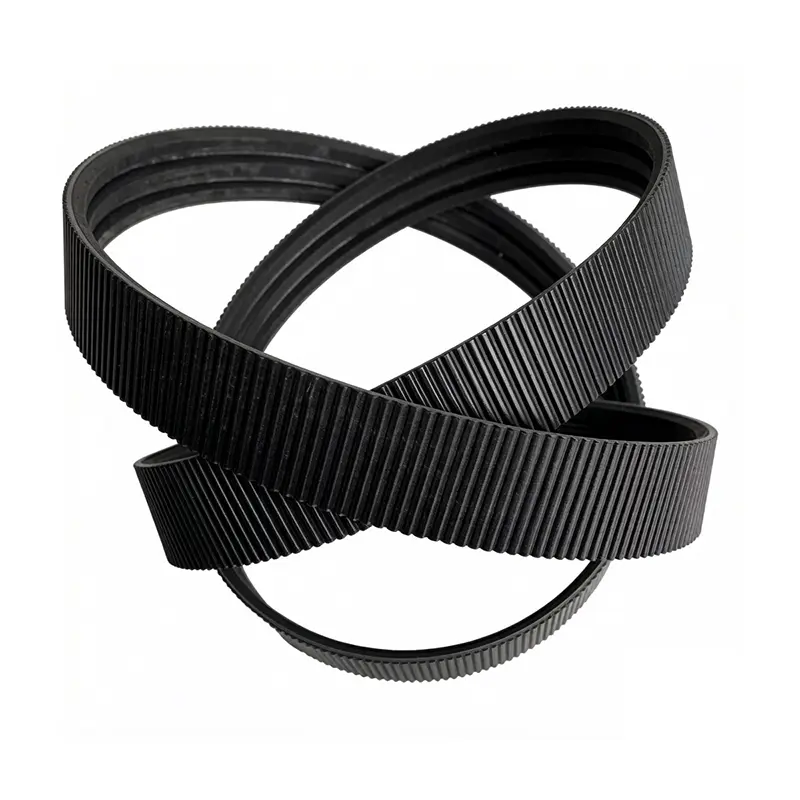
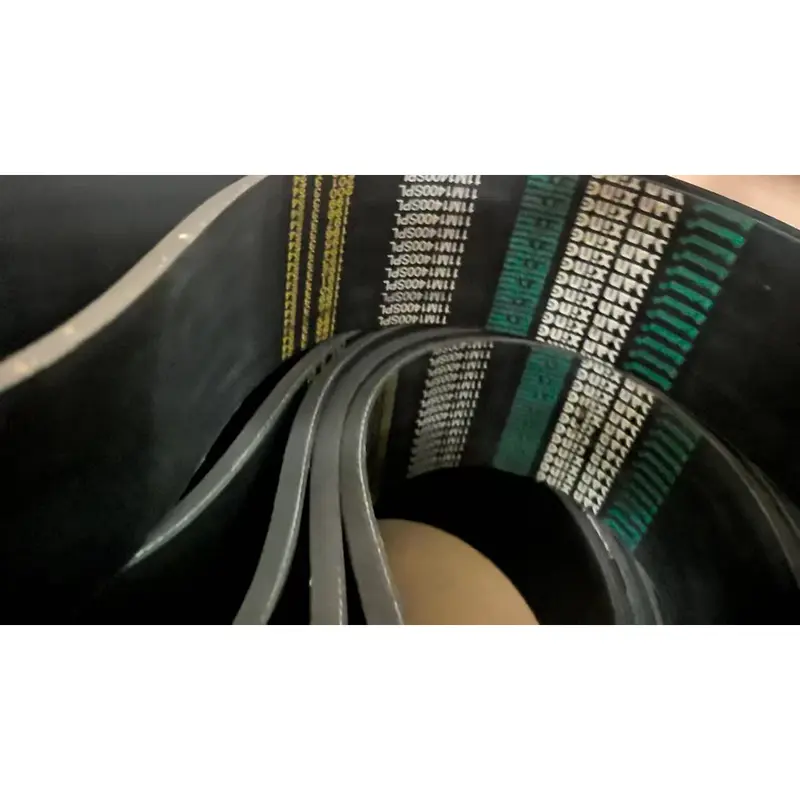
Banded V-belts bind multiple V-belts together with a top connecting layer, used in multi-belt parallel drive scenarios. In ordinary multi-belt drives, length differences among the belts cause the shortest one to carry most of the load while the others “follow.” The banded structure forces all belts to work in synchronization, distributing load more evenly and also suppressing lateral belt oscillation at high speed.
A banded belt is itself an integral structure and is replaced as a whole, so there is no single-belt matching issue. However, if the connecting layer of a banded belt cracks or separates, the entire set fails and cannot be downgraded to single-belt use. During incoming inspection, check the bond between the connecting layer and the belt top.
Banded belts have higher requirements for groove spacing and parallelism of multi-groove pulleys than single-belt drives. If the grooves of a pulley are worn to different degrees, the individual belts of the banded set are loaded unevenly, and the connecting layer bears additional shear stress. Before replacing a banded belt, check the wear consistency across all grooves.
The tension setting of a V-belt directly affects life and bearing load. Insufficient tension causes slippage and heat; excessive tension accelerates bearing wear. A V-belt undergoes initial stretch after installation, with the initial elongation of a classical V-belt at about 1% to 2%; it must be re-tensioned within 24 hours after tensioning. This step is especially critical in multi-belt drives and long-center-distance layouts; omitting re-tensioning leaves the belt in a slack state during the early running period.
Measure with a tension gauge according to the tension table provided by the equipment manufacturer or belt supplier, rather than pressing by hand. Tension values differ noticeably across cross-sections and pulley diameters, and empirical values are unreliable when changing brands or batches.
In multi-belt drives, mixing old and new belts is strictly prohibited, as is mixing belts from different manufacturers. Belts from different sources have slight differences in length and cross-section dimensions; mixing causes severely uneven load distribution, the shortest belt fails quickly, and the entire set is forced to stop.
The cause of slippage must be determined first. If groove wear has caused excessive belt sink depth, increasing tension only accelerates bearing wear without restoring the wedging effect. If the belt flanks have become glazed and hardened, the friction coefficient has irreversibly decreased, and replacement rather than re-tensioning is required.
No, because the cross-section dimensions differ. The height-to-width ratio of a narrow V-belt differs from that of a classical V-belt; when the pulley groove does not match, the wedging position shifts, and both load capacity and life are affected. If increased load capacity is genuinely required, the pulleys must be recalculated together.
Request the length inspection records for the batch to be supplied with the goods. In multi-belt drive scenarios, it is recommended to stipulate in the contract the length range across belts in the same batch, avoiding uneven load distribution caused by length differences.
(Case studies, image links, and video links reserved: insert according to actual materials; this section does not replace the media references in the original text.)