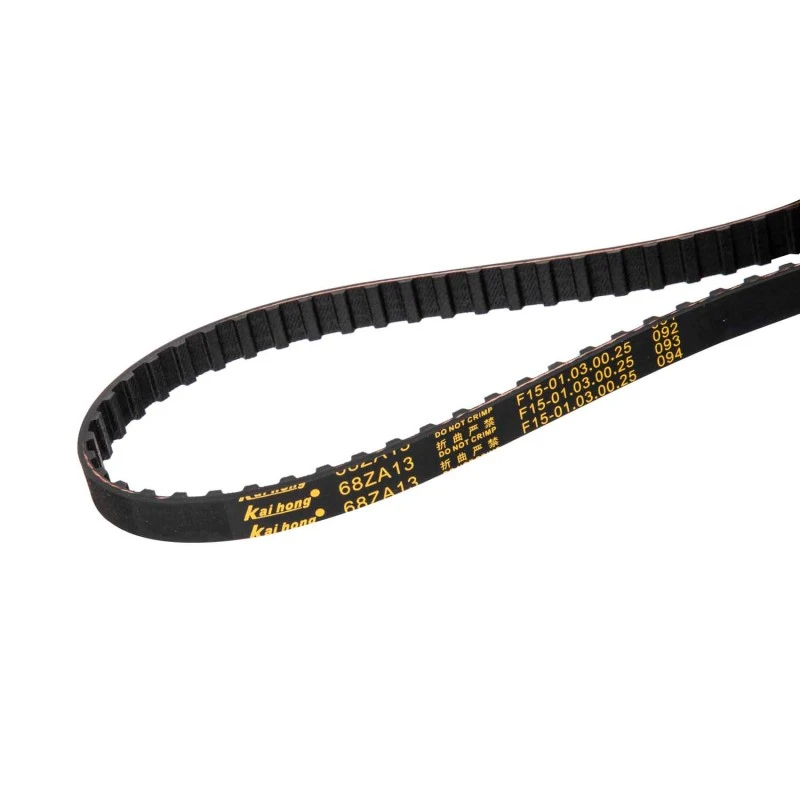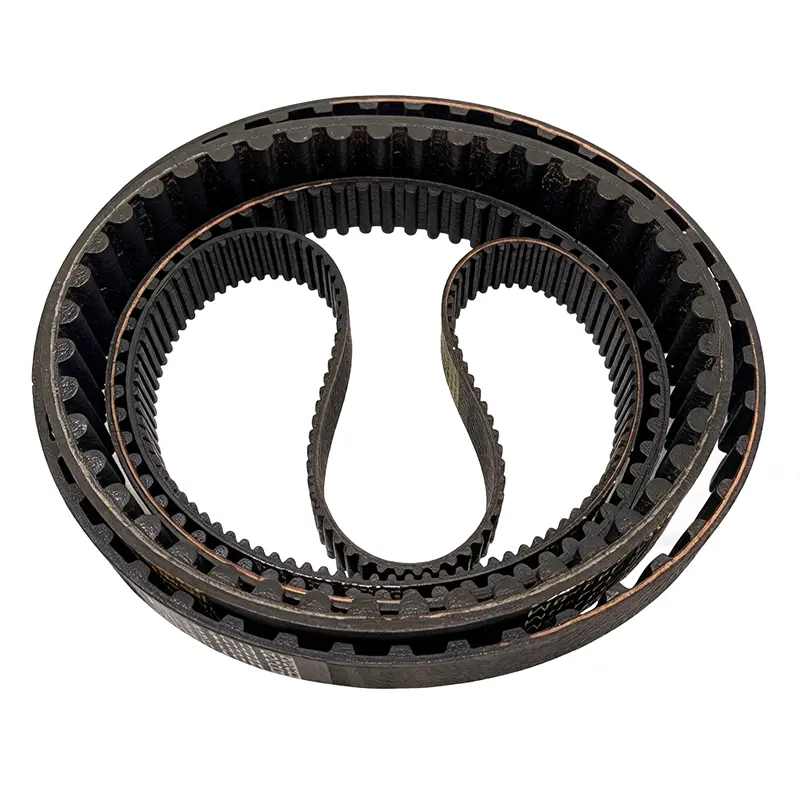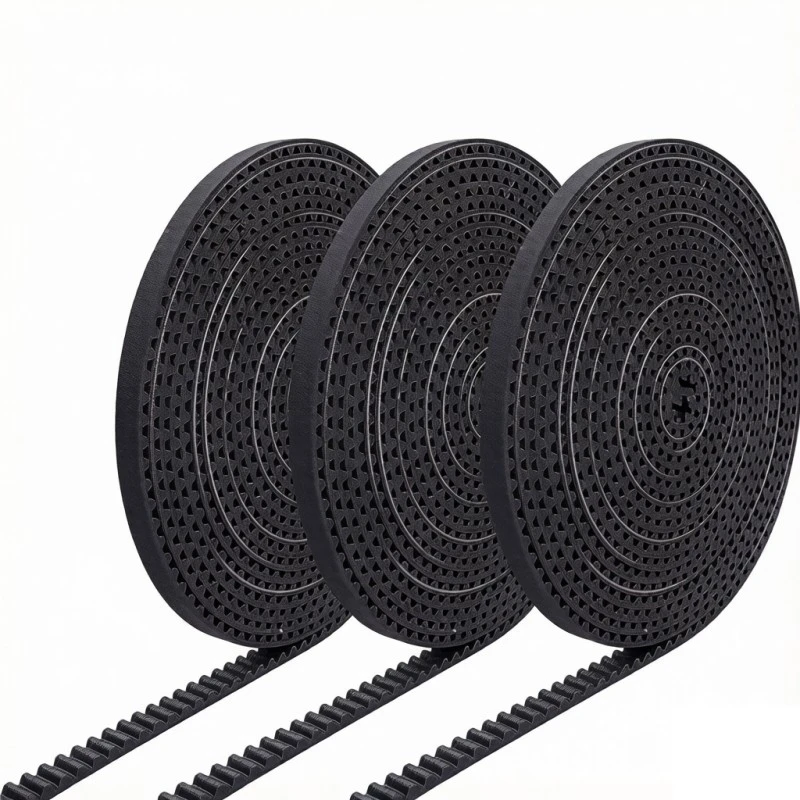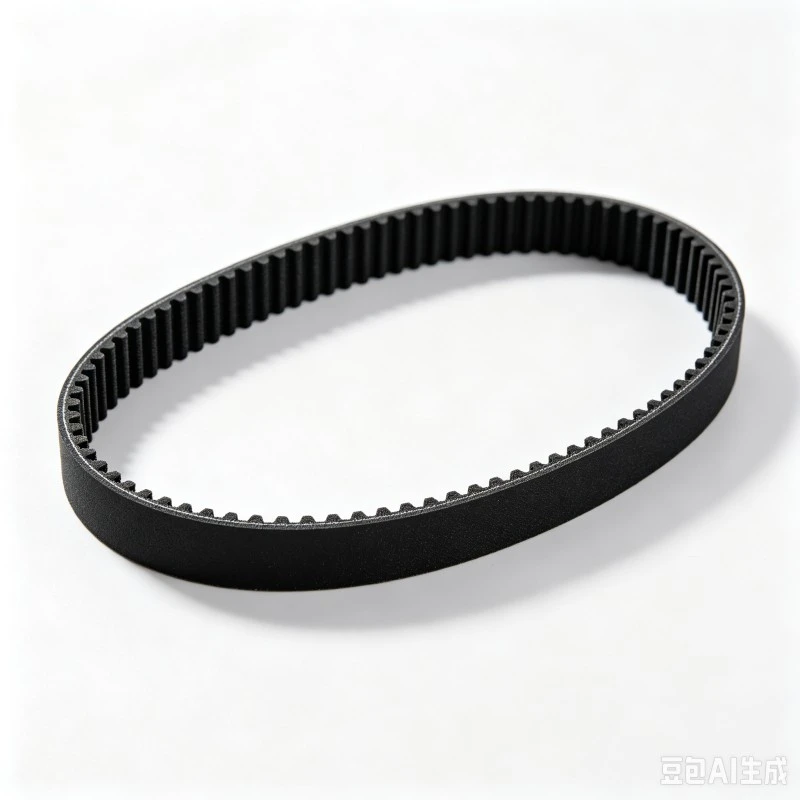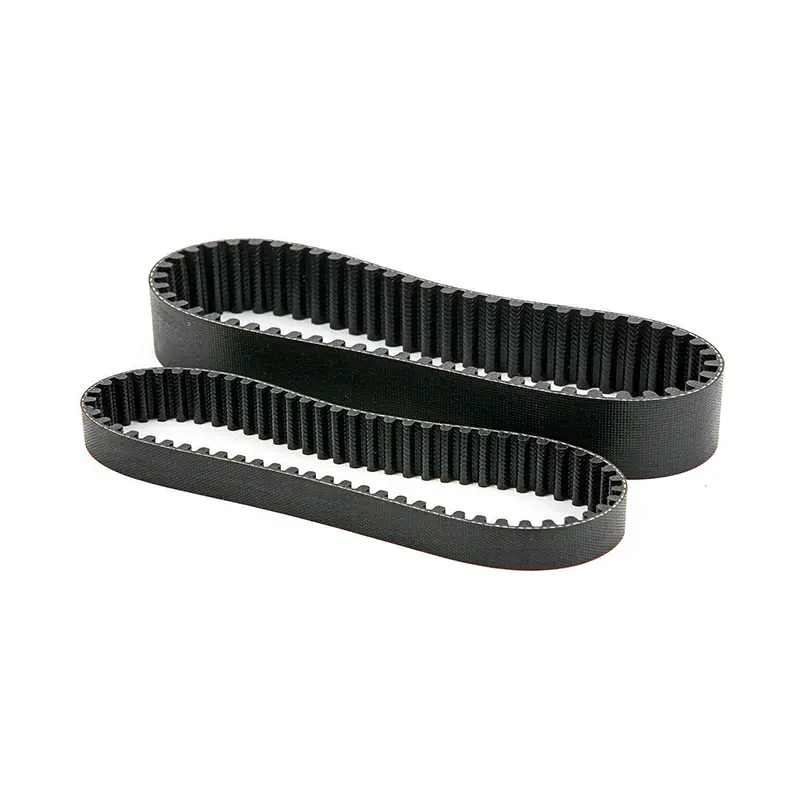


Engineers seeking a reliable, industry-standard solution for medium-to-high torque mechanical power transmission often face stress concentration issues with older trapezoidal timing belts. Upgrading to a full-curvilinear h-type timing belt provides a high-efficiency alternative, eliminating tooth root shear, preventing tooth jumping under shock loads, and ensuring slip-free synchronization across automated manufacturing equipment.
Classical first-generation trapezoidal timing belts (such as MXL, XL, L, H, XH, and XXH) feature straight tooth flanks with a 40° angle. While straightforward to manufacture, trapezoidal profiles concentrate mechanical stress sharply at the tooth root, leading to root shear or tooth jumping when subjected to sudden motor torque surges.
The H-profile solves this structural limitation by utilizing a multi-arc curvilinear geometry with fully rounded crests and roots, providing three key mechanical advancements:
Instead of concentrating force along a sharp root line, tensile load spreads across the entire rounded tooth flank. At the same pitch width, this profile delivers approximately 30% higher torque transmission capacity than classical trapezoidal belts.
The full arc-shaped root disperses shear forces encountered during abrupt motor reversals or heavy shock loading, dramatically reducing tooth shear and extending operational fatigue life.
The continuous arc surface enters and exits pulley grooves progressively. This smooth meshing action softens impact vibration, suppresses the polygonal effect, and provides significantly quieter, more stable speed regulation at medium-to-high rotational speeds.
Kaihong utilizes premium elastomer compounds and high-tenacity reinforcement cords engineered to resist environmental degradation and pitch drift over long service lives.
| Layer | Material | Function |
| Body & Backing | Chloroprene Rubber (CR) | Resists oil, ozone, and thermal aging; encapsulates internal tensile cords |
| Tensile Member | Helically Wound Fiberglass Cord (Aramid/Steel optional) | Carries longitudinal tension; near-zero elongation prevents pitch drift |
| Tooth Facing | Nylon 66 Elastic Wear-Resistant Fabric | Self-lubricating, low-friction surface; protects tooth flanks from abrasion |
The internal load skeleton consists of helically wound fiberglass cords possessing high tensile modulus and flex fatigue resistance. Because the tensile core does not stretch under load, pitch distance remains constant throughout its service life, eliminating the need for periodic re-tensioning.
Every tooth is wrapped with a low-friction Nylon 66 fabric cover. This tough jacketing lowers the friction coefficient during groove engagement, minimizes heat build-up, and protects the underlying rubber compound from sidewall wear.
Kaihong produces curvilinear H-Type Timing Belts across five standard metric pitch specifications to support light automated mechanisms up to heavy industrial primary drives:

| Type | Pitch (mm) | Belt Thickness (mm) | Tooth Height (mm) |
| H3M | 3.0 | 2.4 | 1.21 |
| H5M | 5.0 | 3.8 | 2.08 |
| H8M | 8.0 | 6.0 | 3.38 |
| H14M | 14.0 | 10.0 | 6.02 |
| H20M | 20.0 | 13.2 | 8.68 |
Due to its high torque density, slip-free synchronization, and low maintenance requirement, an industrial h-type timing belt serves as a reliable power transmission standard across diverse industries:
Following correct drive selection protocols and pulley profile matching prevents premature cord breakdown and tooth wear.
1. Determine Pitch Profile: Choose H3M for light compact setups, H5M for general machinery, or H8M/H14M/H20M for heavy torque loads.
2. Compute Pitch Length & Tooth Count: Calculate required pitch length from center distance and pulley tooth counts, then round to a standard tooth count.
3. Determine Belt Width: Cross-reference width load-rating tables against required motor horsepower, incorporating a 20% to 30% operational safety margin.
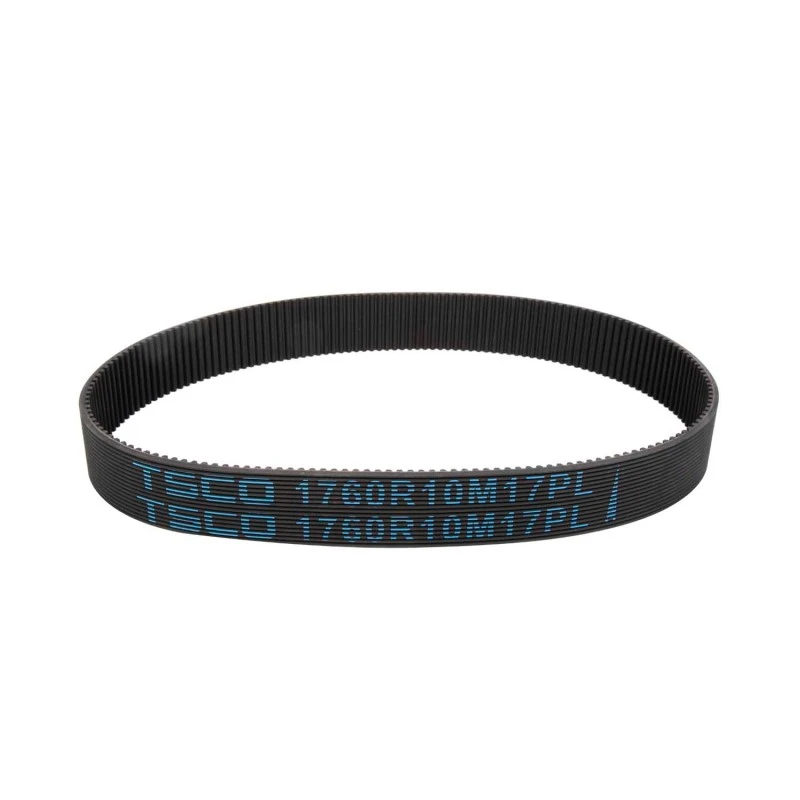
H-profile belts must be paired exclusively with HTD-specific pulleys. Although H-profile belts share identical pitch distances with STD/S-profile and RPP/R-profile belts (for example, H8M, S8M, and RPP8M are all 8.0 mm pitch), their underlying tooth curvature shapes are fundamentally different and must never be mixed. Forced interchanging causes severe tooth binding, elevated noise, and early belt failure. Always verify the "H" or "HTD" prefix printed on the belt backing.
Always shorten shaft center distance or loosen tensioner pulleys before installing new belts. Never force or pry belts over sheave lips using screwdrivers or crowbars, as prying causes invisible fractures inside the fiberglass tensile cord. Store spare belts lying flat in a cool, dry room; never bend, kink, or crimp fiberglass belts during handling.
The H-Type Timing Belt features a fully rounded curvilinear tooth profile rather than a straight 40° trapezoidal shape. This rounded design spreads shear stress evenly across the entire tooth flank, increasing torque capacity by approximately 30%, suppressing meshing impact noise, and preventing root cracking under shock loads.
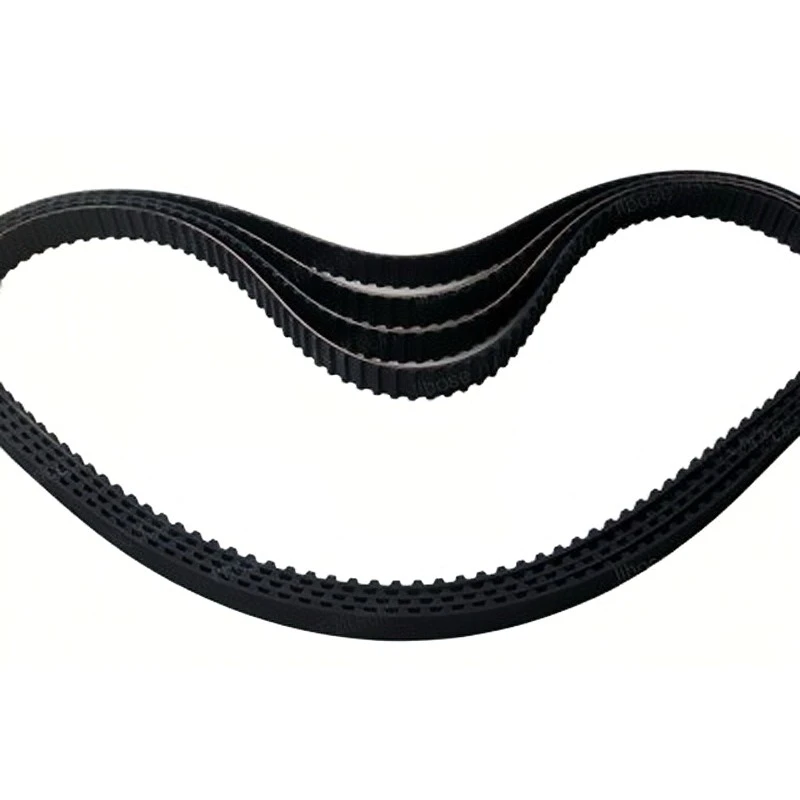
Kaihong supplies double-sided H-profile belts (designated as DA or DB series, such as D5M, D8M, and D14M) featuring symmetrical teeth on both top and bottom faces. These allow multi-axis serpentine drive layouts where pulleys rotate in opposing directions.
Kaihong offers custom options including non-standard lengths, extra widths, thickened/grooved/perforated backings, integrated guide cleats, food-grade polyurethane (PU) formulations, antistatic conductive rubber, and high-temperature HNBR compounds built to customer drawings or samples.
Looking for durable, cost-effective synchronous timing belts for new machine design or global aftermarket supply? Certified to ISO 9001:2015 and ISO 14001:2015, Kaihong maintains full-process quality control across incoming raw materials, in-process molding, and finished batch sampling.
Request an Engineering Quote: Submit your required pitch specs (H3M, H5M, H8M, H14M, H20M), belt widths, pitch lengths, or annual purchase forecasts today to receive free drive sizing assistance and a direct factory quote within 24 hours.
Address
No. 48 Guangming Middle Road, Sanmen County, Taizhou City, Zhejiang Province, China
Tel