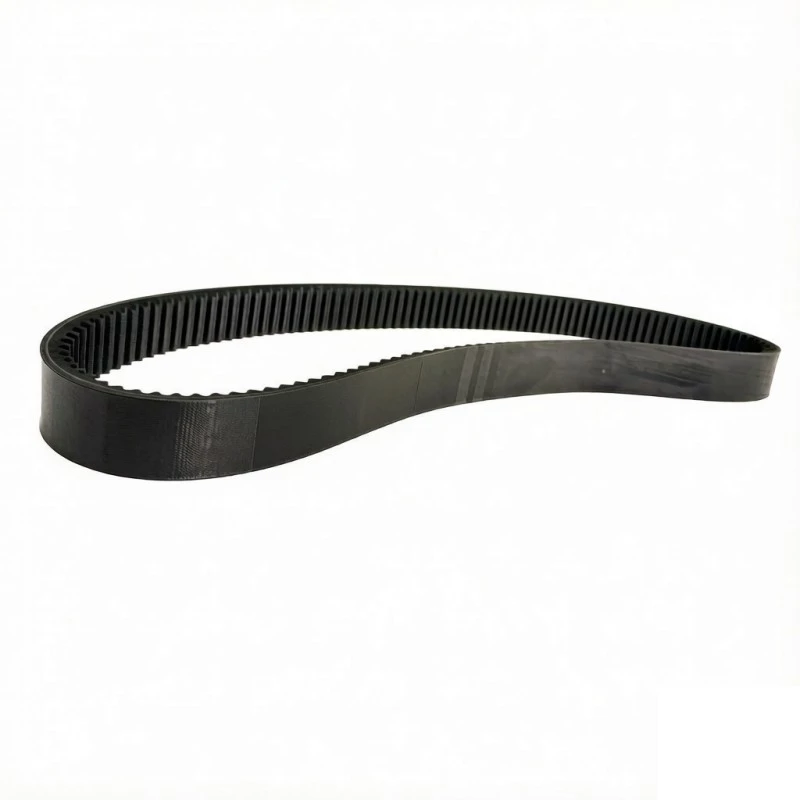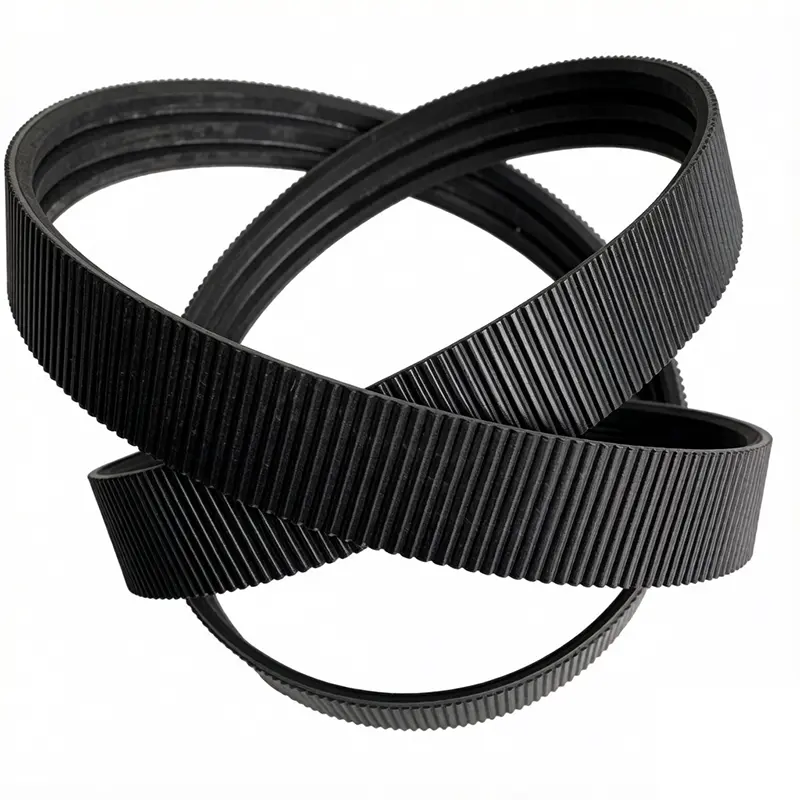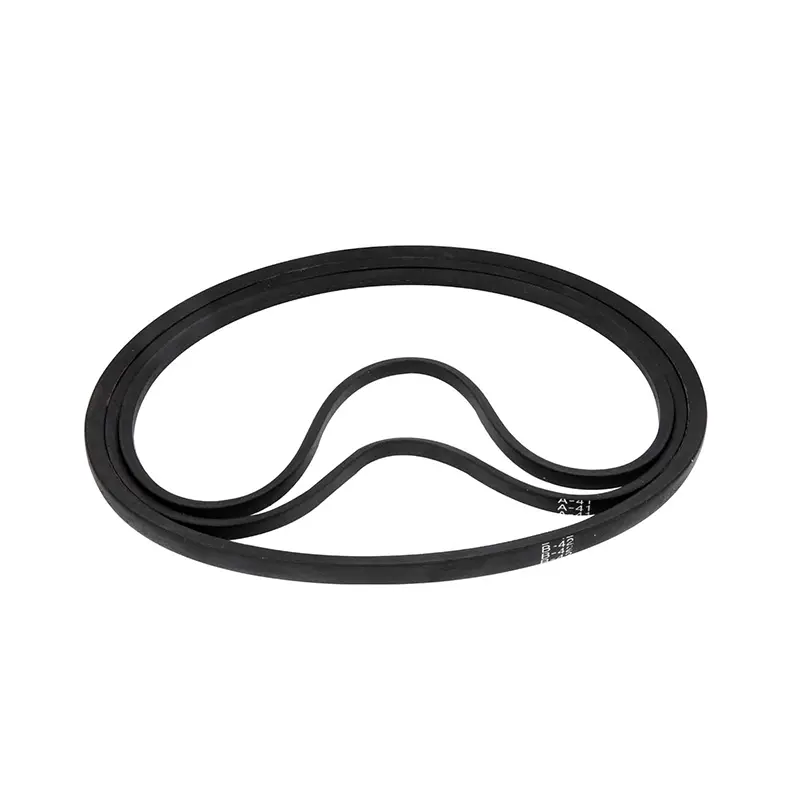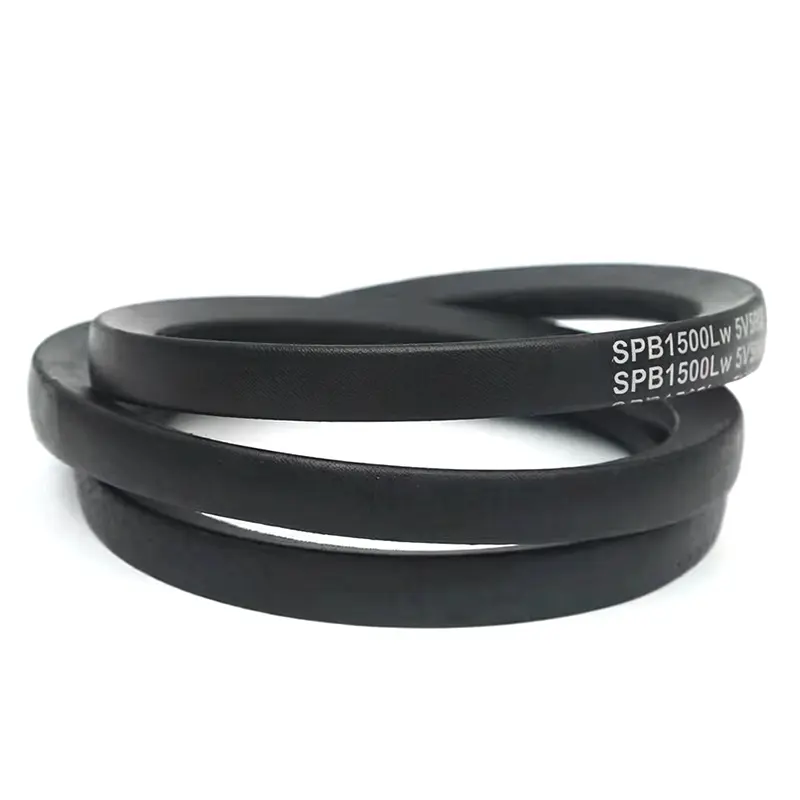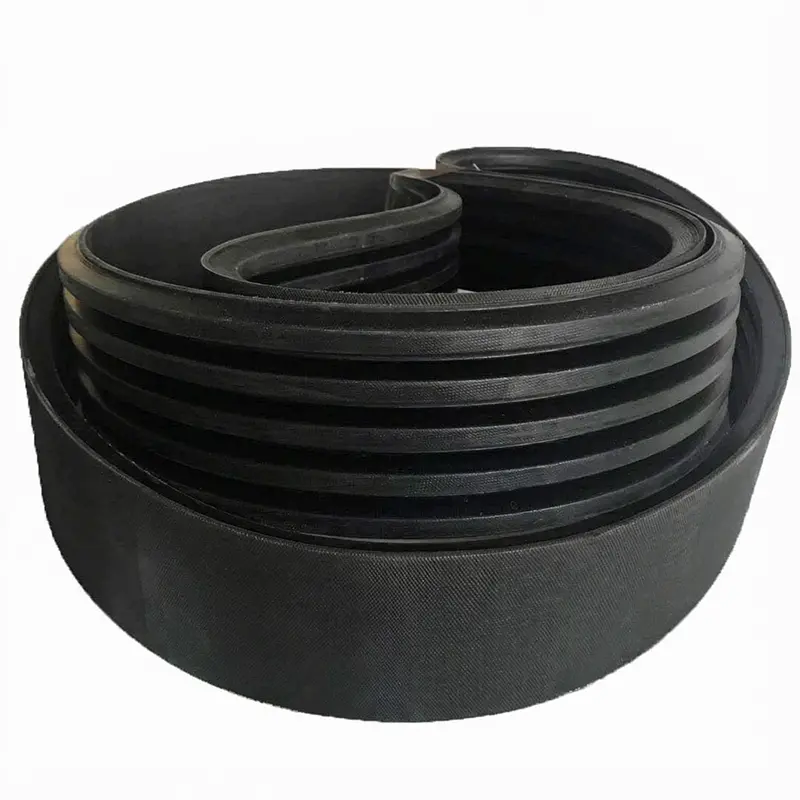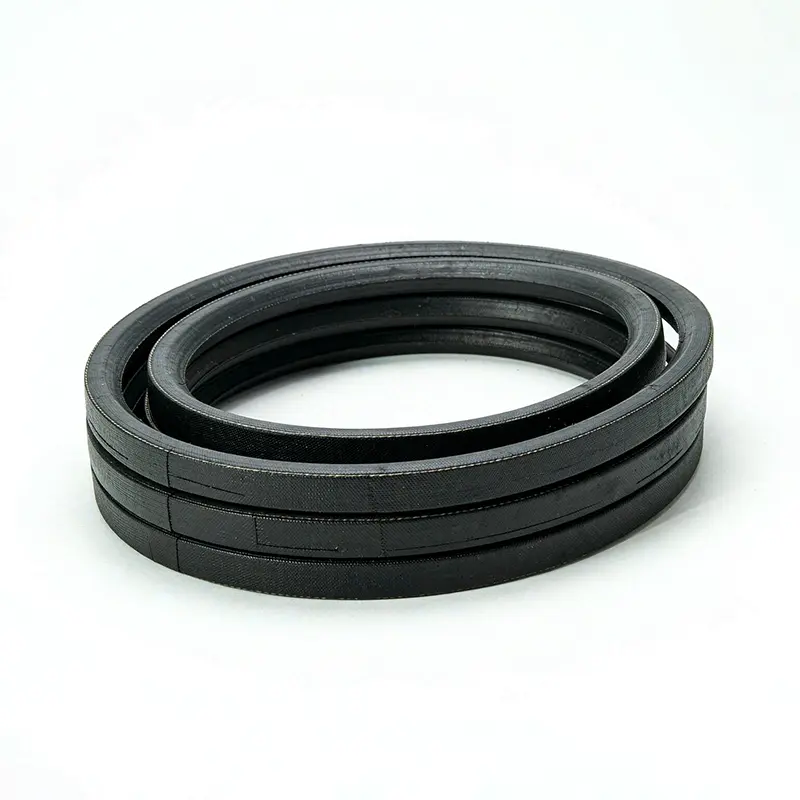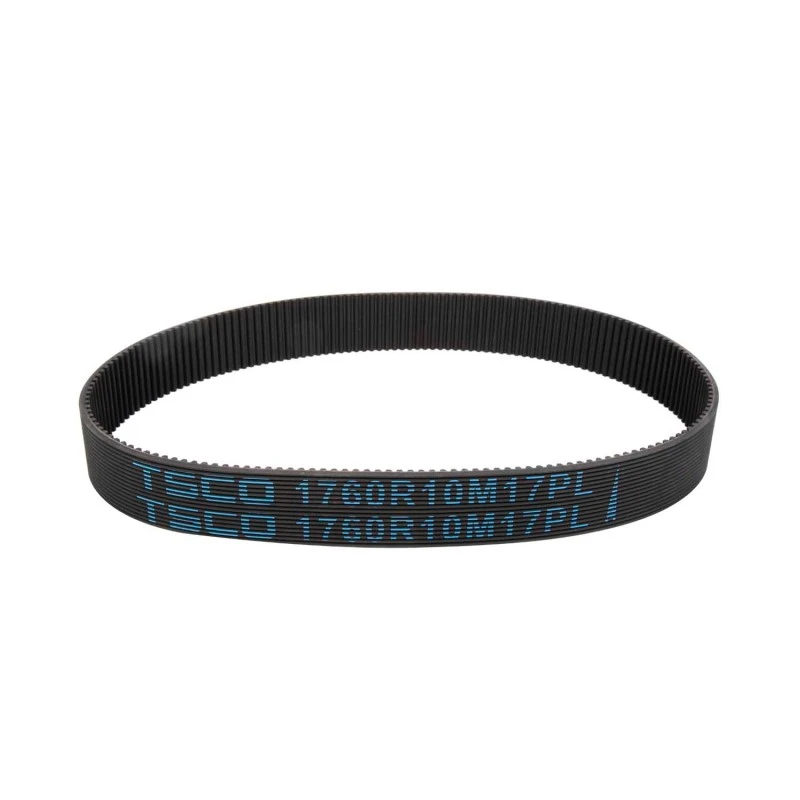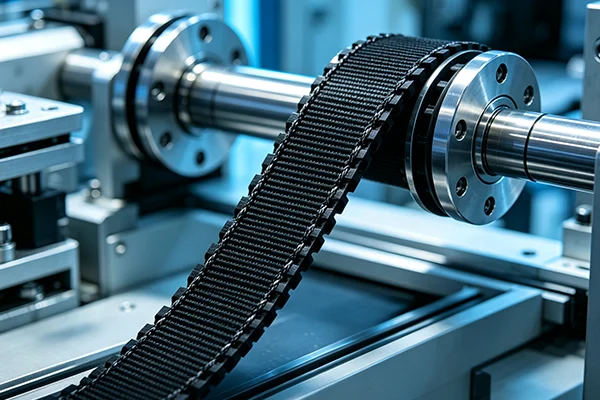


In modern power transmission systems, choosing a high-durability industrial variable speed v-belt is essential for achieving continuous, stepless speed modification without stopping machinery. Kaihong provides heavy-duty power transmission components specifically engineered for mechanical stepless variable drives across light industry, paper processing, machine tools, and automated production lines.
As an established B2B manufacturer certified with ISO 9001:2015 and ISO 14001:2015, Kaihong operates under rigorous quality control and environmentally responsible production standards. Our drive components comply fully with the Chinese National Standard GB/T 15327—2018, delivering high cord adhesion strength (≥ 15.0 kN/m) and fatigue endurance (≥ 200 h) for demanding industrial buyers worldwide.


The primary design distinction of an industrial variable speed v-belt lies in its wide, flat cross-sectional geometry. The relative height ratio (belt height h divided by pitch width bp) is maintained at approximately 0.32, compared to roughly 0.7 for standard V-belts and 0.9 for narrow V-belts.
Because stepless speed variation relies on changing the effective pitch diameter of conical pulley discs, the belt must move freely in the radial direction inside the pulley groove.
The flatter profile allows unhindered radial movement between variable pulley sheaves, effectively widening the achievable speed ratio range without causing mechanical binding or premature wedging.
The expanded base width provides high resistance against transverse deformation. When subjected to severe axial clamping forces from variable discs, the belt resists collapsing inward, thereby eliminating power loss and slip.
Every high-performance industrial variable speed v-belt from Kaihong features specialized compound layering built to handle severe dynamic bending and continuous sliding friction.
| Layer | Material | Function |
| Outer cover | Rubber-impregnated canvas (wrapped type) | Wear resistance; withstands disc clamping and axial sliding friction |
| Top compound | High-elasticity rubber | Absorbs bending tension; fast recovery |
| Tensile member | Low-elongation polyester cord | The load-carrying carcass, located at the pitch line |
| Base compound (compression layer) | High-elasticity rubber | Contacts the disc faces to transmit power; heat and wear resistance are critical |
Unlike conventional belts, the load-bearing polyester tensile cord is placed intentionally low within the cross-section. The height above the pitch line (ho) is roughly one-quarter of total height (0.25h), while the height below (hu) accounts for three-quarters (0.75h). This lowered center of tension prevents twisting and maintains running stability within conical sheaves.
The wrapped type is enclosed in a heavy-duty rubber-impregnated fabric jacket. This protective layer delivers maximum lateral rigidity and superior resistance against continuous side sliding friction, making it the preferred choice for heavy-load industrial equipment.
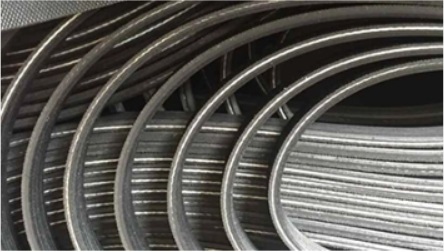
The raw-edge cut construction exposes the internal rubber compound along the sidewalls. This design yields significantly higher flexibility and faster heat dissipation, making it ideal for high-speed operation on small pulley diameters.
Implementing a wide-section industrial variable speed v-belt in mechanical speed changers offers several cost and engineering benefits over complex electrical or hydraulic drives.
Engineers can seamlessly adjust operational speed ratios on the fly during machinery operation, completely bypassing the need to stop motors or manually shift mechanical gears.
With a low aspect ratio of 0.32, the physical structure maintains exceptional structural integrity under intense disc clamping force, preventing dynamic belt distortion and maintaining stable output torque.
The specialized rubber compression base compound is engineered specifically to withstand thermal build-up caused by constant axial sliding contact with metal pulley faces.
By eliminating hard gear mesh contact, this flexible drive system dampens shock loads and operates with minimal noise, extending the mechanical lifespan of connected equipment.
Compared to complex variable frequency drives (VFDs) or heavy gearboxes, wide V-belt variator systems feature fewer mechanical components, lower initial capital cost, and significantly simplified maintenance routines.
Kaihong manufactures nine standard section sizes under GB/T 15327—2018. The section number indicates the nominal pitch width bp in millimeters:
| Section | Top Width b (mm) | Pitch Width bp (mm) | Height h (mm) | Above Pitch ho (mm) | Below Pitch hu (mm) |
| W16 | 17 | 16 | 6 | 1.5 | 4.5 |
| W20 | 21 | 20 | 7 | 1.75 | 5.25 |
| W25 | 26 | 25 | 8 | 2 | 6 |
| W31.5 | 33 | 31.5 | 10 | 2.5 | 7.5 |
| W40 | 42 | 40 | 13 | 3.2 | 9.8 |
| W50 | 52 | 50 | 16 | 4 | 12 |
| W63 | 65 | 63 | 20 | 5 | 15 |
| W80 | 83 | 80 | 26 | 6.5 | 19.5 |
| W100 | 104 | 100 | 32 | 8 | 24 |
This national-standard series is widely integrated into diverse mechanical speed regulation machinery across multiple manufacturing sectors.
Standard industrial speed-changing units manufactured according to JB/T 5984 wide V-belt variator engineering standards rely on these belts for smooth power transmission.
Widely utilized for continuous speed control in commercial printing presses, textile spinning frames, paper processing mills, and fabric dyeing machinery.
Serves as a reliable, energy-saving speed-control retrofit for large industrial ventilation fans, fluid pumps, and automated production conveyor lines.
Installed in spindle drives and feed control mechanisms on conventional machine tools requiring dynamic, stepless speed variations during machining cycles.
Standard Scope Exclusion Warning: GB/T 15327 explicitly excludes agricultural machinery and motor vehicles. For agricultural variators, select the HI / HJ / HK / HL / HM series under GB/T 14829. For scooters and motorcycles, specify the GB/T 18860 series. Using the incorrect standard results in groove angle and dimension mismatch.
Follow this standard 4-step engineering workflow to ensure optimal drive selection for your equipment.
Calculate the required minimum and maximum pitch diameters based on desired output speeds, then determine the appropriate belt cross-section.
Determine design horsepower by multiplying prime mover power by an appropriate operational service factor. Due to continuous axial sliding friction in variator duty, use a service factor between 1.3 and 1.6.
Choose the matching section (W16 through W100) based on design power and verify that top width, pitch width, height, and groove angle match pulley specifications precisely.
Calculate the required datum length based on the mid-position diameter of the variable sheaves. Ensure the system tensioning device can compensate for center-distance variations across the full speed range.
Always back off the tensioning mechanism completely prior to belt installation. Never force or lever belts over pulley flanges with pry bars, as this snaps internal load-bearing polyester cords.
Ensure the rotational axes of both conical disc assemblies are perfectly parallel. Inspect metal disc faces regularly for surface burrs, ridge wear, or scoring before mounting new belts.
Speed adjustments must be carried out exclusively while the drive system is running. Forcing pulley disc spacing changes while stationary will compress and severely shear internal tensile cords.
Regularly monitor sidewall wear patterns. Because side face thinning is the primary failure mode of wide V-belts, replace the belt immediately once tensile cords become visible on the side faces.
Set operating tension strictly to manufacturer specifications. Over-tensioning generates excessive heat, while under-tensioning leads to slip and belt burn. Store spare belts laid flat or hanging in a cool, dark room away from heat and oils.
No. Standard V-belts have a relative height ratio around 0.7 compared to 0.32 for an industrial variable speed v-belt. A standard belt cannot move radially within variable discs and will lock, distort, or slip immediately.
Continuous relative sliding against conical discs creates normal friction wear. However, rapid sidewall erosion usually indicates excessive belt tension, worn or scored pulley disc surfaces, or misaligned shafts.
Choose Wrapped for heavy-load equipment requiring high lateral rigidity against axial clamping forces. Choose Cut-Edge for high-rpm applications, smaller pulley diameters, or setups requiring superior heat dissipation.
No. Agricultural variators require the HI / HJ / HK / HL / HM series under GB/T 14829, which features a relative height ratio of ~0.5. The W-series dimensions and groove angles will not seat correctly in agricultural pulleys.
Looking for high-durability industrial drive belts for machinery manufacturing or aftermarket distribution? As an ISO 9001:2015 and ISO 14001:2015 certified factory, Kaihong delivers precision engineering, reliable batch consistency, and direct factory pricing.
Contact Our Technical Team: Submit your required part numbers (W16 to W100), specifications, or annual purchasing quantities today to receive a complete quotation and technical datasheet within 24 hours.
Address
No. 48 Guangming Middle Road, Sanmen County, Taizhou City, Zhejiang Province, China
Tel