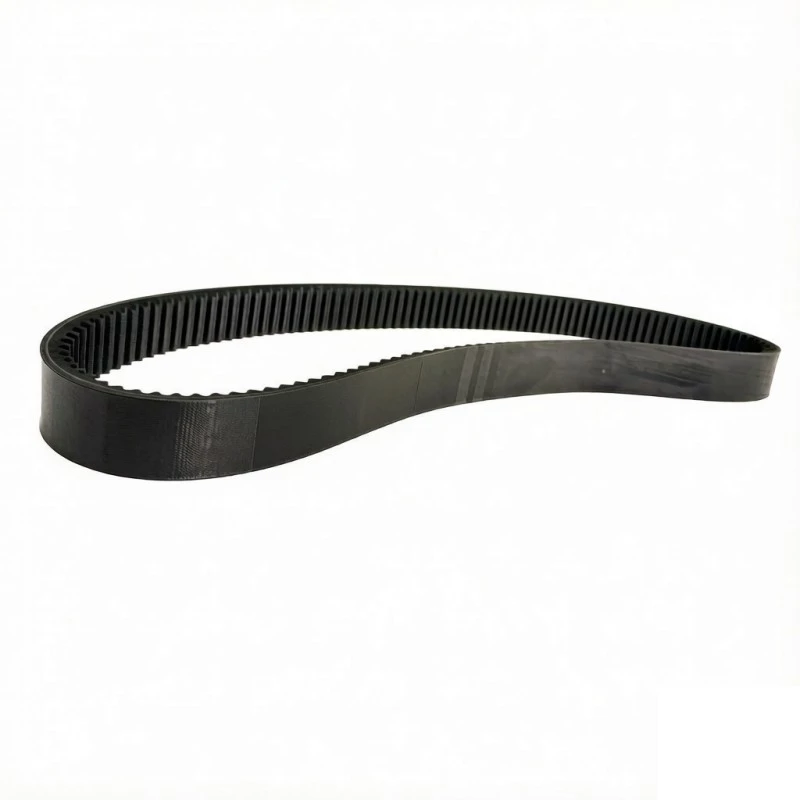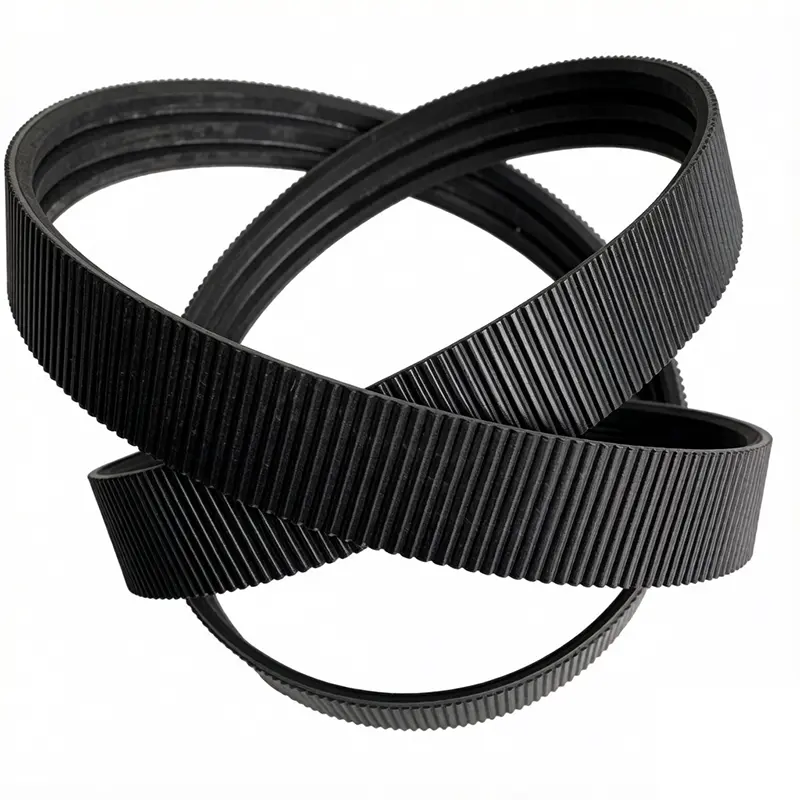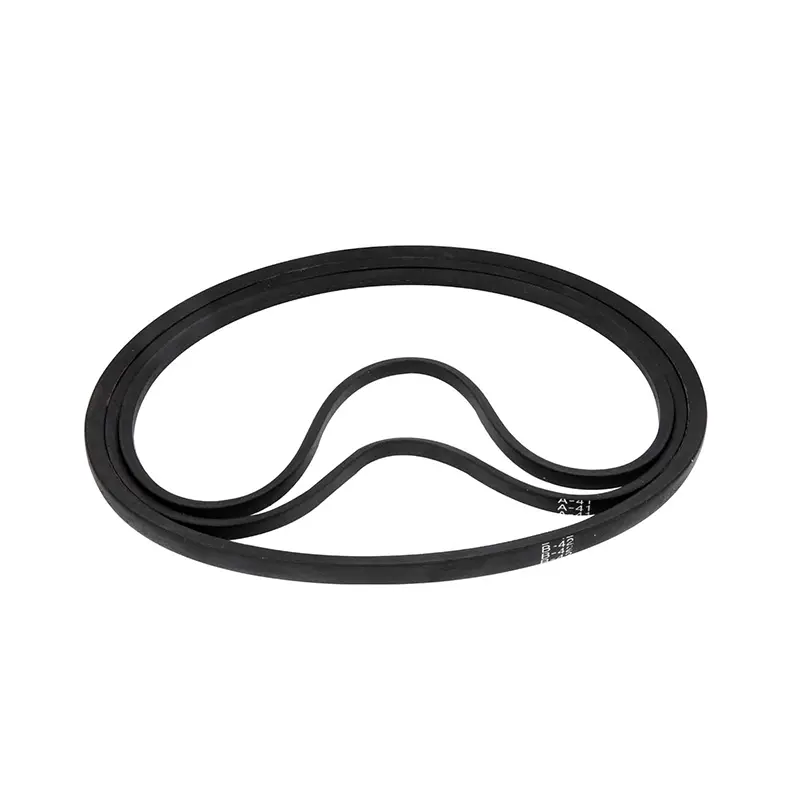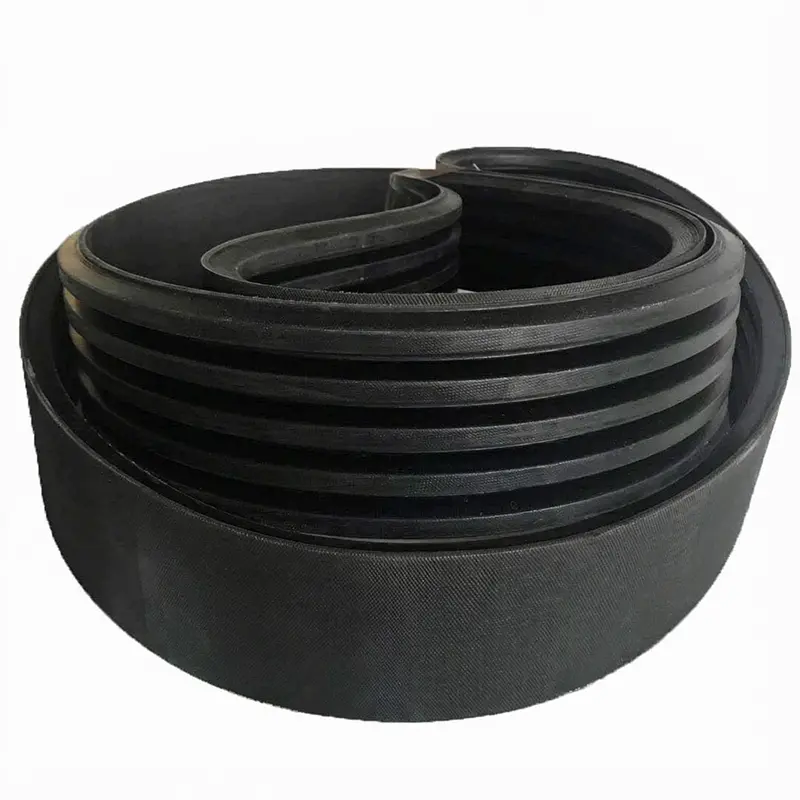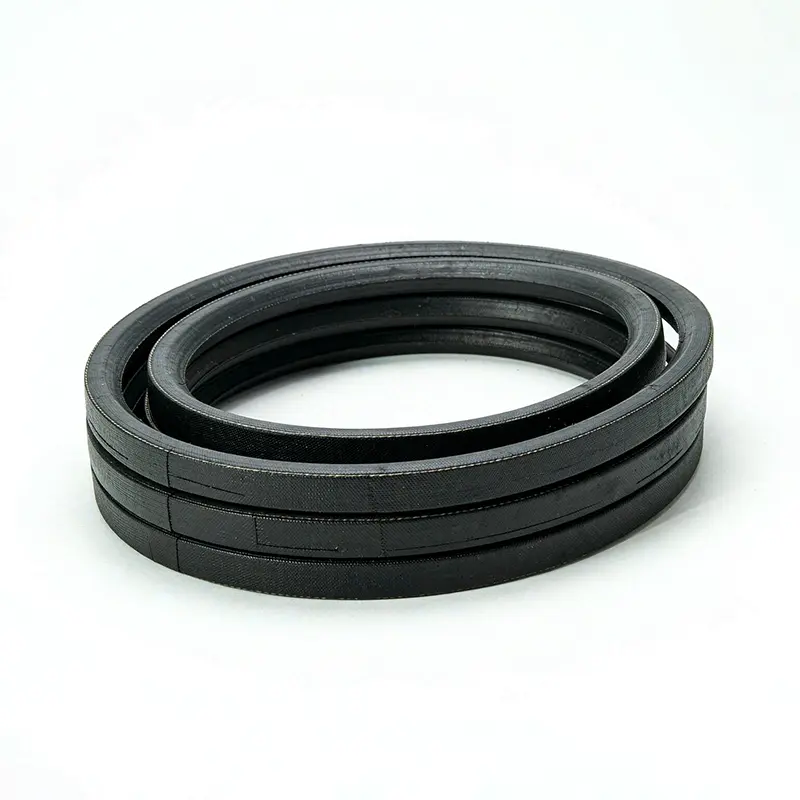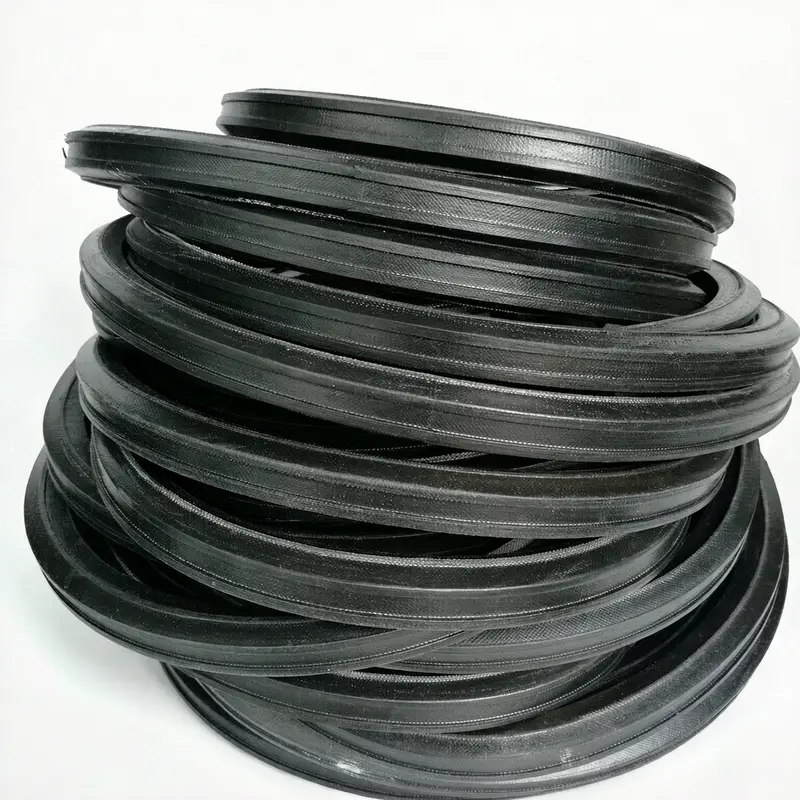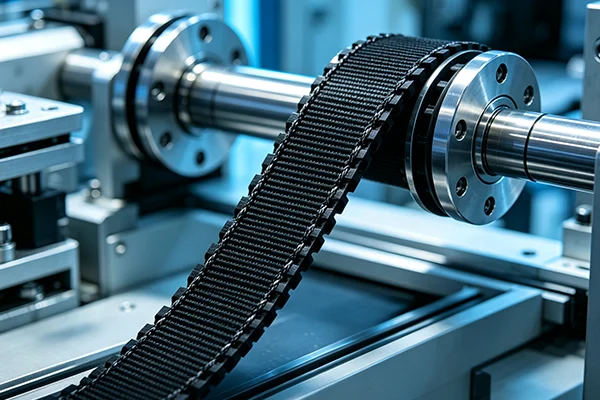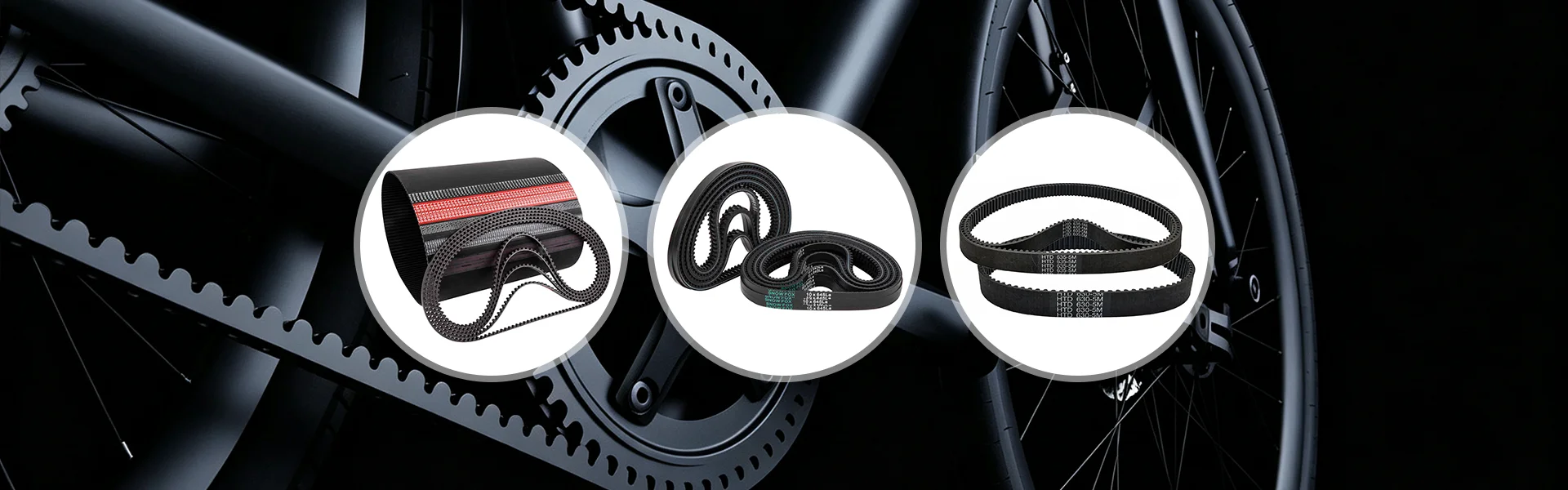
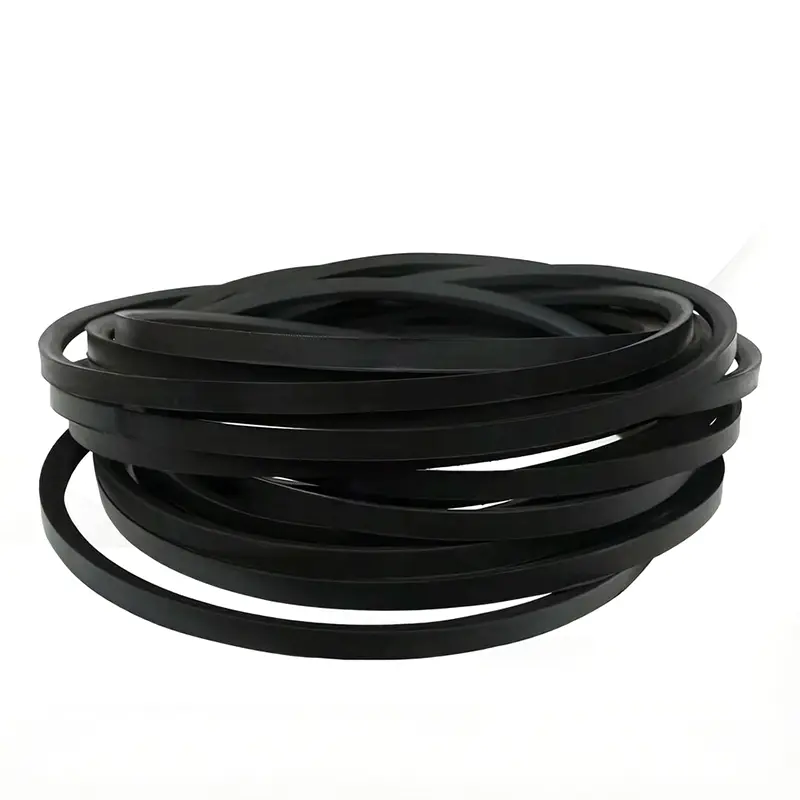
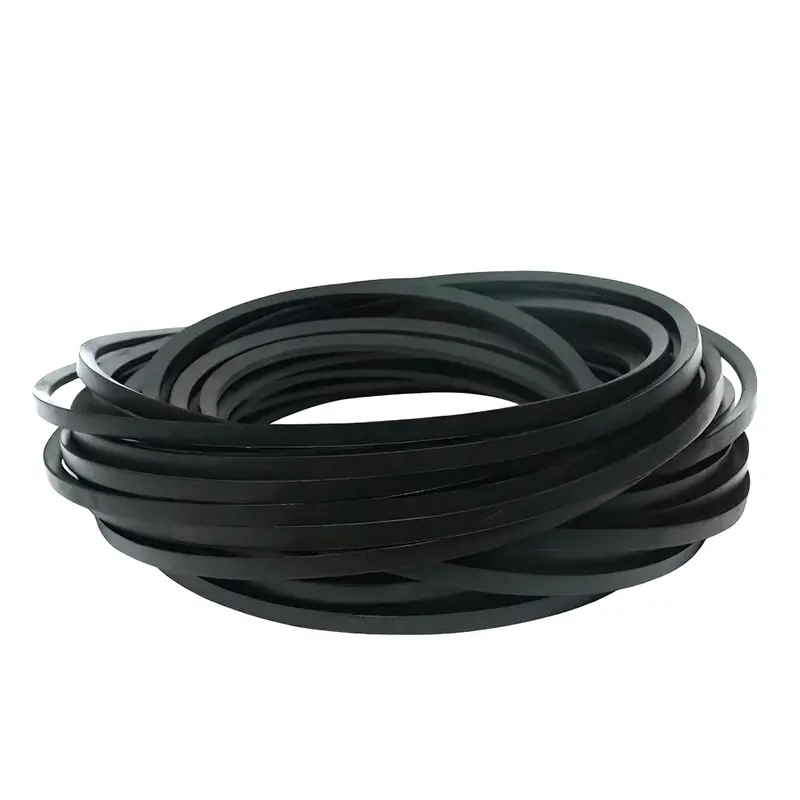
Kaihong manufactures Wrapped Narrow V-Belts for agricultural machinery, compressors, mining equipment, industrial fans, pump units, construction machinery, diesel auxiliaries, and other compact drives exposed to dust, oil mist, shock, vibration, and continuous loads.
Compared with classical V-belts, the narrow wedge profile transmits more power within a smaller pulley arrangement. The rubber-dipped canvas wrapping protects the belt from abrasion and contamination, while high-modulus polyester or aramid cords provide dimensional stability and low elongation.
Depending on the belt type and operating conditions, the belt can provide approximately 50%–100% higher power capacity than classical V-belts of the same width, 90%–97% transmission efficiency, and line speeds of approximately 40–50 m/s.
|
Comparison Item |
Wrapped Narrow V-Belt |
Classical V-Belt |
|
Cross-section |
Narrow wedge profile |
Wider conventional profile |
|
Power capacity |
Approximately 50%–100% higher under comparable conditions |
Lower power capacity for the same width |
|
Installation space |
Requires less pulley width and compact drive space |
Requires more space for equivalent power |
|
Belt quantity |
Fewer belts may be required |
More belts may be required |
|
Pulley contact |
Higher wedging force and improved sidewall contact |
Standard sidewall contact |
|
Outer protection |
Fabric-wrapped surface resists abrasion and contamination |
May use wrapped or raw-edge construction depending on type |
|
Dimensional stability |
High, especially with aramid cords |
Depends on cord material and construction |
|
Typical use |
Compact, high-power, shock-loaded drives |
General-purpose industrial and agricultural drives |
|
Overload behavior |
Can provide controlled slipping during temporary overloads |
Can also slip, but may require more belts for equivalent power |
|
Maintenance space |
Reduced pulley width may simplify layout |
Larger pulley arrangements may be required |
|
Comparison Item |
Wrapped Narrow V-Belt |
Raw-Edge Cogged V-Belt |
|
Surface construction |
Protective fabric wrapping |
Exposed or molded cogged sidewalls |
|
Abrasion resistance |
Strong protection against dust, gravel, and repeated contact |
Good flexibility, but surface protection depends on compound |
|
Flexibility |
Suitable for standard narrow-profile pulley systems |
Often better for smaller pulley diameters |
|
Contamination resistance |
Fabric layer helps protect the rubber body |
May be more sensitive to direct abrasion and chemical exposure |
|
Noise and vibration |
Generally stable and controlled |
May provide efficient operation but can have different noise characteristics |
|
Best suited for |
Compact drives requiring protection and durability |
High-flexing drives with small pulley diameters |
|
Application Condition |
Recommended Configuration |
Main Reason |
|
Compact pulley arrangement |
SPZ, SPA, SPB, or SPC narrow section |
Higher power capacity in limited space |
|
Standard agricultural drive |
Polyester cord construction |
Balanced cost and performance |
|
High shock load or high power |
Aramid cord construction |
Higher tensile strength and lower elongation |
|
Dust, gravel, or oil mist |
Wrapped construction with suitable rubber compound |
Improved surface protection |
|
Small pulley diameter |
Confirm minimum pulley diameter before selection |
Prevents excessive bending stress |
|
Multi-belt drive |
Same type, length, construction, and production batch |
Improves load sharing and belt matching |
|
Exact synchronization required |
Synchronous belt instead of Wrapped Narrow V-Belt |
Positive tooth engagement |
|
Temporary overload protection preferred |
Wrapped Narrow V-Belt |
Controlled slip can reduce shock transfer |
|
Type |
Pitch Width |
Belt Width |
Thickness |
Angle |
|
SPZ |
8.5 mm |
10 mm |
8 mm |
40° |
|
SPA |
11 mm |
13 mm |
10 mm |
40° |
|
SPB |
14 mm |
17 mm |
14 mm |
40° |
|
SPC |
19 mm |
22 mm |
18 mm |
40° |
|
Type |
Pitch Width |
Belt Width |
Thickness |
Angle |
|
9N / 9NJ |
Not applicable |
9.5 mm |
8 mm |
40° |
|
15N / 15NJ |
Not applicable |
16 mm |
13.5 mm |
40° |
|
25N |
Not applicable |
25.5 mm |
23 mm |
40° |
Actual dimensions, tolerances, belt lengths, and performance ratings should be confirmed according to the selected standard, pulley design, and application.
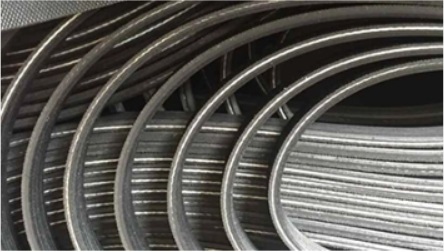
The belt uses a composite structure with rubber-dipped polyester-cotton or polyester canvas wrapping. This outer layer helps resist abrasion from dust, mud, gravel, and oil mist while protecting the belt during repeated pulley contact.
The top rubber layer absorbs impact and supports belt-back stability. Fiber-reinforced cushion rubber improves adhesion between the internal layers and helps reduce delamination during continuous operation.
Polyester or aramid tensile cords provide low elongation and stable power transmission. Fiber-reinforced compression rubber improves lateral stiffness, heat resistance, and pulley engagement.
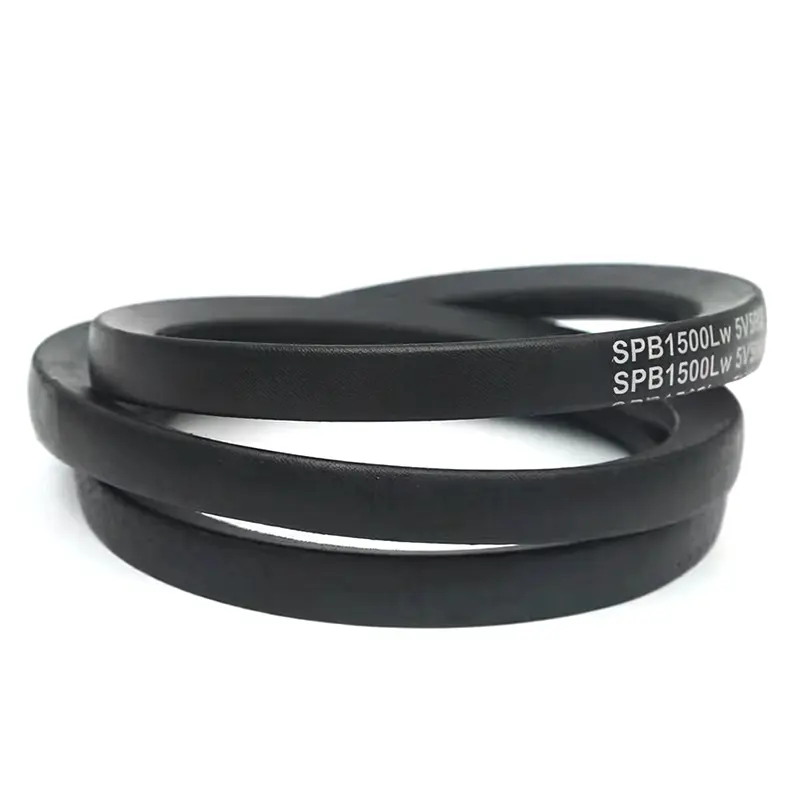
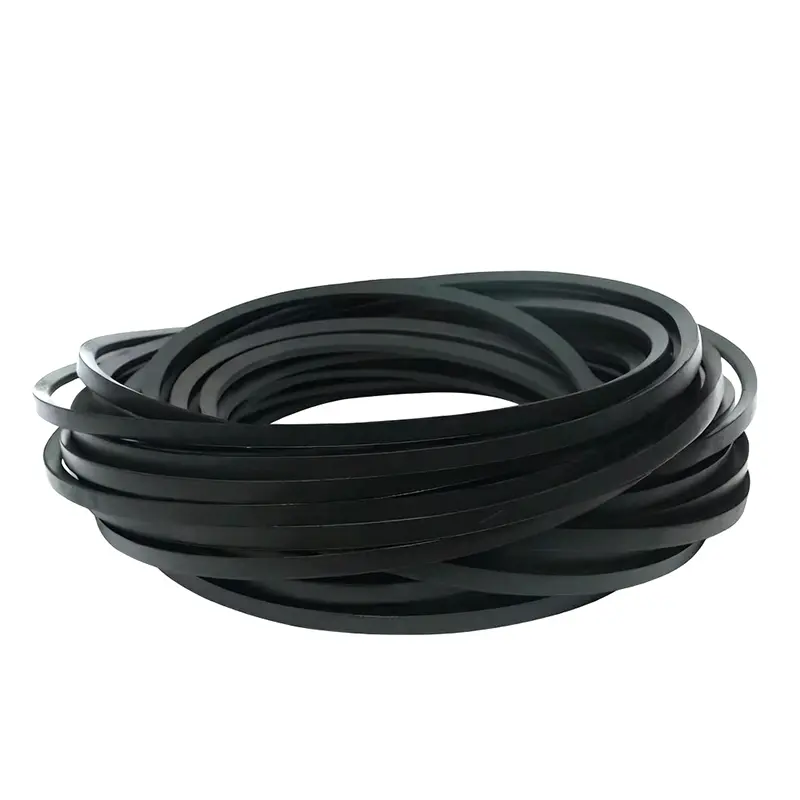
The standard wedge angle is 40°. Its narrow profile and concave sidewalls improve pulley contact and wedging force, allowing higher power transmission in a compact drive. In some applications, one SPB belt may replace approximately two to three classical B-section belts, reducing pulley width and maintenance requirements.
Reference minimum pulley diameters may include approximately 63 mm for SPZ, 90 mm for SPA, 140 mm for SPB, and 224 mm for SPC. Actual limits depend on belt length, speed, load, and equipment design.
Wrapped Narrow V-Belts are used in combine harvesters, balers, tillers, corn harvesters, and other agricultural machinery. They are also suitable for air compressors, blowers, cooling tower fans, ventilation systems, and pump units.
For mining and material-handling equipment, applications may include crushers, mixers, conveyors, vibrating screens, and sand washing machines. Other suitable equipment includes diesel engine fan drives, water pumps, generators, forklifts, and construction machinery.
The belts can also be used in textile machines, woodworking equipment, saws, printing machinery, and other industrial drives. The wrapped construction provides additional protection in environments containing dust, mud, gravel, oil mist, and vibration. Controlled slipping during temporary overloads may also help protect motors, gearboxes, and driven equipment.
Before ordering, confirm the belt section, belt length, pulley groove profile, pulley diameter, center distance, available installation space, operating speed, transmitted power, tensioning method, working temperature, contamination level, shock load, duty cycle, and expected service life.
Polyester cords are suitable for standard and heavy-duty applications. Aramid cords are recommended for higher power, higher speed, greater shock loads, lower elongation, or improved dimensional stability.
For multi-belt drives, use belts with the same type, length, construction, and production batch whenever possible. Old and new belts should not be mixed in the same drive.
Reduce the center distance or release the tensioning mechanism before installation. Never pry the belt into the pulley with a screwdriver or another sharp tool, as this may damage the wrapping, sidewalls, and tensile cords.
Set the tension according to the equipment manufacturer's specification. Incorrect tension can cause slipping, heat generation, glazing, bearing overload, and premature failure.
Check pulley alignment, groove condition, flange damage, and surface wear. As a general reference, face runout should normally remain at or below 1°, subject to the equipment specification.
Replace the complete belt set when one belt fails. Inspect the belts regularly for cracks, glazing, frayed wrapping, exposed cords, edge wear, oil saturation, abnormal dust, burning odor, vibration, slipping, and uneven tracking.
The belt does not require lubrication. Keep pulley surfaces free from oil and grease.
Store belts in a cool, dry, clean, and ventilated location away from sunlight, ozone, heat, oil, fuel, solvents, and chemicals. Keep belts in their natural loop shape and avoid sharp folding, twisting, narrow hooks, or heavy compression.
Kaihong supports SPZ, SPA, SPB, and SPC sections, as well as 9N, 9NJ, 15N, 15NJ, and 25N types. Buyers can select polyester or aramid tensile cords according to the required power, speed, and operating conditions.
Kaihong also supports application-specific rubber compounds, custom lengths and dimensions, OEM replacement development, private-label branding, laser marking, printed packaging, barcode labels, instruction cards, matched belt sets, sample testing, and technical evaluation.
Under ISO9001 and ISO14001 management systems, Kaihong controls belt dimensions, cord position, rubber hardness, tensile strength, elongation, adhesion, heat aging, abrasion resistance, surface condition, and batch consistency.
It is a high-power V-belt with a narrow wedge profile, protective fabric wrapping, reinforced rubber layers, and high-modulus tensile cords for compact and demanding drives.
Its narrow profile provides higher power capacity within a smaller cross-section, allowing fewer belts and narrower pulleys in many applications.
The canvas wrapping protects the belt from abrasion, dust, mud, gravel, oil mist, and repeated pulley contact.
Only when approved by the equipment design. A Wrapped Narrow V-Belt can tolerate controlled slipping during overloads but cannot provide the positive synchronization of a synchronous belt.
No. Lubricants reduce friction and may damage the belt.
Common causes include incorrect tension, misalignment, worn pulleys, insufficient pulley diameter, excessive speed, overload, contamination, improper installation, prying, and mixing old and new belts.
Address
No. 48 Guangming Middle Road, Sanmen County, Taizhou City, Zhejiang Province, China
Tel