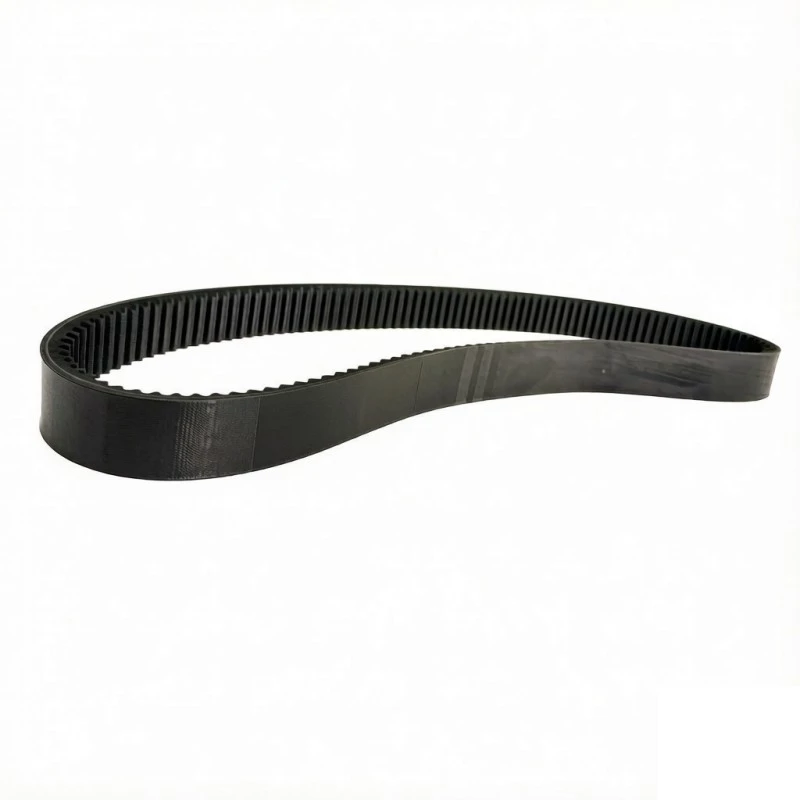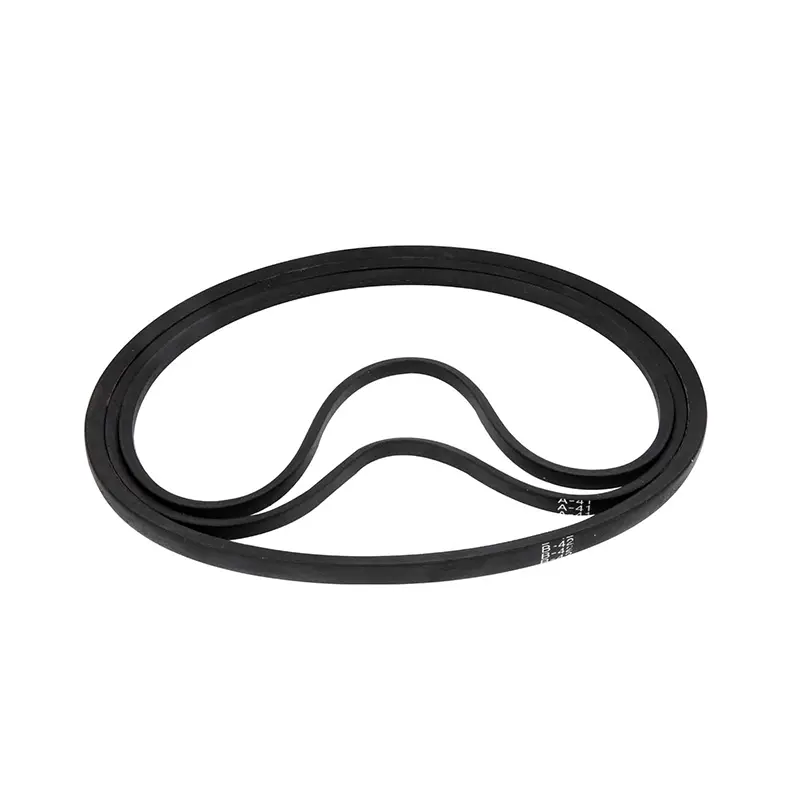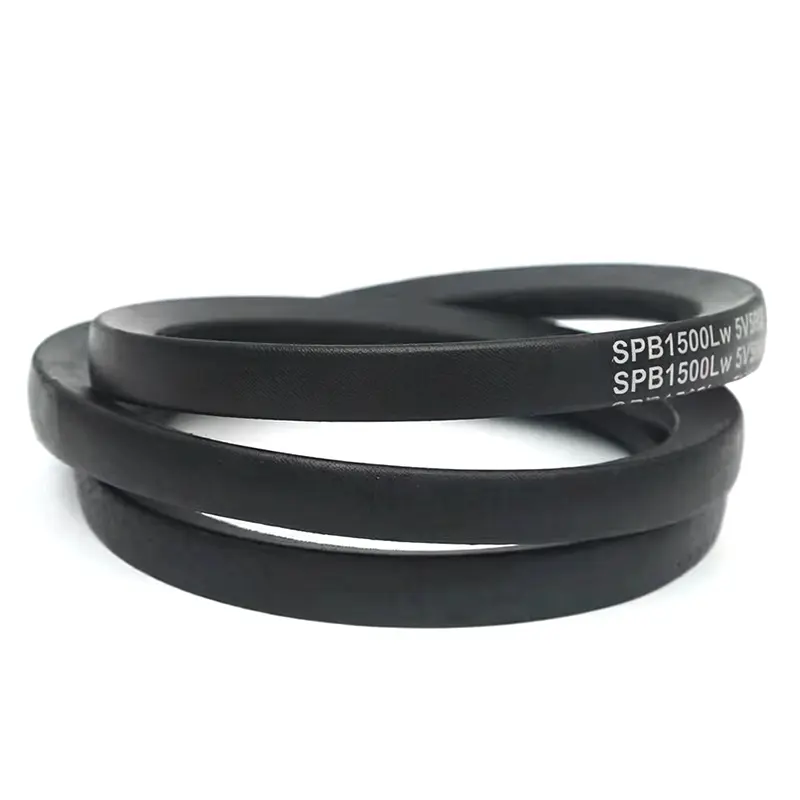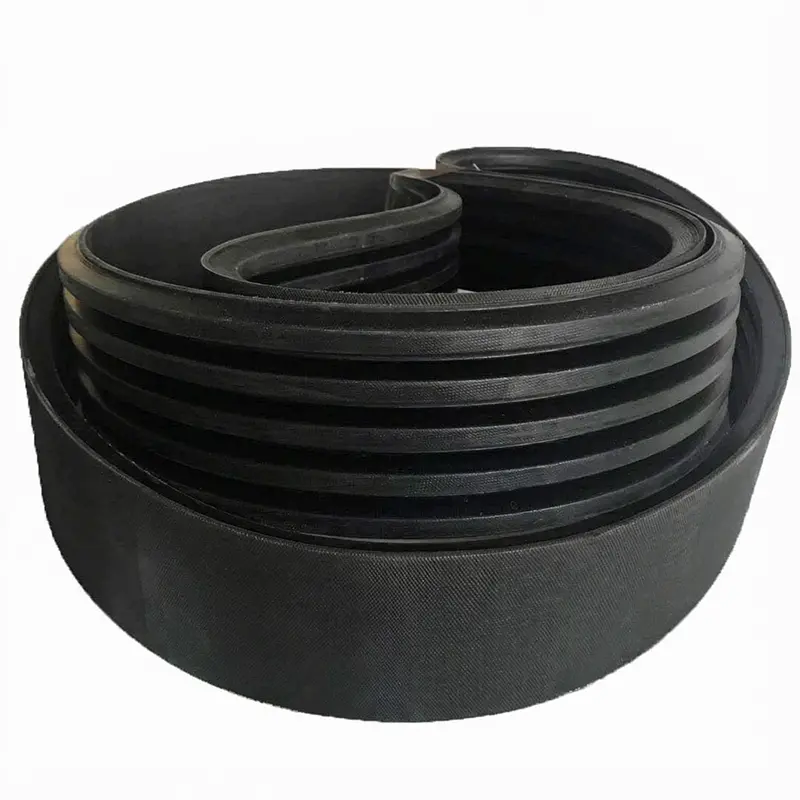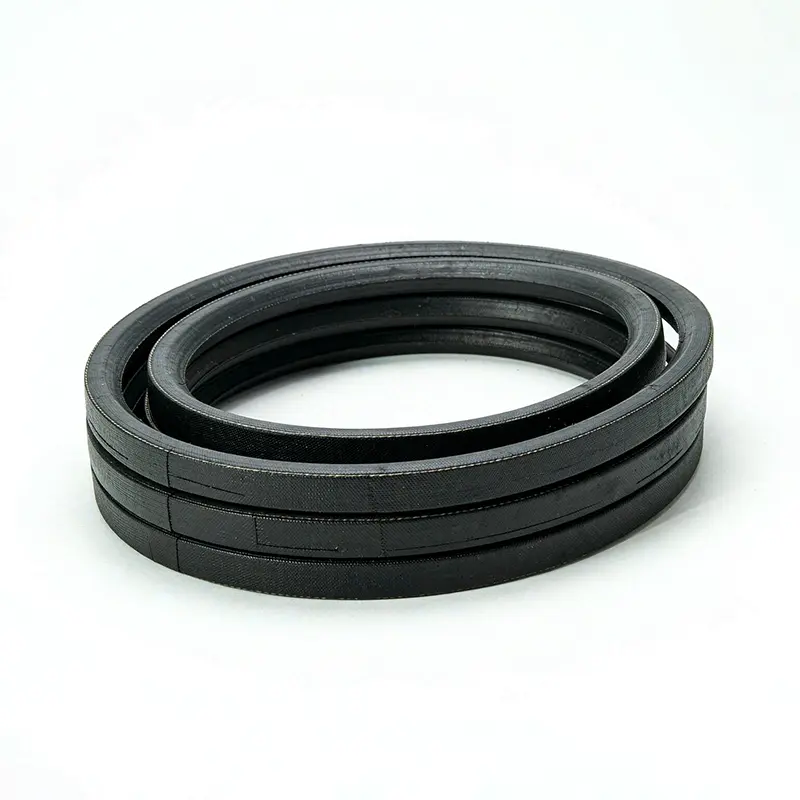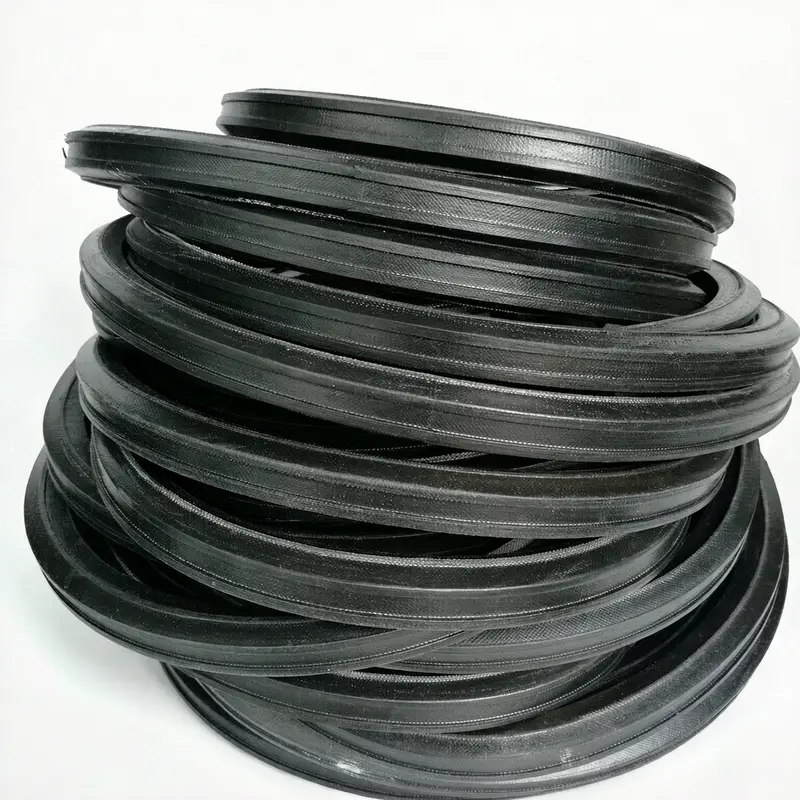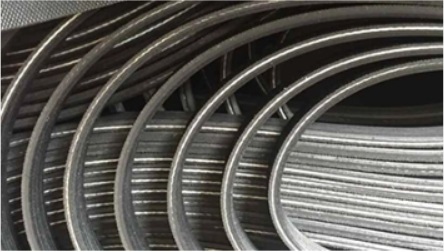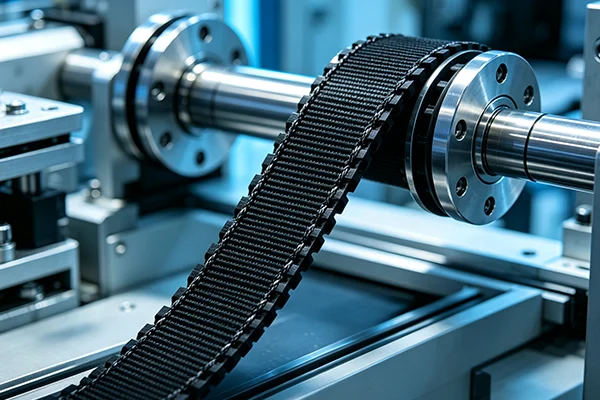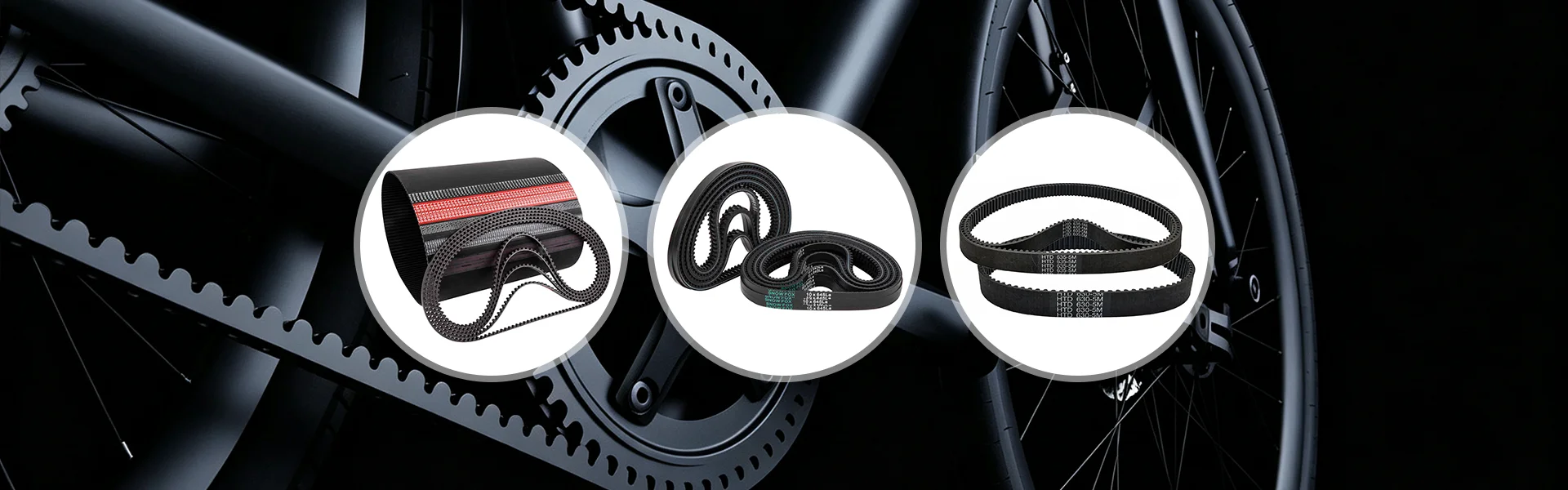
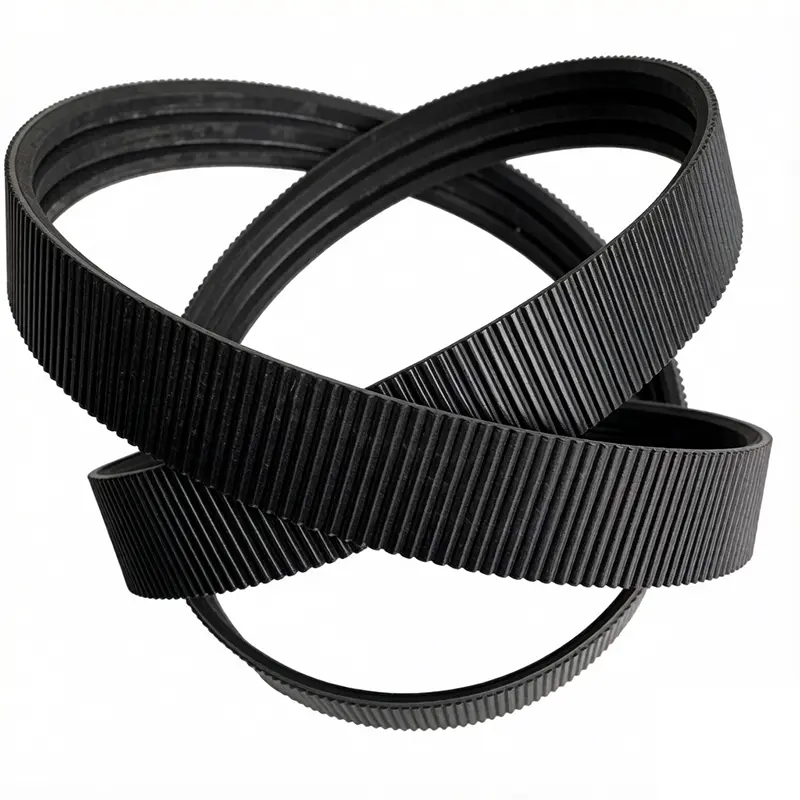
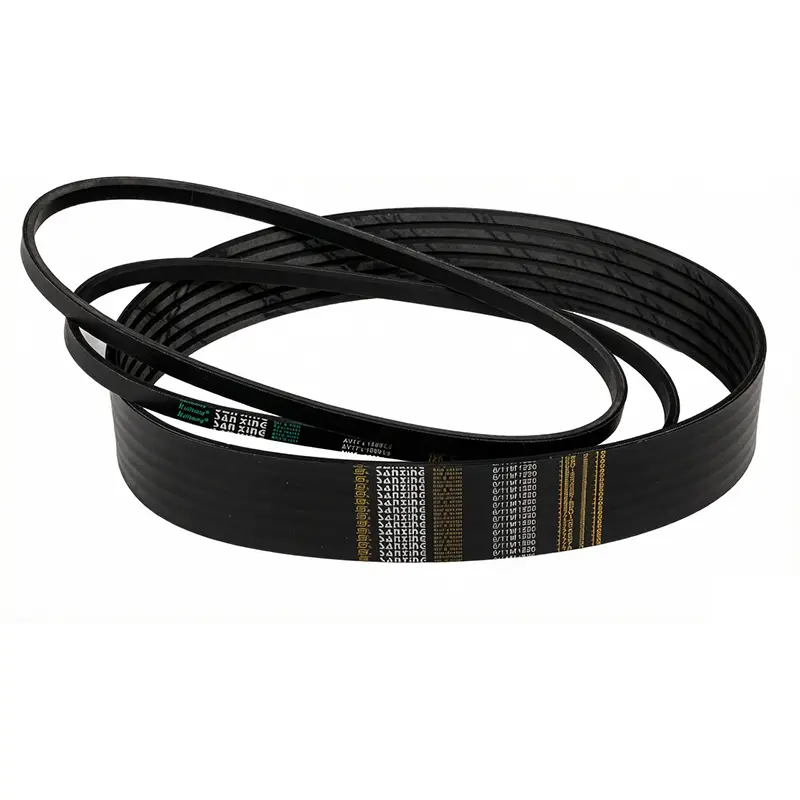
The Agricultural Single V-Belt uses a conventional trapezoidal cross-section that transfers power through friction between the belt sides and pulley grooves. Its relatively simple construction makes inspection, replacement, and routine maintenance straightforward for farm operators and equipment service teams. Kaihong offers classical profiles such as A, B, C, D, and E, as well as narrow profiles including 3VX, 5VX, and 8VX for applications where higher power transmission is required within limited installation space.
Manufactured under ISO9001 and ISO14001 certified management systems, Kaihong focuses on dimensional consistency, rubber compound stability, cord strength, and production control. The result is a belt solution designed to balance transmission performance, field serviceability, and operating cost.
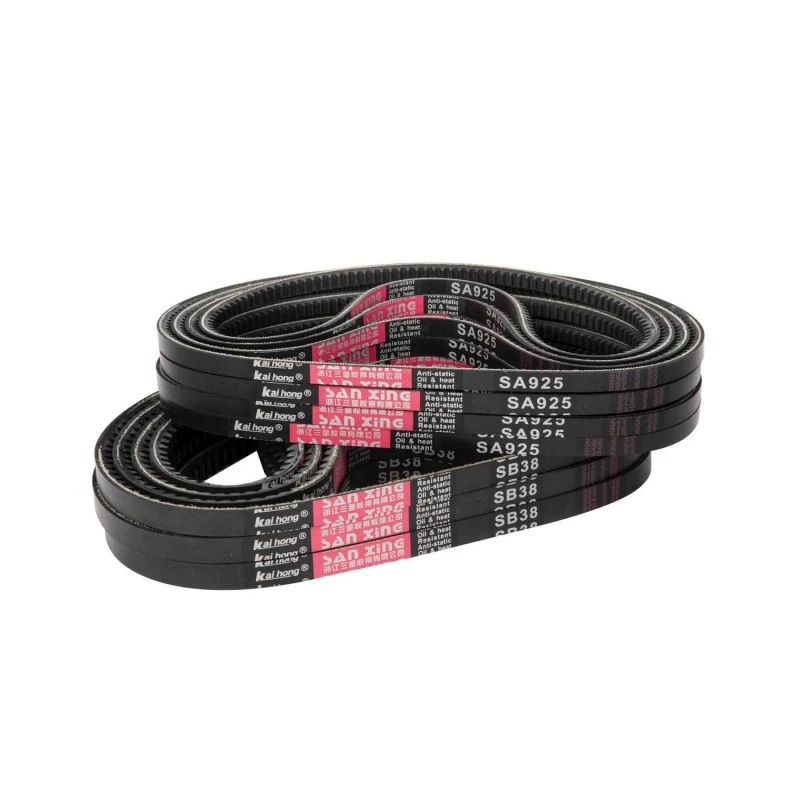
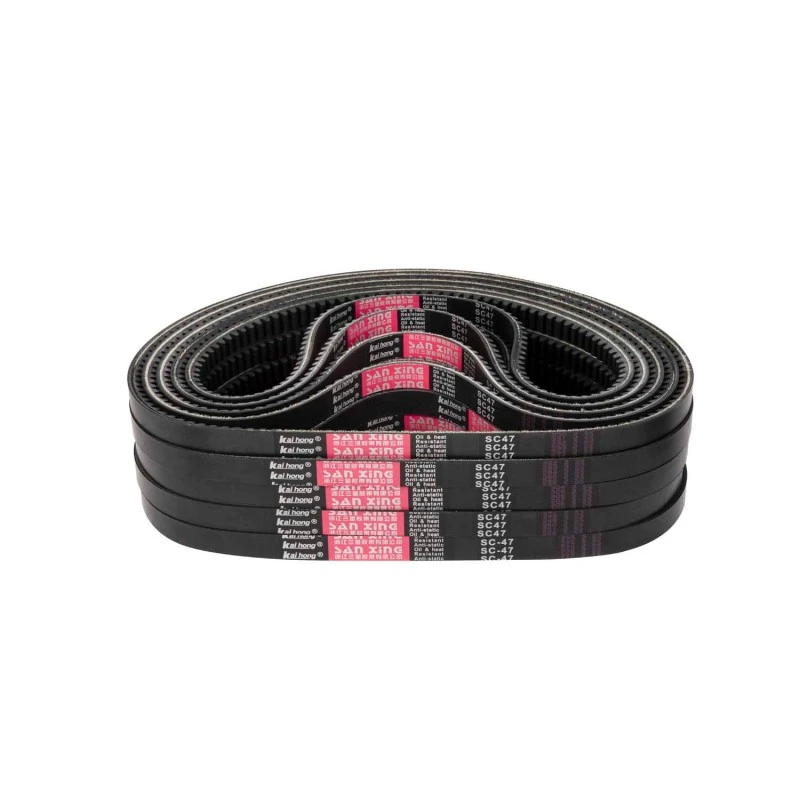
The trapezoidal profile allows the belt to grip the sidewalls of the pulley groove, converting engine or motor power into rotational movement. This friction-based transmission is suitable for many agricultural drive systems where reliable torque transfer is required without complicated belt structures.
For equipment with higher power requirements, narrow profiles such as 3VX, 5VX, and 8VX provide greater power capacity within a smaller installation area. According to the supplied product data, narrow V-belts can transmit approximately 30%–50% more power than comparable classical profiles under appropriate operating conditions.
Farm machinery is frequently exposed to diesel, lubricating oil, fertilizers, pesticides, moisture, dust, and sunlight. Belt materials that are not designed for these conditions can experience premature hardening, softening, cracking, or loss of friction.
Kaihong uses a specialized Chloroprene Rubber (CR) compound for agricultural belt applications. The material is formulated to provide resistance to common agricultural contaminants and ozone exposure, helping maintain usable performance during demanding outdoor operation.
Threshing drums, straw choppers, and other agricultural mechanisms can experience sudden resistance when crop material becomes uneven or temporarily blocks the working mechanism. A belt must withstand these changes without transferring every impact directly to the drivetrain.
The Agricultural Single V-Belt can provide controlled slippage when an abnormal load occurs, functioning as a mechanical protection point for connected components. This characteristic can help reduce the risk of severe damage to engines, gearboxes, and other expensive drivetrain components.
Uneven belt tension, poor pulley alignment, or inconsistent cord placement can result in vibration, squealing, and unstable transmission. Kaihong optimizes the cord arrangement and rubber formulation to support smoother belt movement and reduce abnormal operating noise.
This is particularly useful for machinery that operates for extended periods, where excessive vibration can affect both belt durability and the working environment for operators.
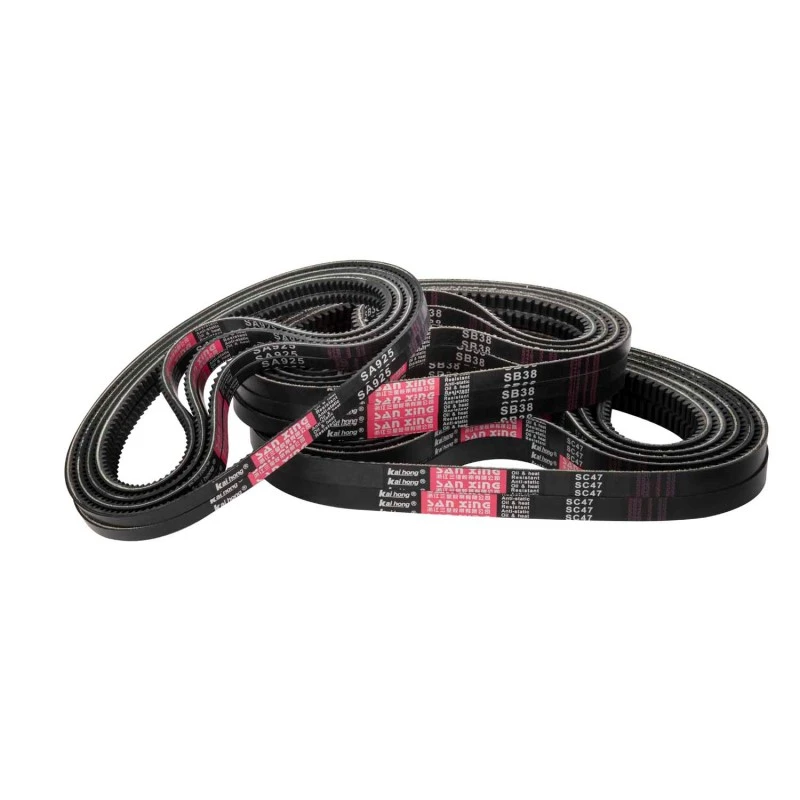
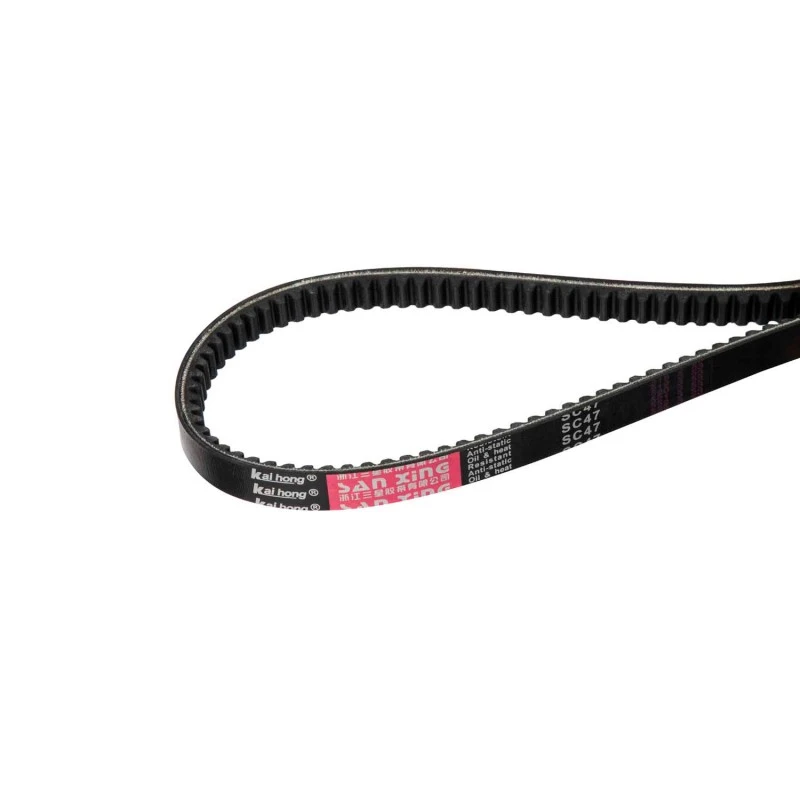
A, B, C, D, and E profiles cover a broad range of conventional agricultural drive applications. The correct profile should be selected according to the original equipment specification, pulley dimensions, transmitted power, and available installation space.
3VX, 5VX, and 8VX narrow profiles are designed for applications requiring greater power transmission from a more compact drive arrangement. They are increasingly suitable for modern medium- and large-scale agricultural machinery where available installation space is limited.
Belt selection should not be based only on external appearance. Buyers should confirm the original belt model, profile, length, pulley dimensions, and machine requirements before ordering. Incorrect selection can result in slipping, overheating, premature wear, or insufficient power transmission.
Combine harvesters use V-belt drives in threshing drums, conveyor bridges, cleaning systems, return elevators, and header transmissions. These systems require stable power transfer while operating under changing crop loads and continuous vibration.
Tractors can use agricultural V-belts for PTO systems, hydraulic pumps, fans, water pumps, alternators, and air-conditioning systems. The belt specification can be selected according to the individual drive arrangement and power requirement.
Transplanters and seeders use belt drives for seed plates, planting mechanisms, spacing adjustment systems, and press-wheel assemblies. Stable belt movement helps maintain consistent mechanical operation during field work.
Threshers, grinders, choppers, straw cutters, and water pumps can also use single V-belt drives. These applications benefit from the belt's straightforward construction and relatively convenient replacement process.
Lawn mowers, turf vehicles, and brush chippers require compact auxiliary power transmission systems. Suitable V-belt profiles can provide reliable drive performance while keeping maintenance relatively simple.
Before replacement, verify the original belt model or measure the required belt dimensions, including the inner circumference where applicable. A specialized agricultural belt should not automatically be replaced with a standard industrial belt because rubber formulation and cord construction may differ.
Inspect the pulley grooves before installing a new belt. Grooves that are excessively worn, rounded at the bottom, sharp at the edges, or misaligned can cause slipping and accelerate belt wear.
Release the tensioning mechanism, position the belt correctly inside the grooves, and gradually apply the required tension. Screwdrivers, pry bars, or other tools should not be used to force the belt onto the pulley because this may damage the outer jacket or internal cords.
Correct tension is essential for efficient transmission. As a general installation reference, belt deflection can be approximately 1.5%–2% of the center distance when checked under the appropriate measurement conditions. For a 1 m span, this corresponds to approximately 15–20 mm.
Actual tension should follow the equipment manufacturer's specifications whenever available. Excessive tension can increase bearing loads, while insufficient tension can result in slipping, heat generation, and premature wear.
When a machine uses multiple V-belts in one drive, the complete set should generally be replaced together. Combining new and significantly worn belts can create length and tension differences, resulting in uneven load distribution.
Keep the belt and pulley surfaces clean during installation. Oil contamination can cause rubber to swell or soften and may reduce the friction required for reliable power transmission.
Replacement belts should be stored in a cool, dry location away from direct sunlight, excessive heat, heavy pressure, and deformation. Proper storage helps preserve the material properties before installation.
Extensive longitudinal cracks or severe bottom rubber crazing indicate that the belt material has deteriorated and should be replaced.
Severe jacket wear or separation that exposes the internal cords is a clear indication that the belt has reached an unsafe condition.
If the belt continues to slip after proper tension adjustment, significant elongation or material deterioration may have occurred. Continued operation can reduce transmission efficiency and increase heat generation.
Persistent squealing, vibration, belt jumping, or irregular movement should be investigated promptly. These symptoms may result from belt wear, incorrect tension, pulley misalignment, or other drive-system problems.
Blistering, separation between belt layers, or visible delamination indicates structural deterioration. The affected belt should be replaced rather than operated until the next scheduled maintenance interval.
Although standard industrial V-belts may appear similar and can have a lower initial purchase price, agricultural machinery creates additional requirements. Field equipment is exposed to dust, moisture, agricultural chemicals, temperature changes, vibration, and sudden impact loads that can accelerate belt deterioration.
Professional agricultural belts use materials and cord structures selected for these conditions. Kaihong Agricultural Single V-Belt uses specialized CR compound technology and pre-tensioned polyester cords to provide a balance of flexibility, strength, and environmental resistance.
For a medium-sized combine harvester, the supplied application information indicates that a standard industrial belt may require approximately 3–4 replacements per harvest season, while a professional agricultural belt can potentially operate for 1–2 full seasons under suitable conditions. Actual service life depends on machine design, load, operating environment, maintenance, and installation quality.
When downtime, field labor, emergency repairs, and crop-season interruptions are included in the total operating cost, a belt designed specifically for agricultural machinery can provide better overall value than selecting solely according to initial purchase price.
Kaihong operates its belt manufacturing under ISO9001 quality management and ISO14001 environmental management systems. Production controls cover material preparation, belt forming, curing, dimensional inspection, and finished-product evaluation.
The use of specialized rubber compounds and pre-tensioned polyester cords is combined with controlled manufacturing processes to maintain consistent belt dimensions and structural performance. This supports reliable fitting and repeatable operation for agricultural equipment manufacturers, machinery distributors, and replacement-parts suppliers.
They are widely used in combine harvesters, tractors, threshers, transplanters, seeders, straw choppers, water pumps, grain-handling equipment, and turf machinery.
Classical profiles include A, B, C, D, and E. Narrow profiles include 3VX, 5VX, and 8VX. Narrow profiles are designed to transmit more power within a smaller installation space and are commonly considered for modern high-capacity machinery.
It should not be substituted without confirming the equipment and belt requirements. Agricultural belts may use different rubber compounds and cord constructions to withstand outdoor exposure, agricultural contaminants, and shock loads.
Confirm the original belt model, profile, length, pulley dimensions, machine type, and operating requirements. Providing the original belt number or equipment model to the supplier is recommended when available.
Replace the Agricultural Single V-Belt when significant cracking, cord exposure, delamination, excessive elongation, persistent slipping, abnormal vibration, or unusual noise is observed. Waiting for complete belt failure can create unnecessary equipment downtime.
Address
No. 48 Guangming Middle Road, Sanmen County, Taizhou City, Zhejiang Province, China
Tel