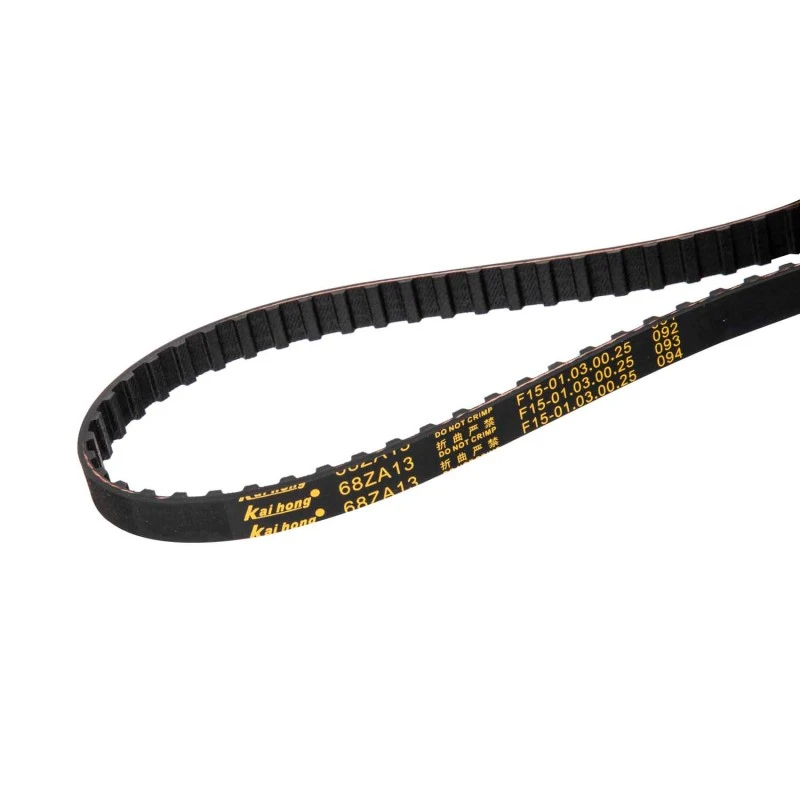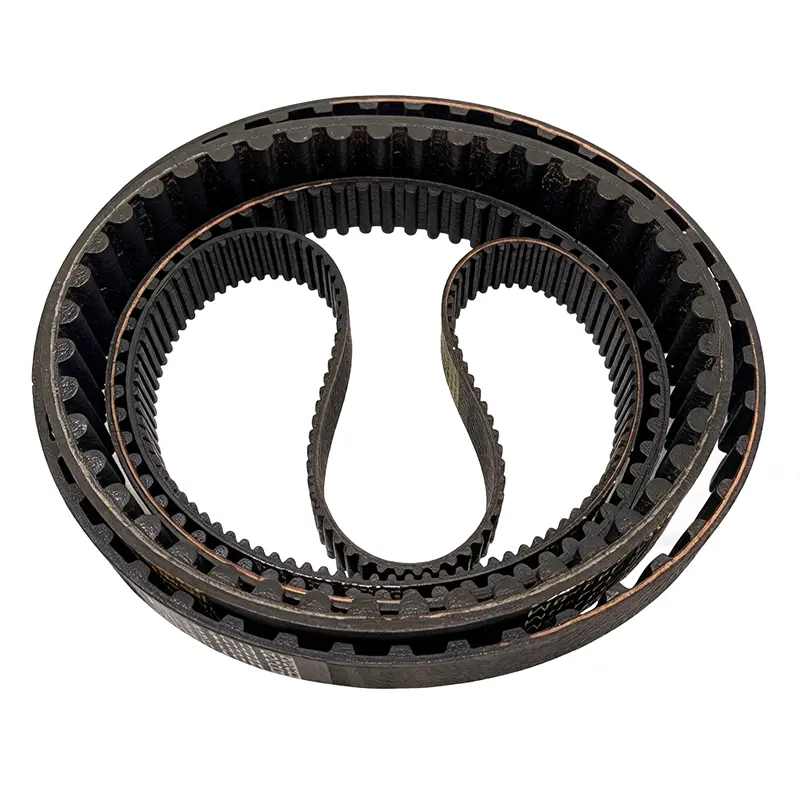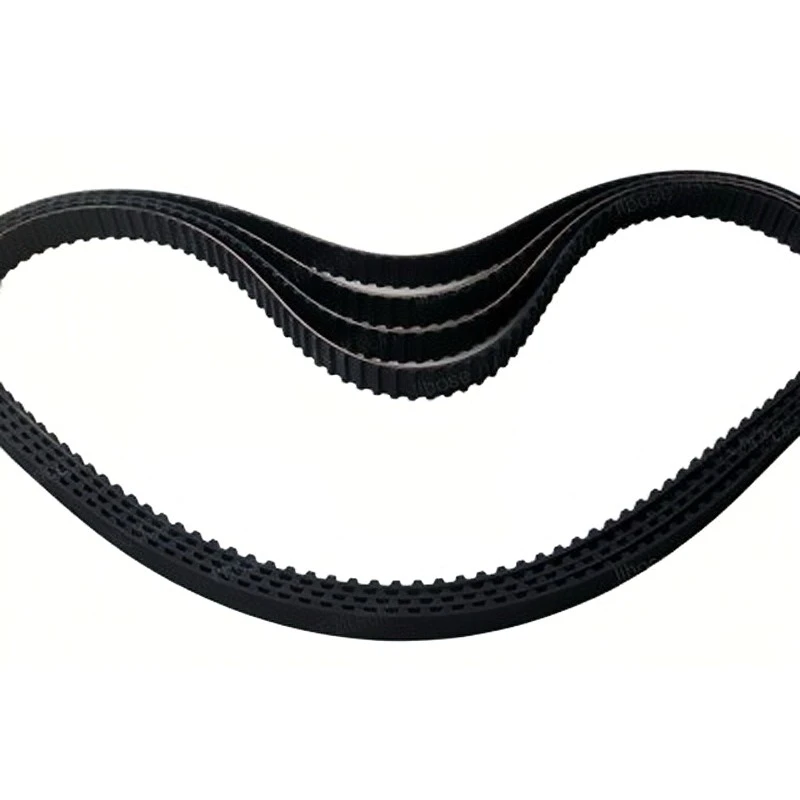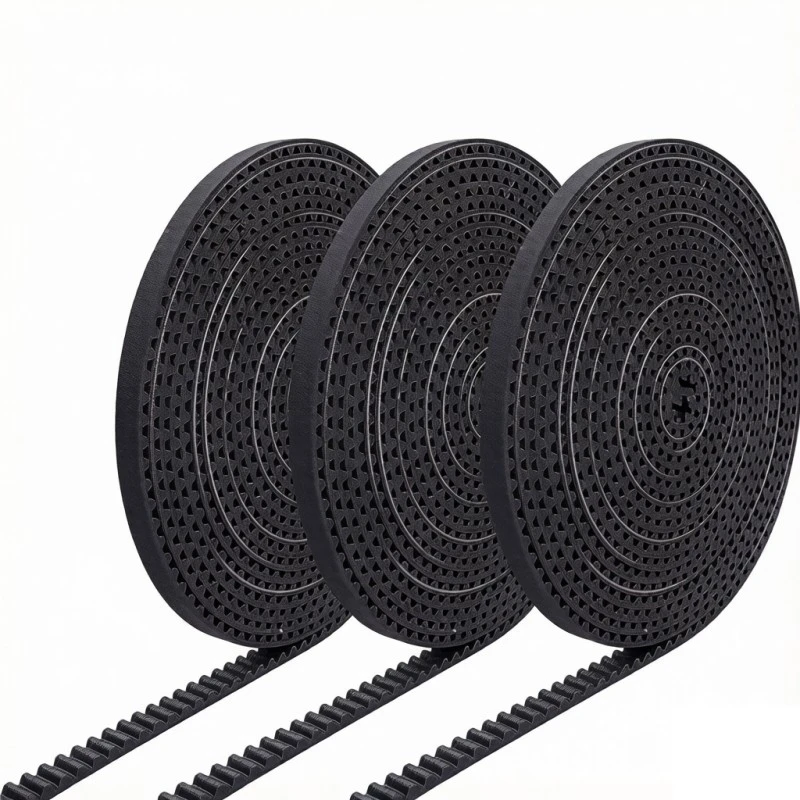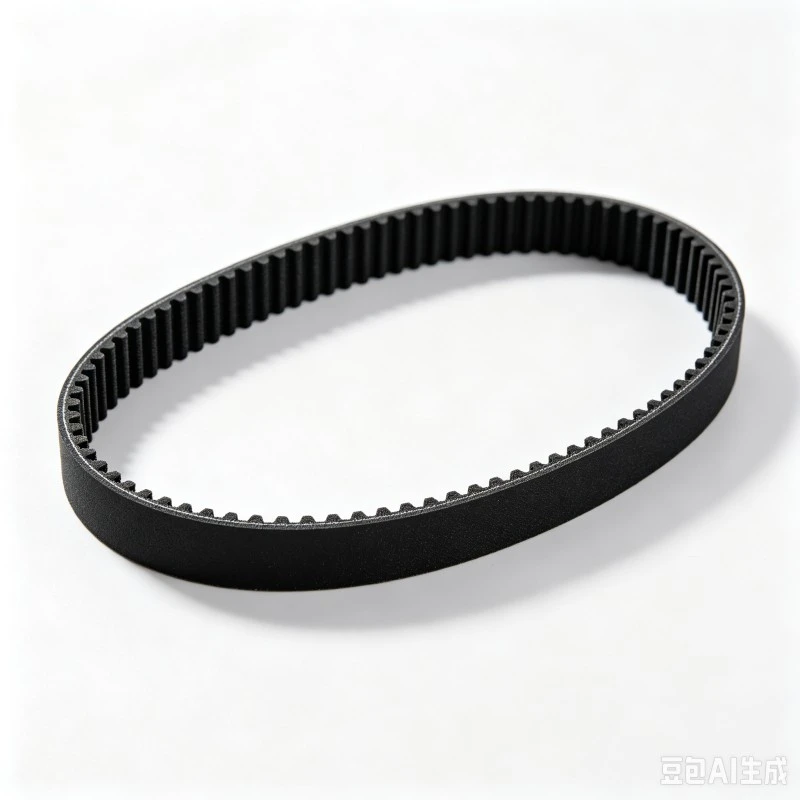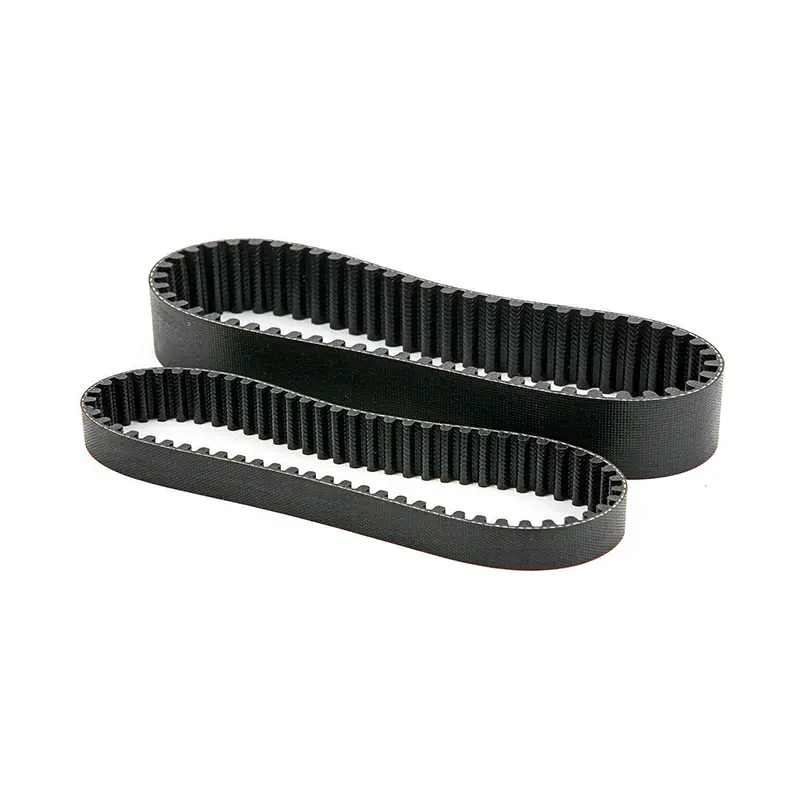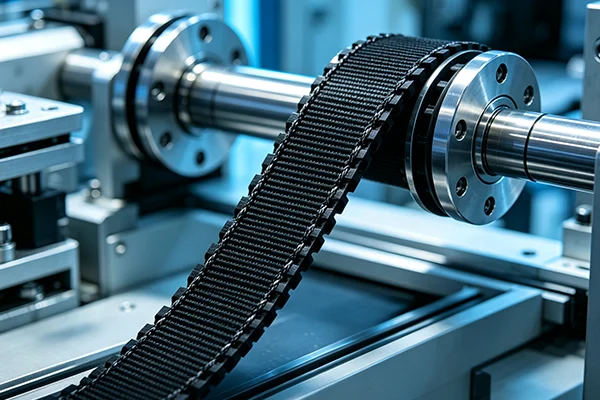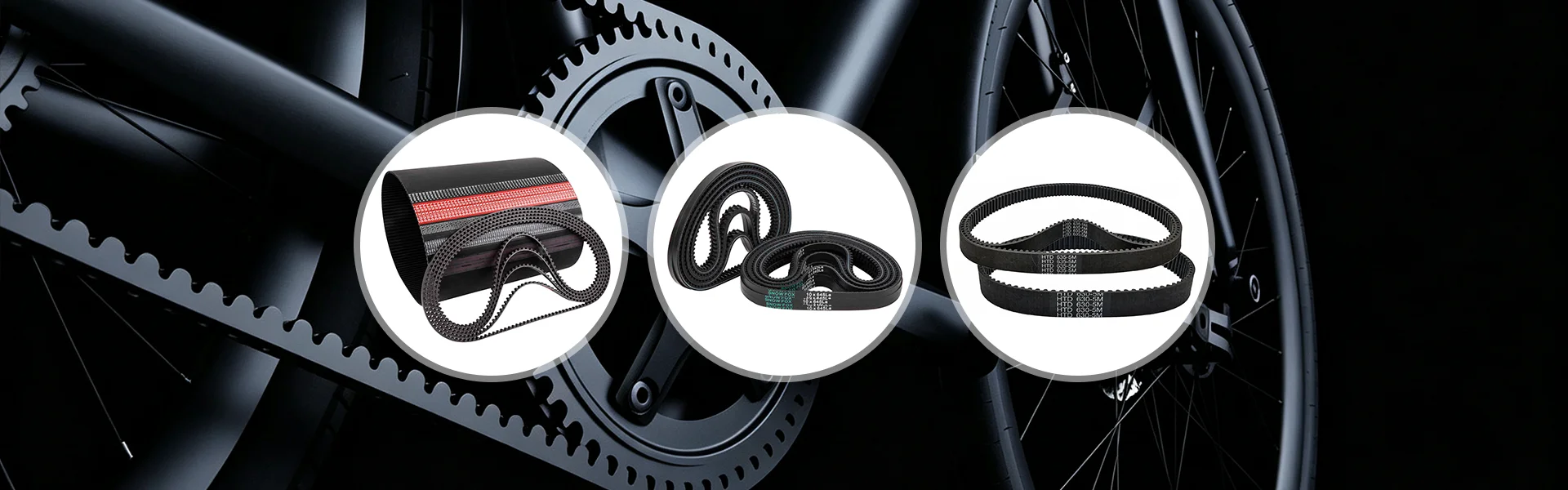
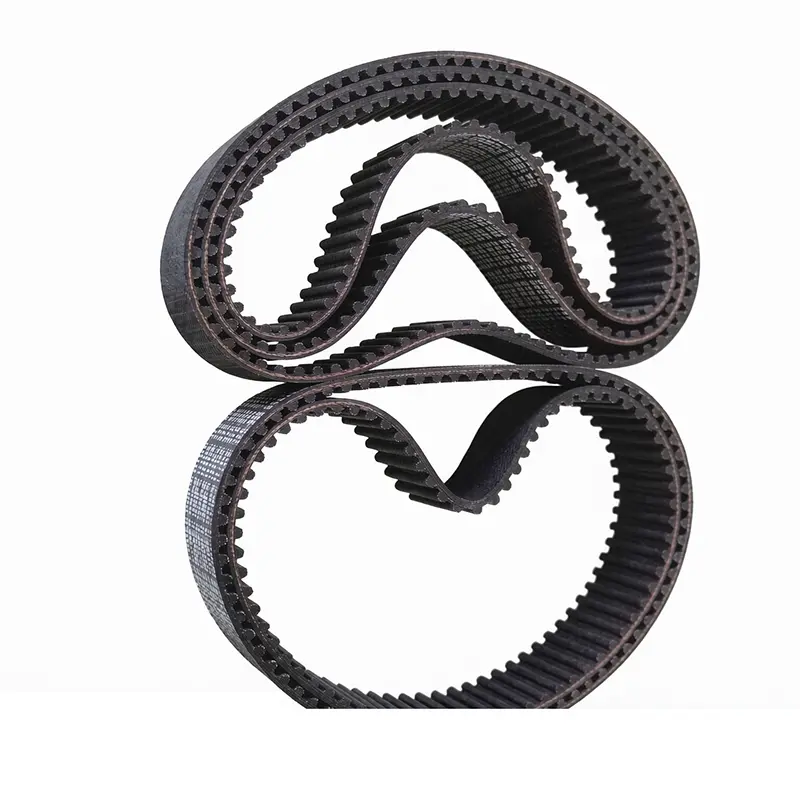
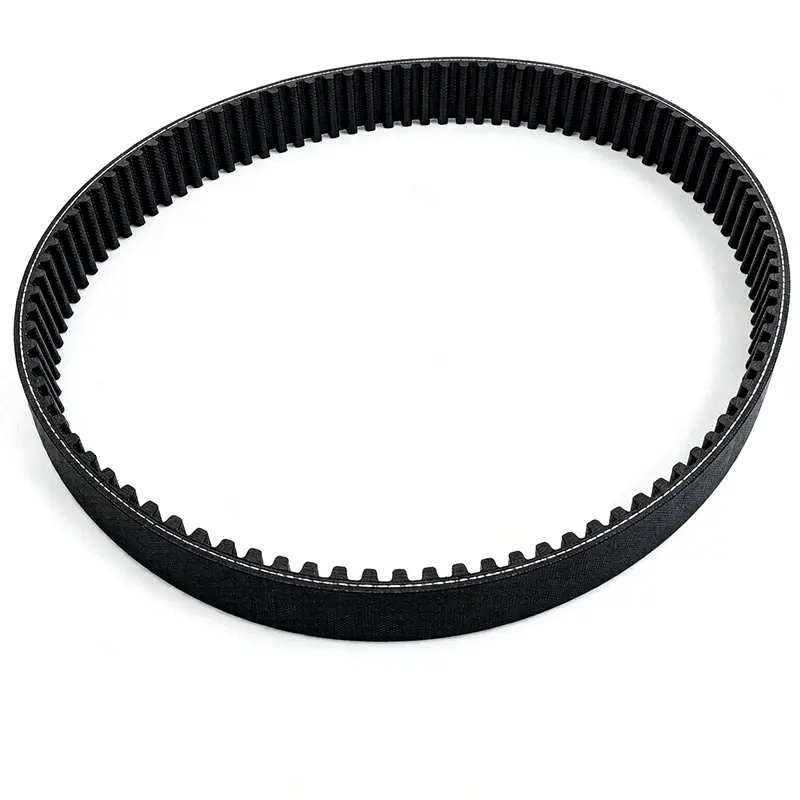
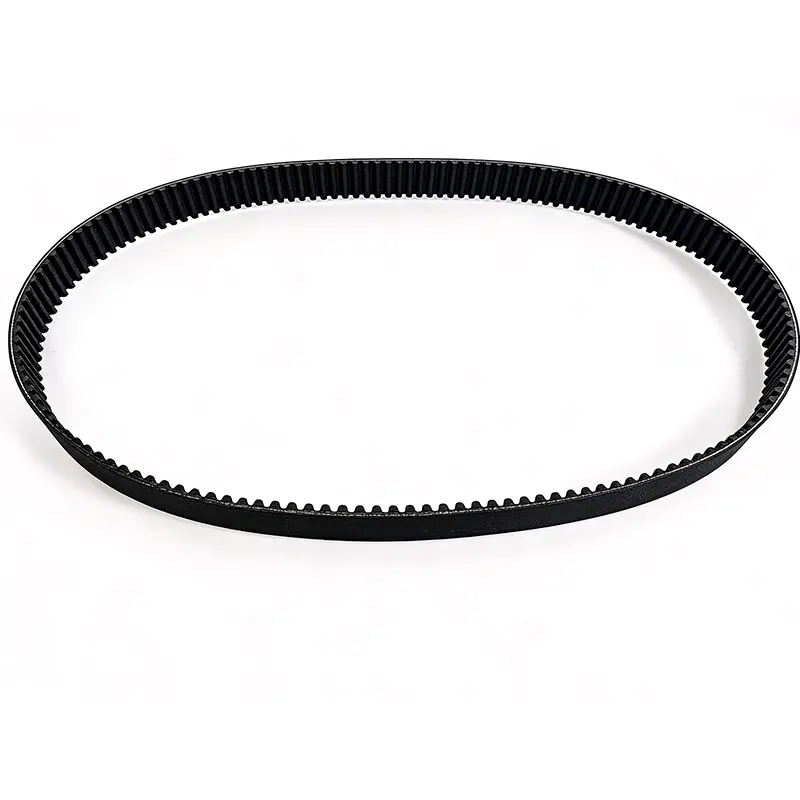
Engineers designing linear positioning modules, vertical lifts, and Cartesian gantry robotics often encounter tooth shear, premature wear, and backlash issues when running traditional T-series metric belts under heavy torque. Upgrading to a reinforced at-type timing belt provides an advanced motion control solution, delivering high shear resistance, millimeter-level repeat accuracy, and whisper-quiet operation across demanding automated production lines.
Standard metric T-series belts (such as T5 or T10) feature a simple trapezoidal profile with a 40° flank angle and sharp 90° corners at the crest and root. Under heavy dynamic torque, stress concentrates intensely at those sharp corners, making standard T-belts susceptible to localized wear and tooth shear.
The AT-profile fundamentally restructures this geometry through three distinct design enhancements:
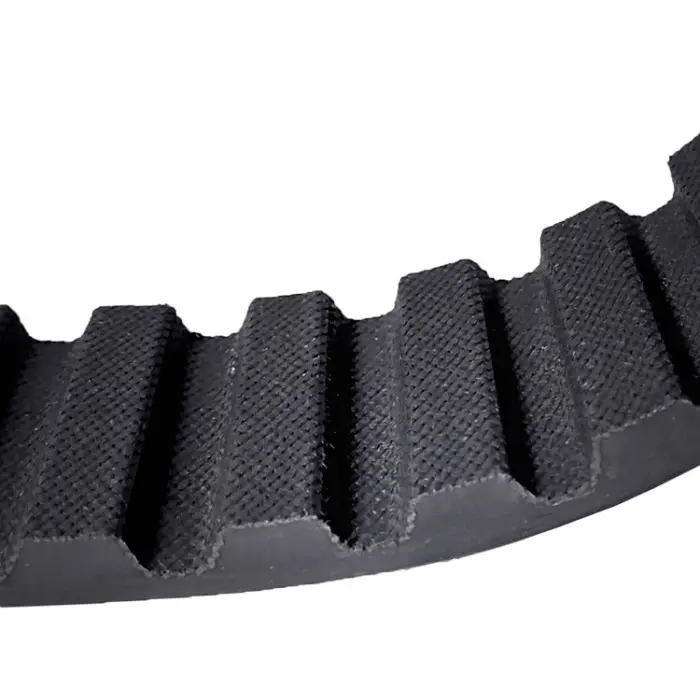
The AT profile expands both tooth width and root thickness. For instance, an AT10 tooth features a base width of 5.00 mm compared to approximately 3.48 mm on a conventional T10 belt, adding substantial rubber mass to resist shear forces.
Increasing the flank angle from 40° to 50° expands the contact surface area between the belt tooth and the pulley groove. This wider flank face distributes driving forces evenly, substantially reducing tooth flex deformation under heavy acceleration.
Incorporating fully rounded arc transitions at both tooth crests and roots—matched with rounded sheave groove bottoms—completely eliminates sharp corner stress points. This smooth transition boosts tooth shear strength, extends flex fatigue life by nearly 50%, and lowers meshing sound levels by 10 to 15 dBA.
Kaihong utilizes premium elastomer compounds and high-tenacity reinforcement cords built to handle dynamic reversing loads without pitch drift.
| Layer | Material | Primary Function |
| Belt Body / Backing | Chloroprene Rubber (CR) or Polyurethane (PU) | Resists oil, moisture, ozone, and thermal aging; protects internal cords |
| Tensile Member | High-Modulus Fiberglass Cord (Aramid / Steel optional) | Carries longitudinal tension; near-zero elongation maintains pitch accuracy |
| Tooth Facing | Nylon 66 High-Elasticity Fabric | Self-lubricating jacket; lowers friction coefficient and resists tooth flank wear |
The internal load skeleton features helically wound fiberglass tensile cords that maintain precise pitch length under dynamic loading. By preventing cord stretch, the belt eliminates lost motion and "creeping" during high-speed indexing, serving as a flexible, maintenance-free alternative to metal ball screws.
Operating without oil lubrication, metal-to-metal wear, or rust generation, this dry drive solution completely prevents workpiece oil contamination in food processing, pharmaceutical, paper, and textile manufacturing equipment.
Kaihong manufactures at-type timing belts across four primary metric pitch specifications to support micro-actuators up to heavy industrial gantry systems:
| Item | AT3 | AT5 | AT10 | AT20 |
| Pitch (mm) | 3.0 | 5.0 | 10.0 | 20.0 |
| Tooth Height (mm) | 1.1 | 1.2 | 2.5 | 5.0 |
| Belt Thickness (mm) | 1.9 | 2.7 | 4.5 | 8.0 |
| Tooth Angle | 50° | |||
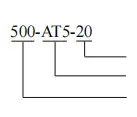
Design Note & Bending Limits: Part numbers follow standard B2B designations (e.g., 660-AT10-32 represents a 660 mm pitch length, AT10 profile, and 32 mm width). When designing tensioners and back-side idlers, observe minimum permitted pulley bending diameters: approximately 15 mm for AT5, 20 mm for AT10, and 40 mm for AT20.
Due to its high shear resistance, rigid tooth engagement, and low backlash, an industrial at-type timing belt is specified across advanced automated sectors:
Following proper engineering selection guidelines and sheave matching rules ensures long drive life and prevents tooth climbing.
1. Select Pitch Profile: Choose AT3/AT5 for compact light-duty setups, AT10 as the general-purpose mainstay, or AT20 for heavy-duty long-stroke applications.
2. Choose Tensile Cord Type: Specify standard high-modulus fiberglass cord, or select aramid (Kevlar) cord for drives subject to heavy shock loads and frequent motor reversals.
3. Calculate Length & Safety Factor: Compute required pitch length (for a two-pulley drive: $L = 2C + \frac{\pi(D_1+D_2)}{2} + \frac{(D_2-D_1)^2}{4C}$), round to a standard tooth count, and cross-reference width load tables with a 20% to 30% safety margin.
AT-profile belts feature specific 50° flank angles and must be paired exclusively with AT-profile pulleys. They must never be interchanged with T-series, HTD, or GT pulleys. For maximum positioning accuracy in servo drives, specify Type 0 (Zero-Backlash) or SE special-engagement pulleys to eliminate play between belt teeth and pulley grooves during direction reversals.
The at-type timing belt features a wider tooth root, a steeper 50° flank angle (versus 40° on T-types), and fully rounded crest and root transitions. This engineered shape increases tooth shear strength, delivering over 30% higher torque capacity, nearly 50% longer flex fatigue life, and 10 to 15 dBA lower meshing noise than standard T-series belts of the same width.
Kaihong supplies AT-series belts in three standard configurations: Open-Ended Belts (for linear actuators and long-stroke reciprocating positioning systems), Spliced / Joined Belts (for conveying equipment where machine shafts cannot be disassembled), and Seamless Endless Molded Belts (continuous construction for high-torque power transmission).
Kaihong provides custom options including non-standard widths, extra-thick backings, surface grooving, backing perforations, integrated guide cleats, food-grade polyurethane (PU) formulations, antistatic (conductive) compounds, and high-temperature elastomeric formulations built to customer drawings or physical samples.
Looking for durable, high-precision drive components for linear positioning systems or global replacement supply? Certified to ISO 9001:2015 and ISO 14001:2015, Kaihong maintains rigorous quality inspection across incoming raw materials, vulcanization molding, and batch pitch tolerance sampling.
Request an Engineering Proposal: Submit your required pitch specifications (AT3, AT5, AT10, AT20), belt widths, drive lengths, or annual purchase forecasts today to receive free drive sizing assistance and a direct factory wholesale quote within 24 hours.
Address
No. 48 Guangming Middle Road, Sanmen County, Taizhou City, Zhejiang Province, China
Tel