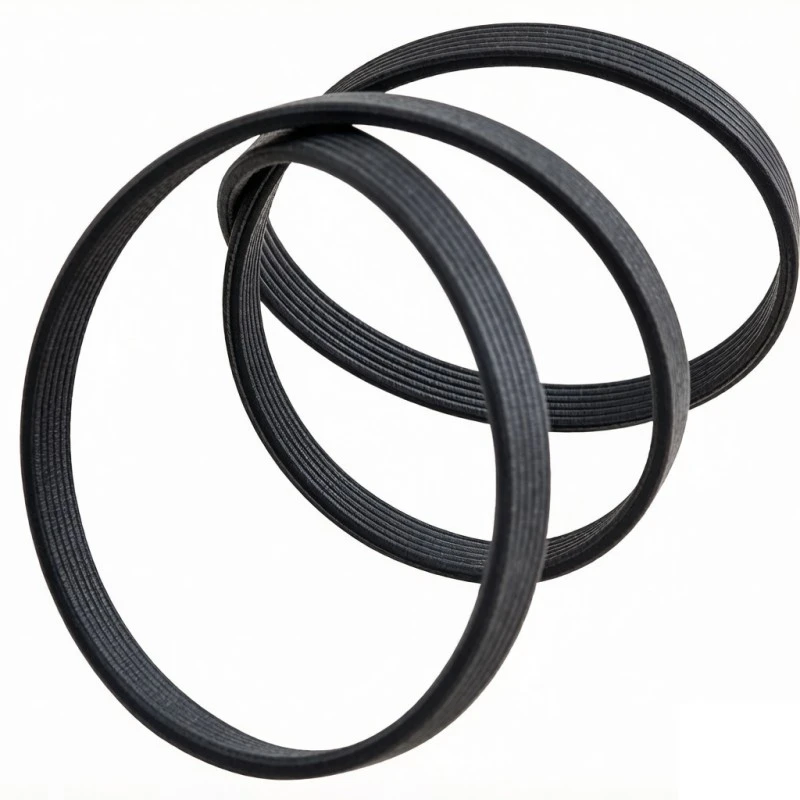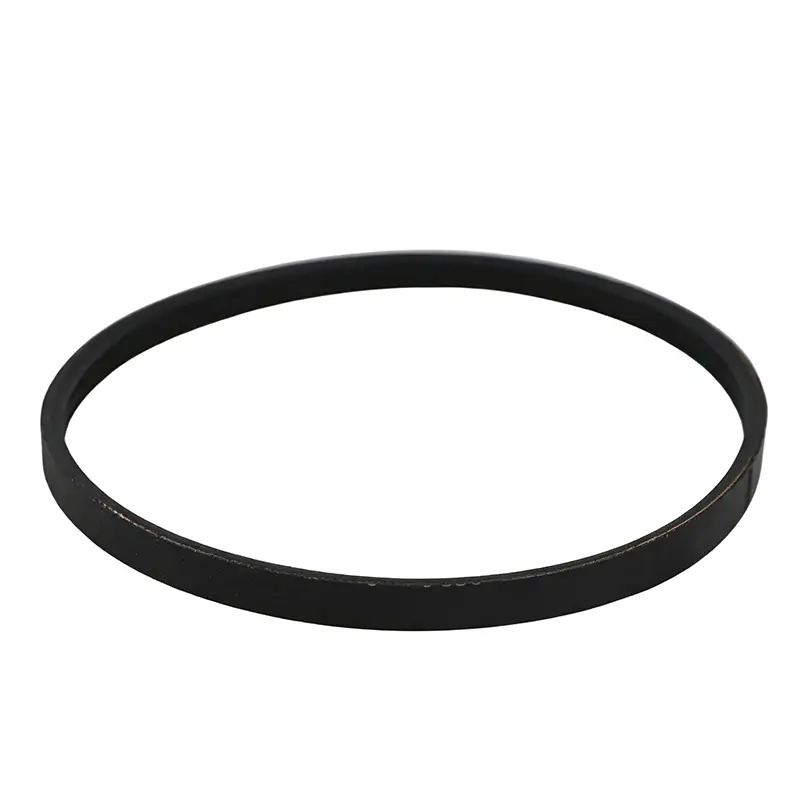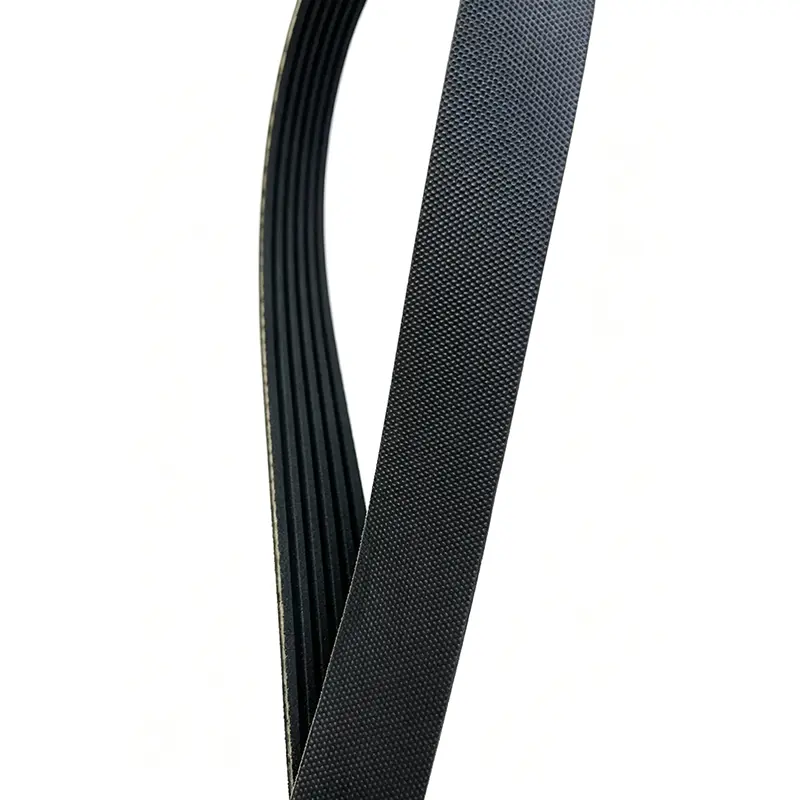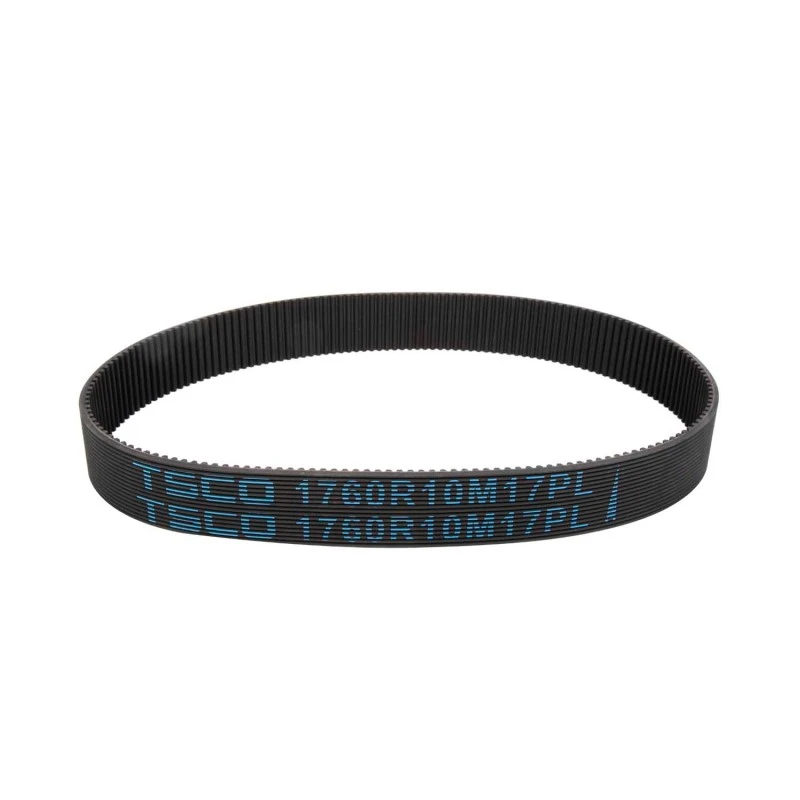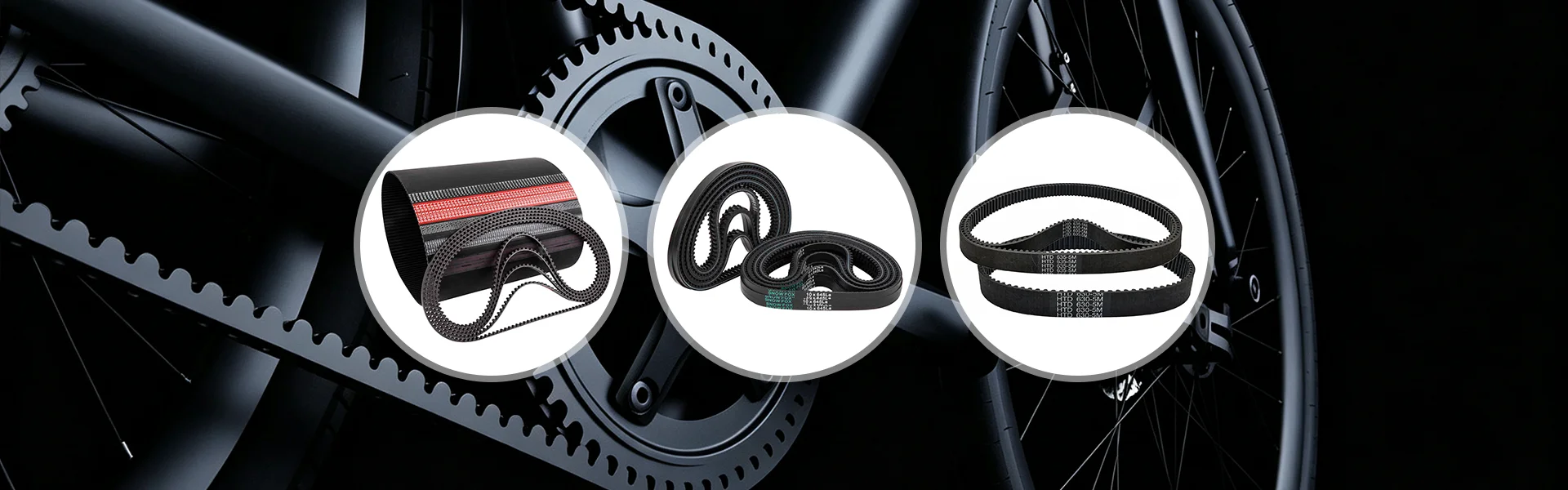


The Single-Sided V-Ribbed Belt features multiple longitudinal ribs with a 40° trapezoidal profile on the working surface. These ribs increase the contact area with pulleys, improving grip performance and reducing power loss during operation. Compared with traditional multi-belt systems, the integrated structure minimizes length differences between individual belts and improves overall drive stability.
The advanced rib design allows the belt to operate around multiple pulleys and adapt to complex routing systems. This flexibility makes it suitable for modern mechanical layouts with automatic tensioners, compact pulley arrangements, and high-speed rotating components.

|
Type |
PH |
PJ |
PK |
PL |
PM |
|
P |
1.6 |
2.34 |
3.56 |
4.7 |
9.4 |
|
hr |
1.1 |
1.6 |
2.4 |
3.4 |
6.5 |
|
r |
≤0.15 |
≤0.2 |
≤0.25 |
≤0.4 |
≤0.75 |
|
h |
2.6 |
3.6 |
4.8 |
7 |
12 |
|
a |
40° |
40° |
40° |
40° |
40° |
The precisely molded rib profile is the main power transmission area of the belt. The optimized 40° rib angle improves friction contact with pulley grooves, helping maintain stable transmission under changing loads and reducing the risk of slipping.
The internal tensile layer uses high-strength polyester cords with low elongation characteristics. This structure maintains dimensional stability during long-term operation and helps the belt withstand repeated bending cycles in high-speed applications.
The Single-Sided V-Ribbed Belt body is available with CR (Chloroprene Rubber) and EPDM compounds. CR provides reliable mechanical strength for general applications, while EPDM offers enhanced resistance against heat, ozone, and aging, making it suitable for demanding operating environments.
The multi-rib structure increases the effective contact area between the belt and pulley compared with conventional flat belts. This allows higher transmission capacity within a smaller installation space, helping equipment manufacturers achieve more compact designs.
The elastic rubber structure absorbs vibration generated during operation, reducing mechanical shock and transmission noise. This makes the belt suitable for applications requiring stable running performance and improved user comfort.
Different profiles are designed for various speed requirements. PH profiles can support speeds up to 70 m/s, PJ up to 60 m/s, PK up to 50 m/s, PL up to 40 m/s, and PM up to 35 m/s, allowing flexible selection according to equipment requirements.
The EPDM version provides excellent resistance to temperature changes, ozone exposure, and outdoor conditions, operating from approximately -35℃ to +120℃. CR versions offer stable performance within -20℃ to +100℃ for general industrial and automotive applications.
In vehicle Front End Accessory Drive (FEAD) systems, the belt is commonly used to drive alternators, air conditioning compressors, water pumps, and power steering systems. Its compact design meets the requirements of modern engine compartments where multiple accessories must be powered efficiently.
The Single-Sided V-Ribbed Belt is widely applied in automation equipment, logistics systems, and compact machinery requiring continuous power transmission. Its flexibility allows stable operation in systems with multiple pulleys and changing transmission directions.
High-speed printing machines, folder-gluers, and packaging equipment require accurate and smooth material feeding. The belt helps maintain consistent operating speed while reducing vibration during continuous production.
In textile and chemical fiber equipment, the belt supports multi-shaft transmission systems used in spinning frames, roving machines, and other precision machinery where stable rotation is essential.
Washing machines, dryers, treadmills, and commercial appliances often use ribbed belt systems because of their low noise, compact structure, and reliable operation under repeated working cycles.
Kaihong provides multiple profiles including PH, PJ, PK, PL, and PM. The correct profile should be selected according to pulley dimensions, transmission power, operating speed, and available installation space.
For standard environments, CR rubber provides balanced performance and cost efficiency. For applications exposed to higher temperatures, ozone, or outdoor conditions, EPDM material is recommended for longer service life.
Before replacement, customers should confirm belt length, rib number, cross-section size, and pulley compatibility. Correct matching helps prevent abnormal wear, vibration, and reduced transmission efficiency.
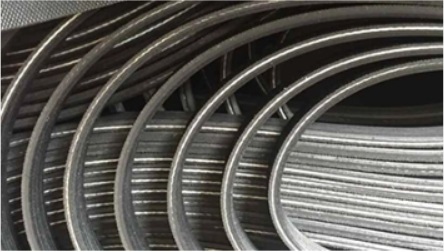
Kaihong applies strict production control throughout rubber mixing, cord treatment, molding, vulcanization, and final inspection processes. Each production stage is monitored to ensure dimensional accuracy and stable mechanical performance.
Besides standard models, Kaihong supports OEM production, customized lengths, special rubber compounds, and manufacturing based on customer samples or technical drawings. These services help customers develop suitable transmission solutions for different equipment requirements.
During installation, avoid using screwdrivers or sharp tools to force the belt onto pulleys. Adjust the center distance or tension device properly to prevent damage to the rib surface and internal cords.
Proper tension is essential for reliable operation. Excessive tension increases bearing load and may shorten component life, while insufficient tension can cause slipping, overheating, and accelerated rib wear.
Regularly inspect pulley alignment, groove condition, and belt surface condition. Remove oil, coolant, and other contaminants from the transmission area to maintain proper friction performance.
Kaihong supplies PH, PJ, PK, PL, and PM profiles to meet different transmission requirements, including automotive, industrial, and appliance applications.
The available materials include CR and EPDM rubber compounds. EPDM is preferred for applications requiring stronger resistance to heat, ozone, and environmental aging.
Yes. Kaihong supports OEM branding, customized dimensions, special materials, and production based on customer drawings or samples.
Correct profile selection, proper tension adjustment, pulley alignment, and regular inspection are key factors for maximizing belt service life. Avoiding oil contamination and excessive loading also helps maintain stable performance.
Address
No. 48 Guangming Middle Road, Sanmen County, Taizhou City, Zhejiang Province, China
Tel