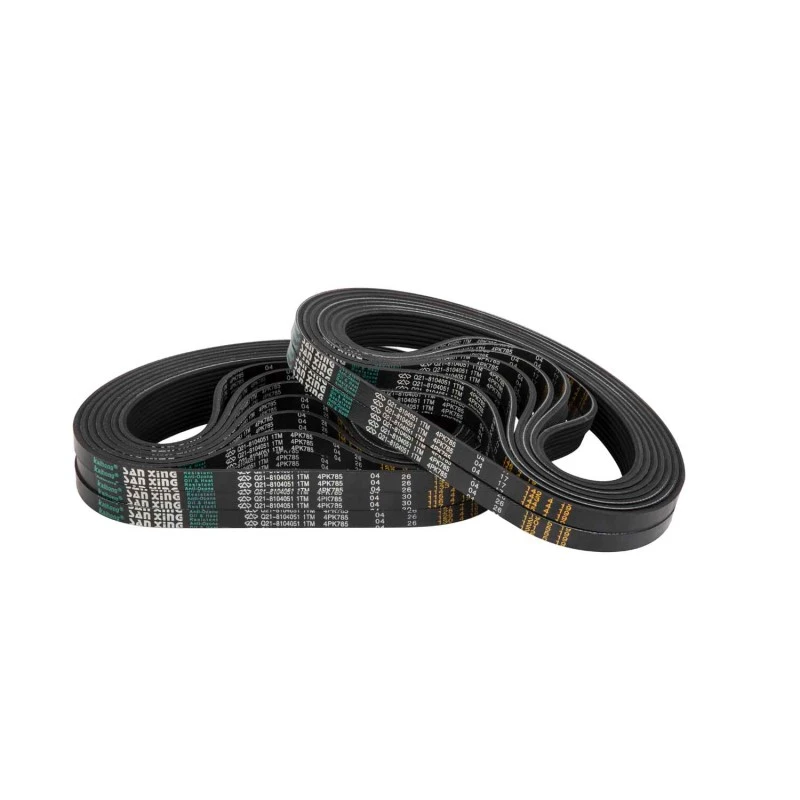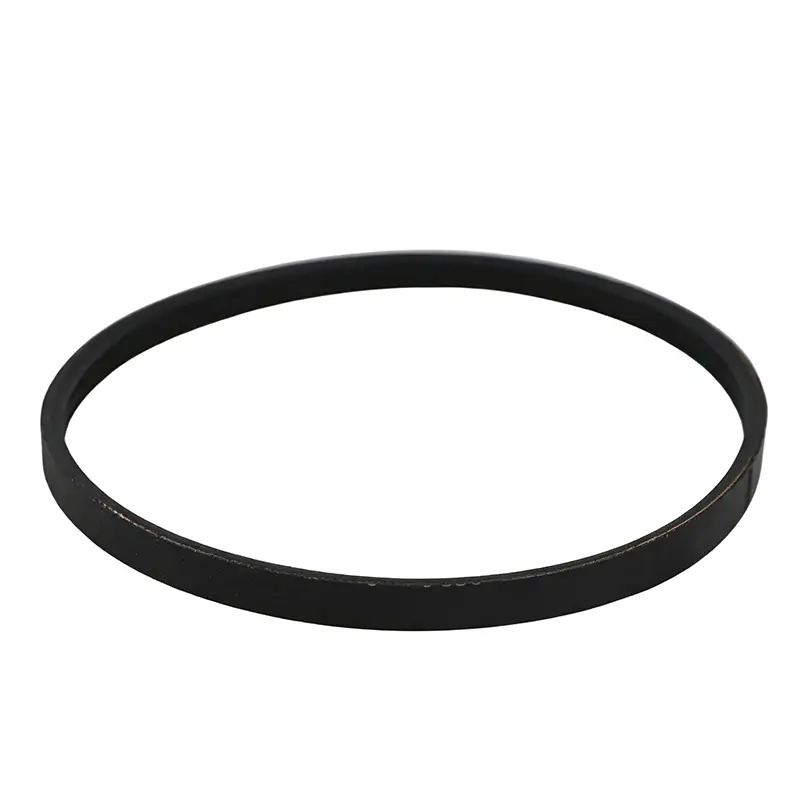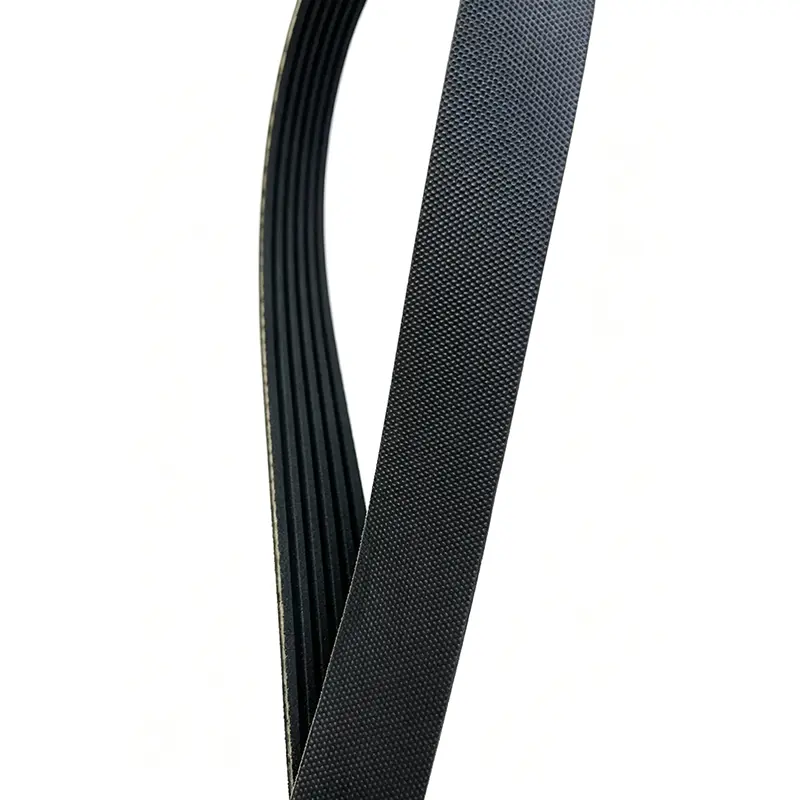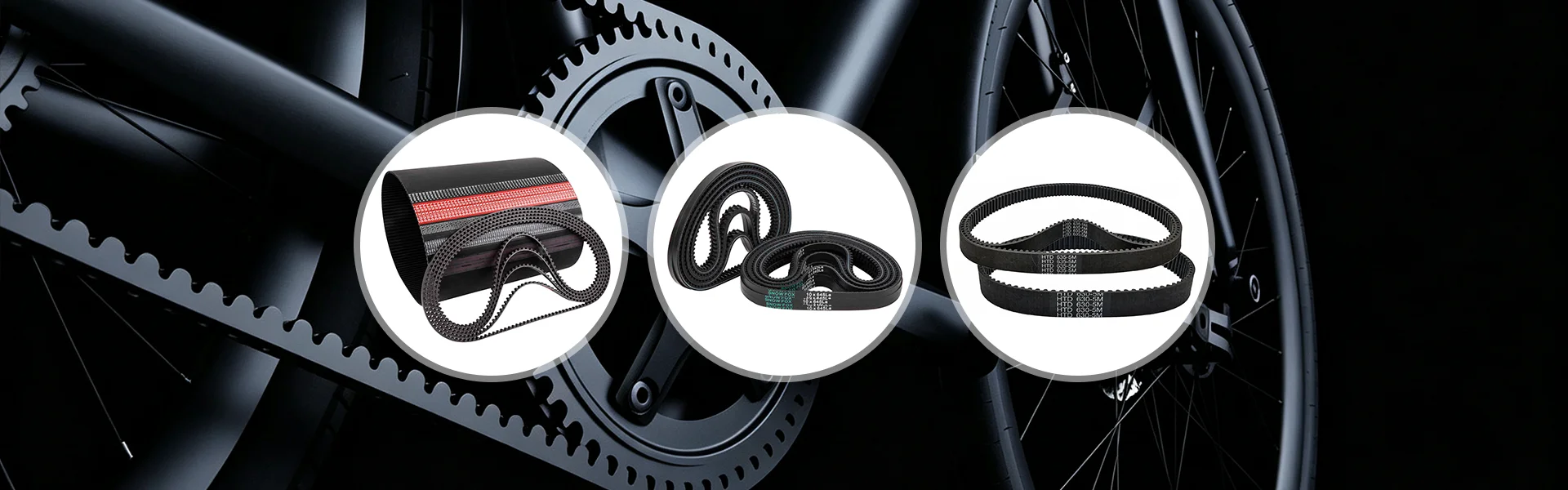


Kaihong Double-Sided Poly V-Belts are designed for transmission systems where both sides of the belt need to engage with pulleys. The ribbed construction allows one belt to drive multiple pulleys from different directions, helping engineers simplify serpentine layouts and reduce the need for additional belts or reversing mechanisms.
Kaihong focuses on DPK and DPL profiles for different operating conditions. DPK is suited to high-speed automotive and compact industrial drives, while DPL is designed for lower-speed, higher-torque equipment such as grain processing and heavy conveying systems. The belts are available in CR and EPDM compounds for different temperature and environmental requirements.


|
Type |
PL |
PK |
|
P |
4.7 |
3.56 |
|
hr |
3.4 |
2.4 |
|
r |
≤0.4 |
≤0.25 |
|
h |
12 |
7.0 |
|
a |
40° |
40° |
DPK is developed for compact, high-speed transmission systems. Its flexible structure works well with smaller pulley diameters and complex serpentine arrangements.
Typical applications include automotive FEAD systems, combine harvesters, air compressors, machine tools, and printing equipment.
DPL is intended for applications requiring higher torque and continuous mechanical loading. It is commonly considered for grain-processing machinery, heavy conveyors, textile equipment, and packaging machinery.
Its larger profile provides suitable load-carrying capability for demanding industrial drives.
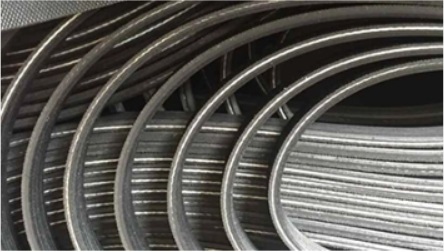
Both surfaces are formed with precision V-ribs, allowing the belt to transmit power through the inner and outer surfaces. This makes it possible to operate multiple pulleys with different wrap directions using one continuous belt.
The ribbed profile provides good flexibility around smaller pulleys while maintaining sufficient friction for power transmission. This is particularly useful where installation space is limited.
High-strength tensile cords maintain dimensional stability during continuous operation. PET reinforcement is available for standard applications, while Aramid options can be considered for higher-load requirements.
Kaihong offers different rubber formulations according to the working environment. CR is suitable for approximately -20°C to +100°C, while EPDM provides improved heat and ozone resistance within an approximate range of -35°C to +120°C.
DPK belts can be used in Front End Accessory Drive systems for transmitting power to alternators, water pumps, A/C compressors, and hydraulic pumps.
The bidirectional design is particularly useful in serpentine layouts containing reverse idlers and multiple accessory pulleys.
Applications include combine harvester fan decks, threshing clutch systems, and motorized agricultural sprayers where compact routing and continuous operation are required.
DPL belts are suitable for flour mill grinding rollers, purifiers, auger conveyors, and other grain-processing equipment requiring bidirectional power transmission.
The Double-Sided Poly V-Belt can drive multiple roller sections in conveying and lifting equipment while reducing the number of independent transmission components.
Double-sided transmission is useful for draw frames, combing machines, and multi-roller systems where several rollers need synchronized movement.
Applications include die-cutting machine feeder clutches and preheater roller systems used in corrugated packaging production.
DPK is more suitable when the drive operates at higher speed, uses smaller pulleys, or requires a compact serpentine arrangement.
DPL is better suited to lower-speed systems with higher mechanical loads, including grain-processing and heavy conveying equipment.
CR can be selected for general industrial and automotive conditions. EPDM is preferable where high temperature, ozone, or outdoor exposure is a major concern.
The belt profile, rib pitch, pulley dimensions, and transmission layout should be checked together before ordering. Correct matching helps prevent uneven rib loading and premature wear.
Do not pry the belt onto a pulley with screwdrivers or other tools. Reduce center distance or release the tensioner before installation to prevent damage to the rib roots.
All pulleys should remain properly aligned. For the supplied application guideline, pulley face runout should be maintained at ≤0.5 mm.
Use the equipment manufacturer's recommended tension. As a reference, the supplied guideline recommends approximately 90–100% of the tension specified for an equivalent single-sided PK/PL belt.
Keep the belt away from prolonged exposure to unsuitable oils and chemicals. CR and EPDM have different chemical resistance characteristics, so the compound should be selected according to the operating environment.
For seasonal agricultural equipment, clean and dry the belt before storage. Keep it hanging in a cool, shaded location and avoid tight folding or deformation.
Kaihong can manufacture non-standard belt lengths according to technical drawings, equipment dimensions, or original samples.
Customers can select CR or EPDM according to temperature, ozone exposure, and application requirements. PET and Aramid reinforcement options are also available for different load conditions.
For replacement projects, Kaihong can measure and reproduce belts from customer samples, helping distributors and equipment manufacturers match existing transmission systems.
OEM blank packaging and customized branding can be provided for distributors and machinery manufacturers requiring their own product presentation.
Kaihong operates under ISO9001 and ISO14001 certified management systems. Production focuses on mold precision, symmetrical vulcanization, belt dimensional consistency, and running durability.
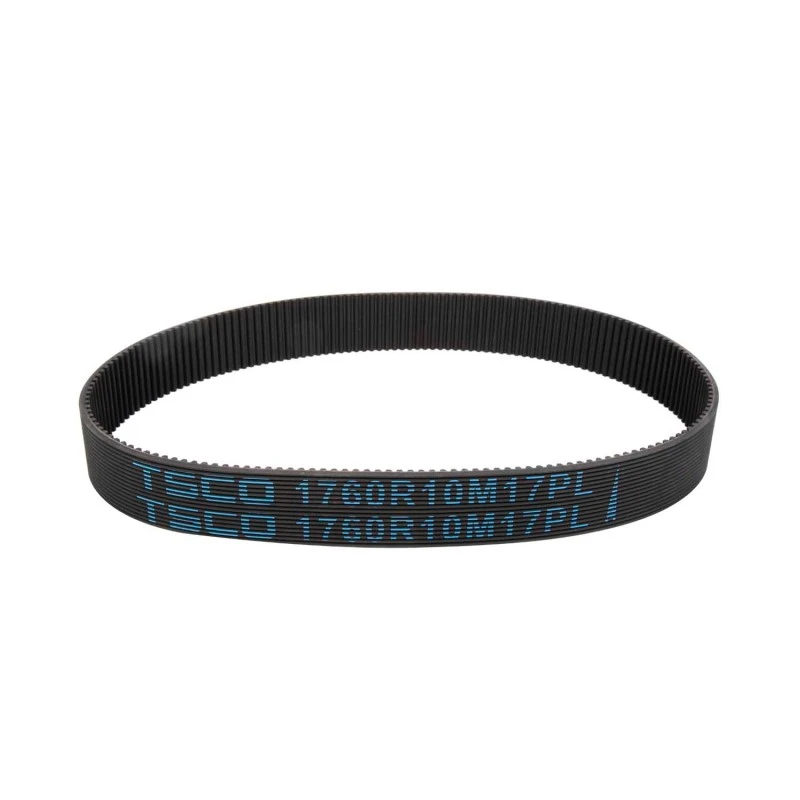
For batch control, Double-Sided Poly V-Belt can be laser-marked with length information to support product identification and traceability. Selected production batches can also undergo dynamic fatigue testing to evaluate performance under repeated operating conditions.
A conventional single-sided belt can only transmit power through one working surface. When a machine contains several pulleys with alternating wrap directions, additional belts, gears, or reversing mechanisms may be required.
A double-sided ribbed design allows both belt surfaces to engage with pulleys. This can simplify the transmission path, reduce component count, and make better use of limited installation space.
For automotive serpentine drives, agricultural equipment, grain machinery, and multi-roller industrial systems, this configuration can provide a practical alternative where a conventional single-sided arrangement would require a more complicated layout.
Both sides can transmit power, allowing one belt to drive multiple pulleys with different wrap directions. This can simplify complex transmission layouts.
DPK is primarily intended for higher-speed, compact transmission systems, while DPL is designed for heavier loads and lower-speed industrial applications.
Yes. EPDM is available when improved heat and ozone resistance is required. The final compound should be selected according to the actual operating environment.
Yes. Kaihong supports customized lengths based on drawings, dimensions, or original belt samples.
Yes. PET is available for standard applications, while Aramid reinforcement can be considered for applications requiring higher tensile performance.
Release the tensioner or adjust the center distance, install the belt without forcing it over the pulley, verify pulley alignment, and then set the specified tension.
Address
No. 48 Guangming Middle Road, Sanmen County, Taizhou City, Zhejiang Province, China
Tel