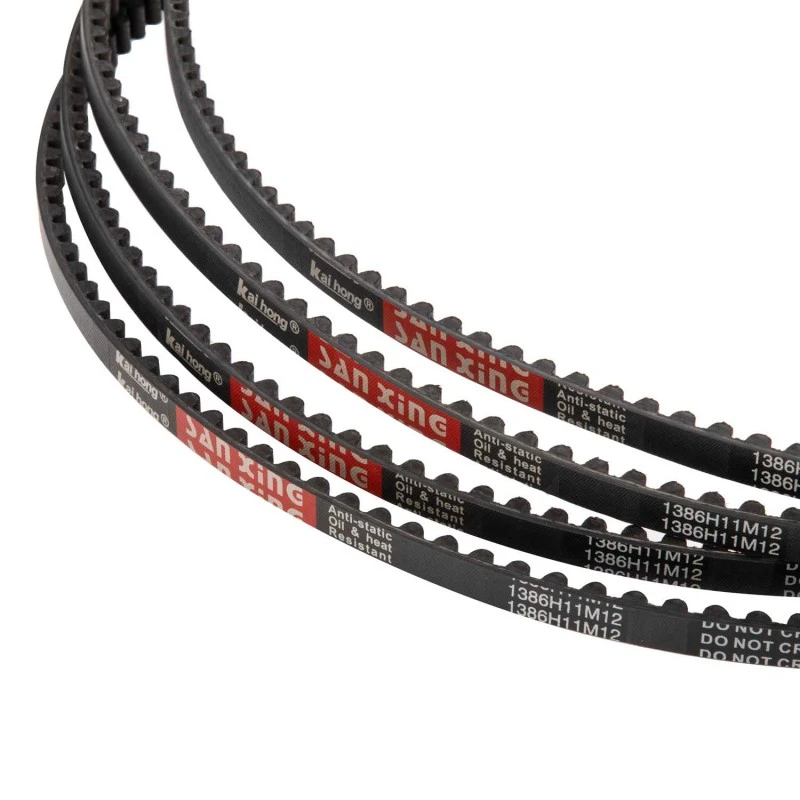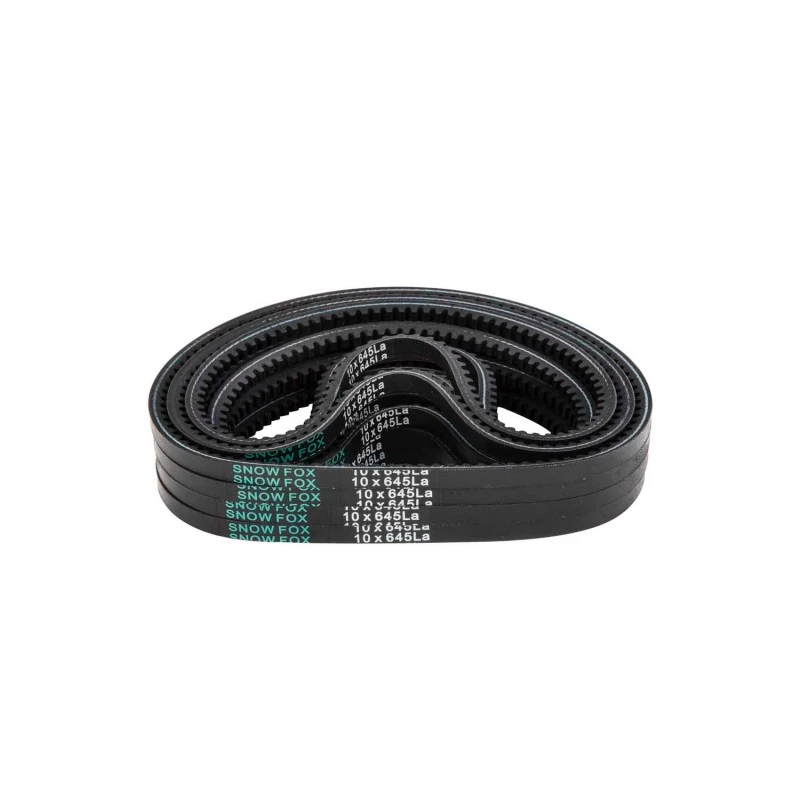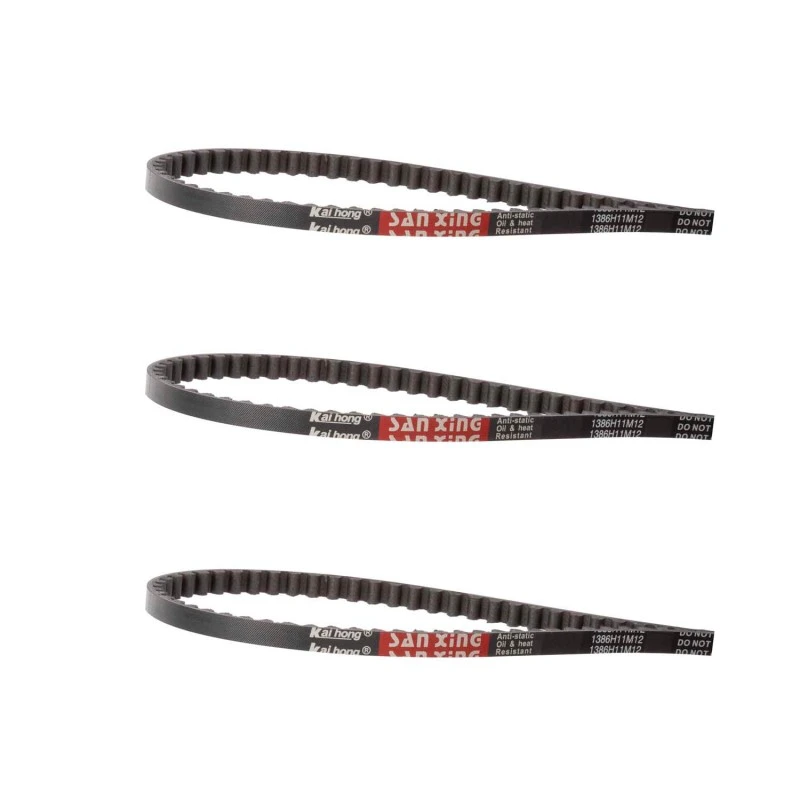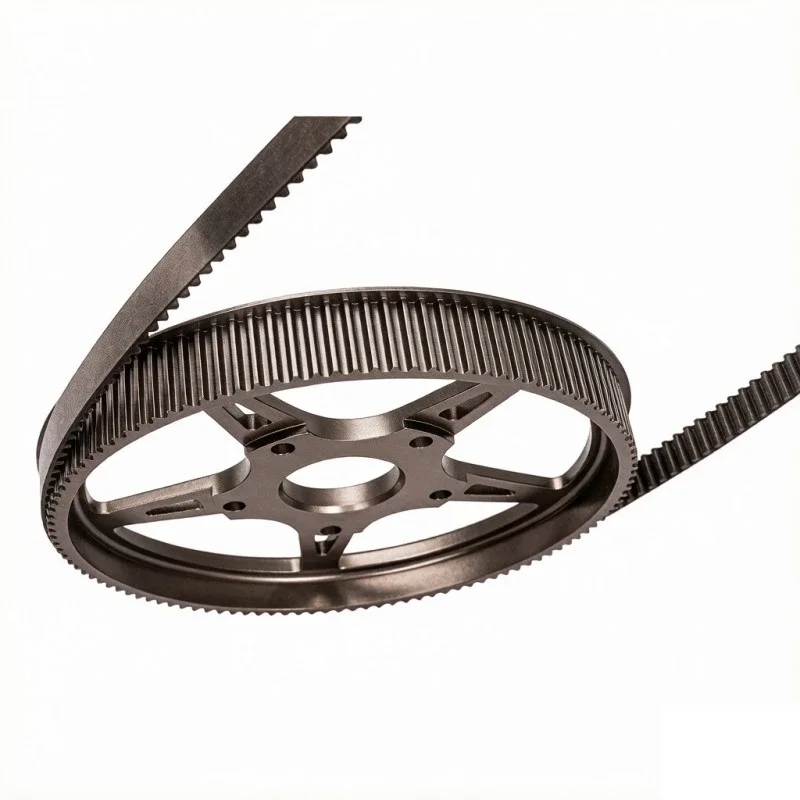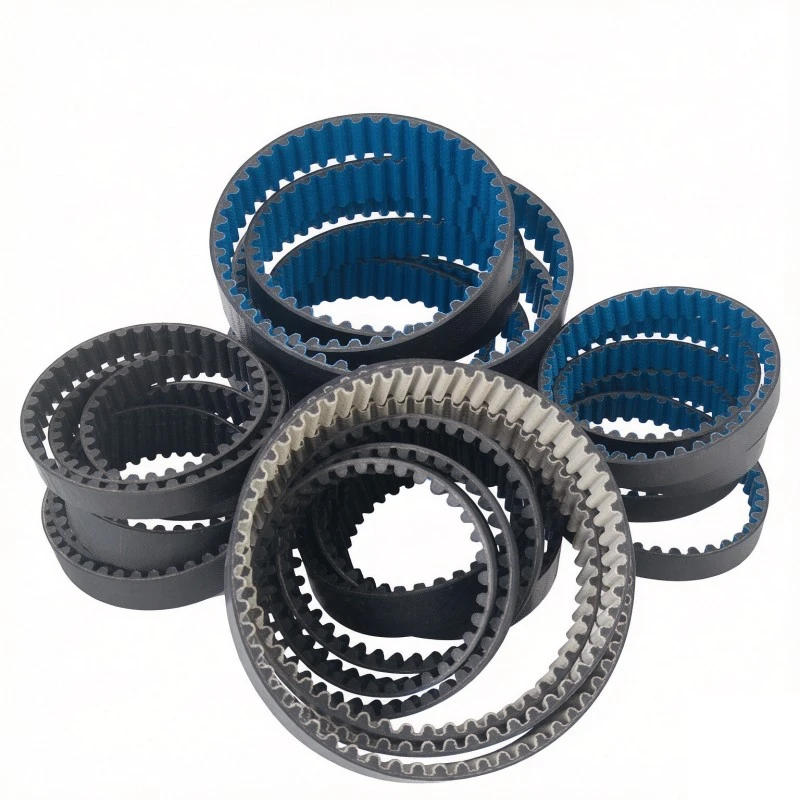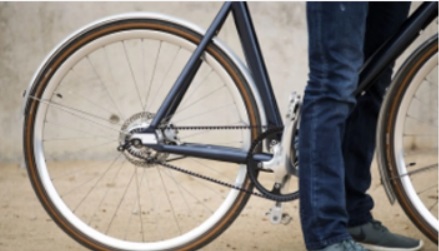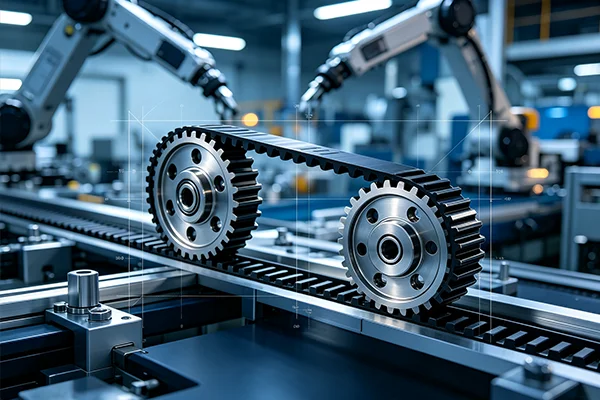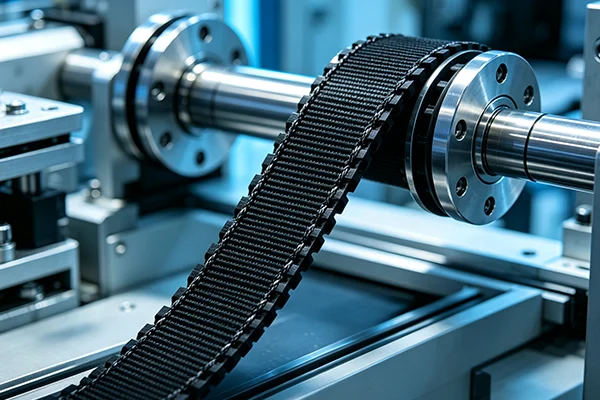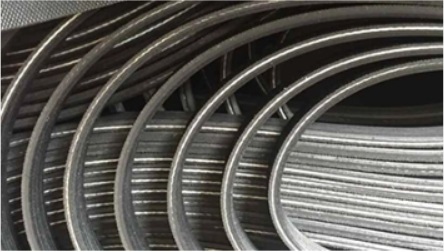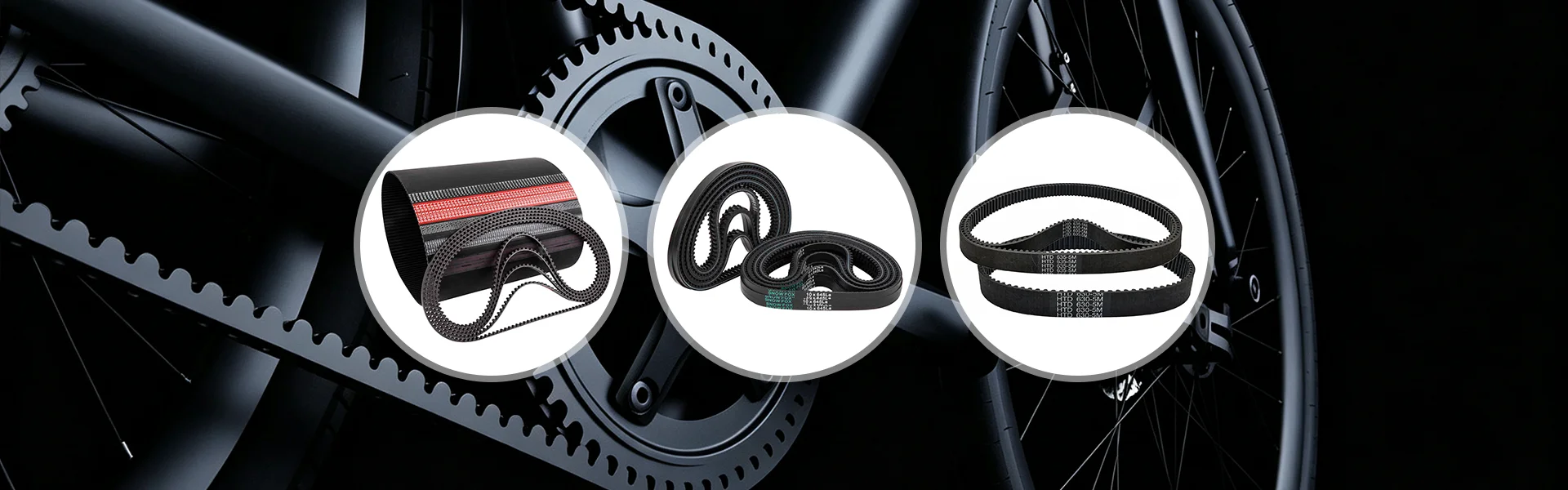
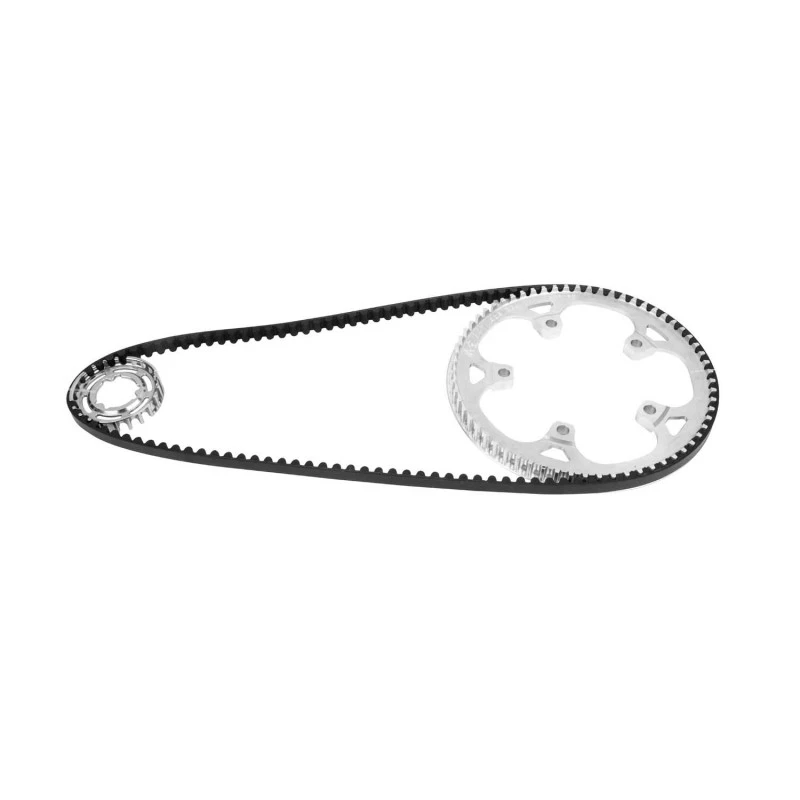
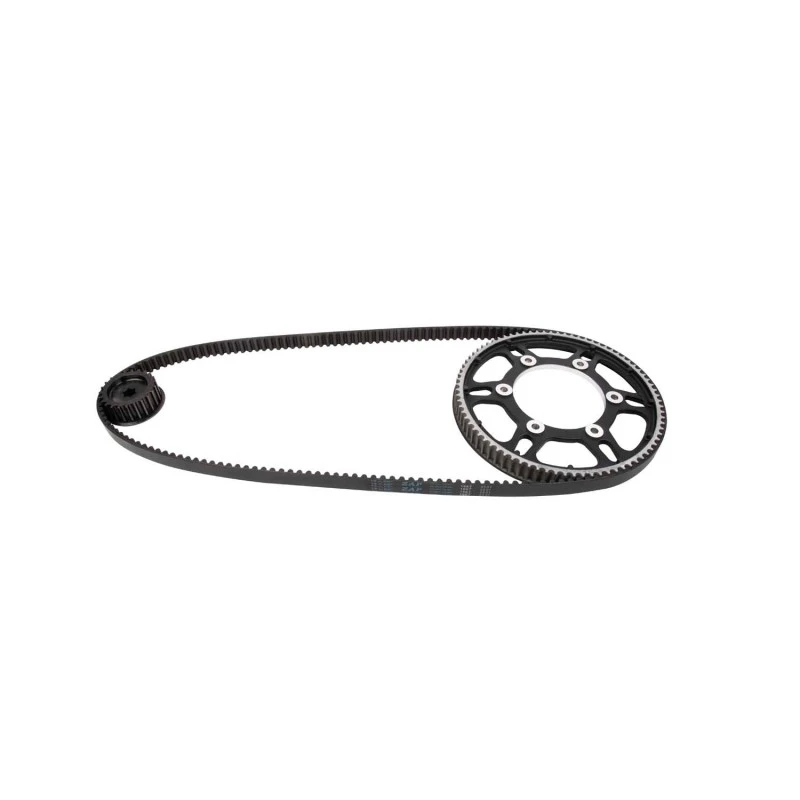
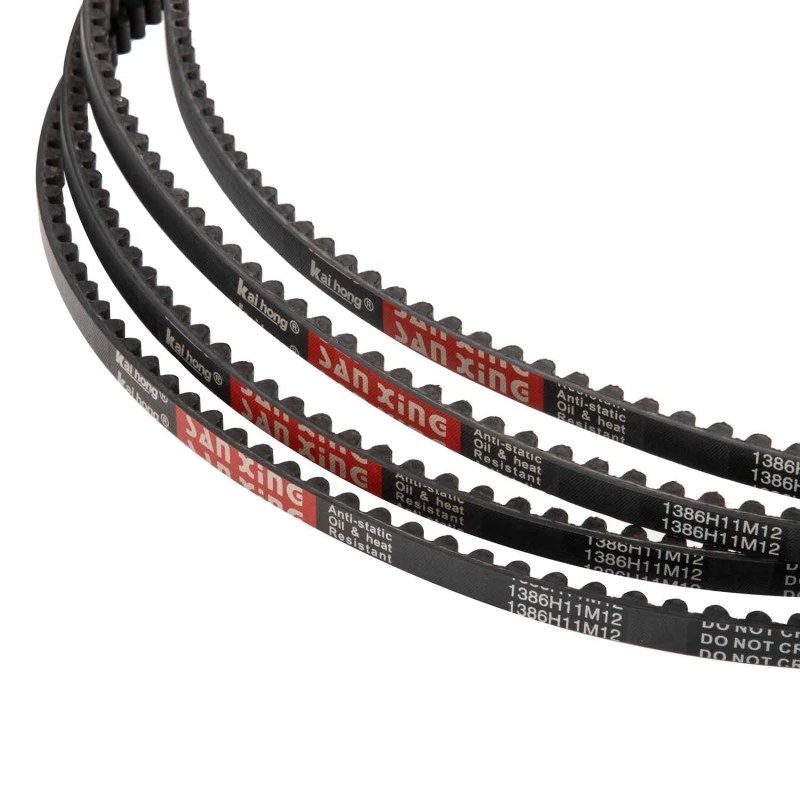
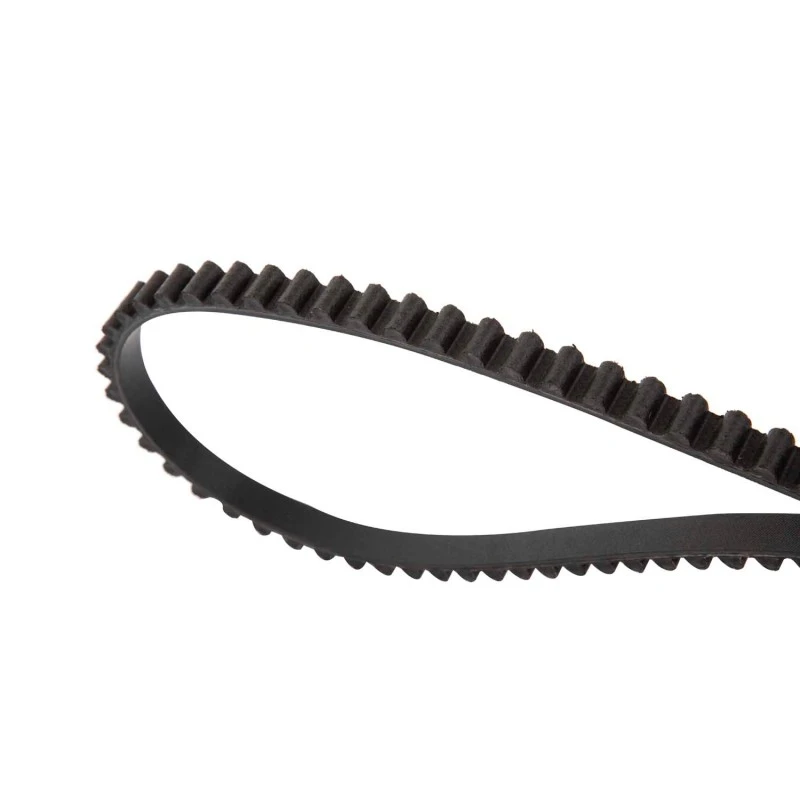
Traditional chains can cause grease stains, corrosion, noise, and frequent maintenance. Kaihong’s Electric Bike Carbon Timing Belt uses positive tooth engagement to provide a clean, quiet, and low-maintenance alternative. Its three-layer structure combines carbon fiber tensile cords, a polyurethane or HNBR body, and a reinforced nylon tooth-facing layer.
The belt can be developed for mid-drive E-bikes with torque ratings up to approximately 75 N·m and selected high-performance e-moto systems with peak outputs up to approximately 40 kW, subject to correct sizing, sprocket matching, tension, alignment, and application testing.
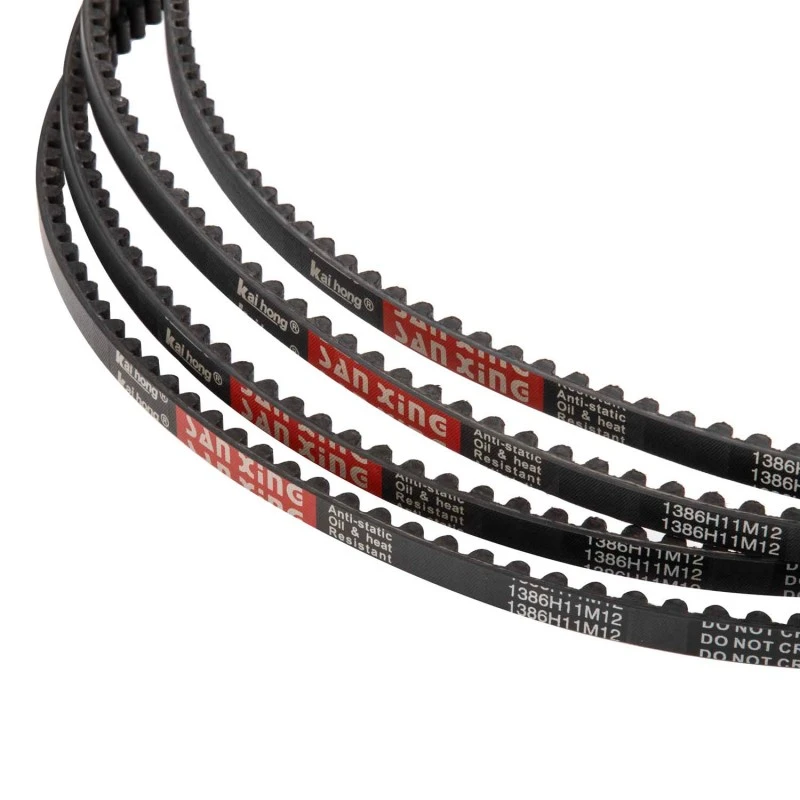
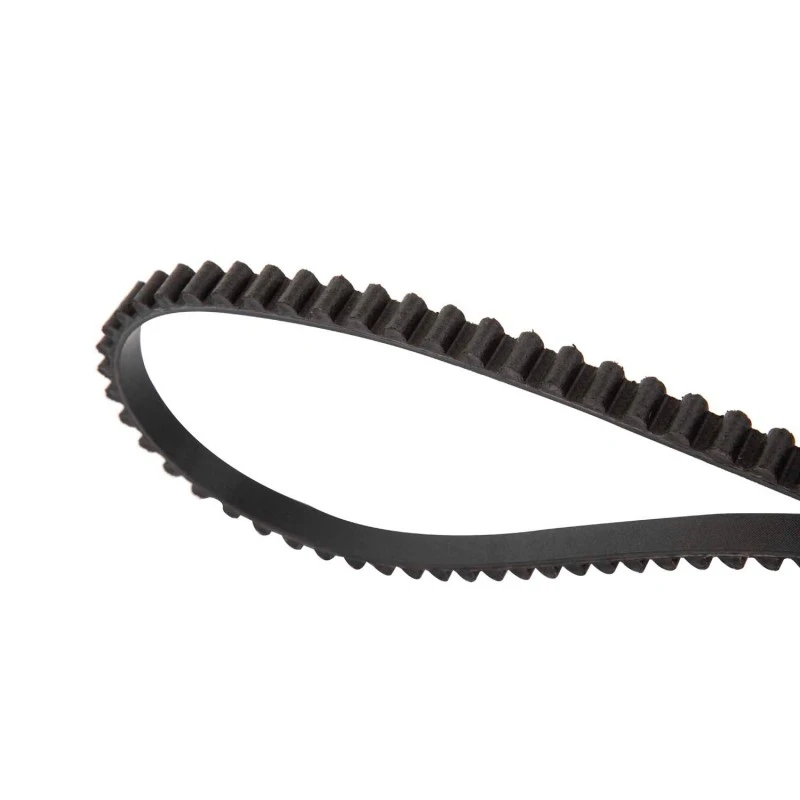
High-modulus carbon fiber cords provide high tensile strength, low creep, and dimensional stability. Depending on the specification and test method, Kaihong constructions can target tensile strength of approximately 3,800 MPa and creep rates below 0.3%.
This helps maintain stable belt pitch and tooth engagement during acceleration, high-torque starts, and heavy-load riding, reducing the need for frequent re-tensioning.
Polyurethane offers flexibility, wear resistance, and dimensional stability for urban and utility applications. HNBR can be selected for higher temperatures, moisture, road salt, dust, and repeated torque loading.
The final compound should be matched to motor output, belt width, sprocket design, ambient temperature, and duty cycle.
Wear-resistant nylon fabric reduces friction and tooth wear during engagement with compatible aluminum or steel sprockets. It also helps reduce meshing noise and support smooth power transfer.
Under suitable test conditions, a properly matched belt drive may achieve cruise noise below approximately 52 dB. Actual noise depends on alignment, frame stiffness, tension, motor control, and riding speed.
The Electric Bike Carbon Timing Belt requires no chain oil and is not affected by conventional chain stretch. Normal maintenance is generally limited to visual inspection, cleaning, and periodic tension checks, helping reduce service labor and fleet downtime.
Without sticky lubricant, the belt collects less dust and road grit and does not create typical chain grease stains. Its composite structure does not rust, making it suitable for coastal cities, tropical climates, snowy roads, and wet-weather commuting.
Other drivetrain components, including sprockets, hubs, fasteners, and frame hardware, still require suitable corrosion protection.
Positive tooth engagement eliminates much of the metallic clatter, link vibration, and chain slap associated with chain drives. Stable tension can also support more consistent torque-sensor feedback on mid-drive E-bikes.
A correctly installed carbon belt may achieve approximately 15,000–20,000 km in typical urban use, while selected high-performance variants may target up to approximately 30,000 km. Actual service life depends on belt width, sprocket alignment, tension, contamination, motor torque, riding conditions, and installation quality.
|
Item |
Parameters |
|
Belt Width |
12 mm(Commuter/Mid-drive E-bike) |
|
Pitch |
11 mm(Compatible with CDC/CDX sprockets) |
|
Standard Length |
1221/1243/1265/1298/1320/1342/1375 mm (111-125 teeth) |
|
Product Type |
Main Construction |
Typical Application |
Main Advantages |
|
Standard E-bike Carbon Belt |
Carbon fiber cords with polyurethane body and nylon tooth facing |
Urban commuter E-bikes and light utility bikes |
Clean operation, low noise, low maintenance |
|
Heavy-Duty Carbon Belt |
Higher-strength carbon cords with reinforced body construction |
Mid-drive E-bikes and e-cargo bikes |
Improved torque capacity and dimensional stability |
|
HNBR Carbon Belt |
Carbon fiber reinforcement with HNBR-based body |
High-temperature, wet, salty, or demanding environments |
Better resistance to heat, moisture, and aging |
|
Wide Performance Belt |
Wider tooth profile and reinforced tensile structure |
High-power E-moped and off-road conversions |
Higher load capacity and improved shock resistance |
|
Fleet-Grade Carbon Belt |
Wear-resistant construction with controlled dimensions |
Bike-share and rental fleets |
Reduced service frequency and easier fleet maintenance |
|
Customized Private-Label Belt |
Application-specific dimensions, materials, markings, and packaging |
Bicycle brands, distributors, and OEM buyers |
Supports fitment development and brand differentiation |
Selection should be based on motor torque, peak power, belt width, sprocket tooth count, center distance, frame design, riding environment, and expected service life.
The Electric Bike Carbon Timing Belt is suitable for city bikes, step-through E-bikes, internal gear hub systems, and commuter models with belt-compatible frames. Its main benefits are clean clothing, quiet operation, and reduced maintenance.
Belt drives can reduce lubrication requirements, drivetrain contamination, service frequency, and vehicle downtime. In Copenhagen, bike-share fleets using belt drives have reported a 73% reduction in drivetrain-related failures. Actual results vary according to fleet design, climate, maintenance, rider behavior, and component quality.
E-cargo bikes operate with high payloads, frequent starts, and repeated incline riding. A reinforced belt can be developed for mid-drive torque up to approximately 75 N·m, subject to correct belt width, sprocket design, tension, alignment, and testing.
The belt is suitable for wet, salty, snowy, and dusty environments because it does not rust or require oil lubrication. Complete system reliability also depends on corrosion-resistant sprockets, fasteners, hubs, and frame hardware.
For Surron, Ultra Bee, E-Ride Pro, and similar conversions, Kaihong can develop wider belts in approximately 18–25 mm widths. Selected designs may be evaluated for peak outputs up to approximately 40 kW.
These applications require careful verification of belt width, tooth profile, center distance, tension, sprocket material, alignment, and frame stiffness because shock loads and vibration are significantly higher than in standard bicycles.
A continuous belt requires a frame with a belt slot, removable dropout, split seatstay, or another approved installation opening. A conventional closed frame cannot accept a belt without qualified structural modification, which may affect safety and warranty coverage.
Belt length must match wheel size, chainstay length, sprocket tooth counts, and the available adjustment range. Buyers should provide the original belt reference, center distance, sprocket tooth counts, wheel size, and frame drawing where possible.
For urban commuting, the general tension reference is approximately 40–60 Hz. Aggressive riding may require approximately 60–75 Hz, while internal gear hub systems may use approximately 35–50 Hz.
Final tension should follow the bicycle manufacturer’s specification and be checked with a suitable tension tool. Excessive tension can increase bearing load and wear, while insufficient tension may cause tooth skipping and unstable power transfer.
The belt must be paired with compatible belt sprockets. CenterTrack, CDX, and other belt-specific profiles are not interchangeable with standard chainrings.
Buyers should confirm pitch, tooth profile, tooth count, width, material, and alignment before ordering. Incorrect matching can cause accelerated wear, tooth skipping, and belt failure.
During the first approximately 50 km, avoid repeated full-throttle launches and extreme shock loading. After break-in, inspect tension, alignment, tooth condition, and sprocket wear. Abnormal noise, vibration, or tooth skipping should be investigated before further high-load operation.
When requesting a quotation, buyers should provide the E-bike or e-moped model, motor brand, rated torque, peak power, front and rear sprocket tooth counts, belt pitch, width, length or center distance, frame type, belt installation method, riding environment, expected annual mileage, target service life, and packaging or private-label requirements.
Kaihong can support sample development based on drawings, physical samples, drivetrain measurements, or vehicle testing. Available options include different belt widths, carbon cord constructions, polyurethane or HNBR compounds, tooth-facing fabrics, markings, and packaging formats.
Kaihong operates under ISO9001 and ISO14001 management systems. Production control covers material consistency, belt pitch, length, width, tooth geometry, tensile performance, elongation, surface quality, and batch stability.
Qualified projects can include testing for tensile strength, permanent elongation, creep resistance, heat aging, abrasion resistance, tooth wear, noise level, high-load torque transfer, sprocket compatibility, and environmental resistance.
For competitor comparisons, belts should be tested with identical dimensions, sprockets, tension, motor settings, load, speed, temperature, and operating cycles. Useful evaluation data includes belt temperature, noise, tooth wear, elongation, power transfer stability, visible damage, and total operating hours or kilometers.
It is a toothed synchronous belt reinforced with carbon fiber tensile cords. It transfers motor power through positive tooth engagement with compatible sprockets and does not require chain lubrication.
Only when the frame, sprockets, rear hub, belt length, belt width, and tensioning system are designed for belt drive. Replacing the chain with a belt alone is not sufficient.
Selected Kaihong constructions can be developed for mid-drive systems up to approximately 75 N·m and high-performance e-moto applications up to approximately 40 kW peak power. Actual capacity depends on belt width, tooth profile, sprocket size, tension, alignment, and shock load.
No. The belt does not require chain oil, but periodic cleaning and inspection are recommended.
Typical urban service potential is approximately 15,000–20,000 km, while selected high-performance variants may target up to approximately 30,000 km. Actual life depends on operating and installation conditions.
Yes. The belt resists rust and can be developed for wet, salty, snowy, and dusty environments. Other drivetrain components must also be protected against corrosion.
Common causes include incorrect length, improper tension, sprocket misalignment, incompatible tooth profiles, excessive torque, sharp debris, damaged sprockets, frame movement, and incorrect installation.
Yes. The frame must include a belt slot, removable dropout, split rear triangle, or another approved installation method.
Yes. Kaihong supports customized dimensions, carbon reinforcement levels, polyurethane or HNBR compounds, laser marking, private-label branding, neutral packaging, and custom printed boxes.
Address
No. 48 Guangming Middle Road, Sanmen County, Taizhou City, Zhejiang Province, China
Tel