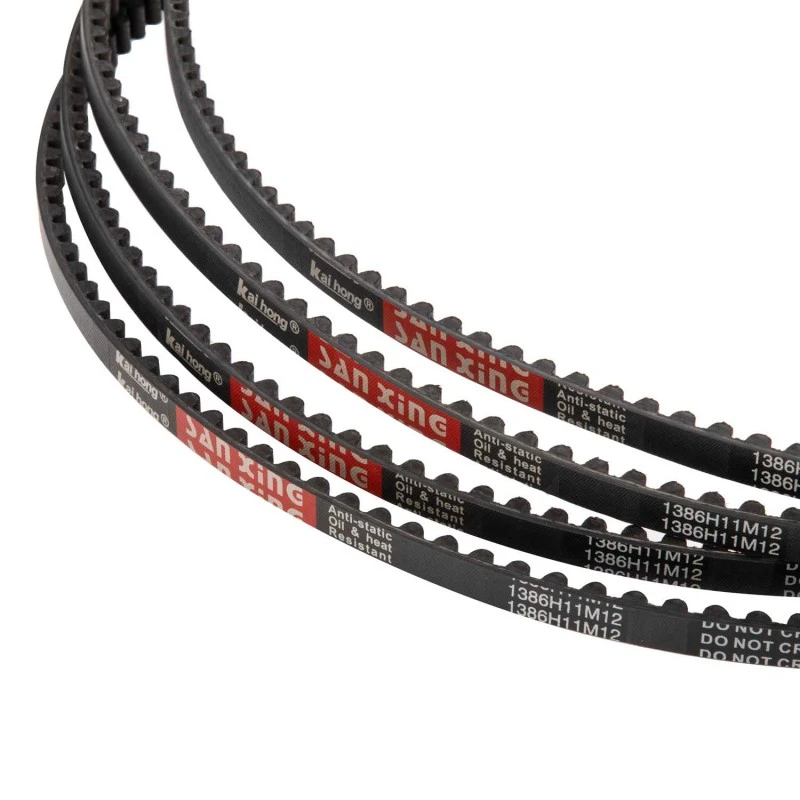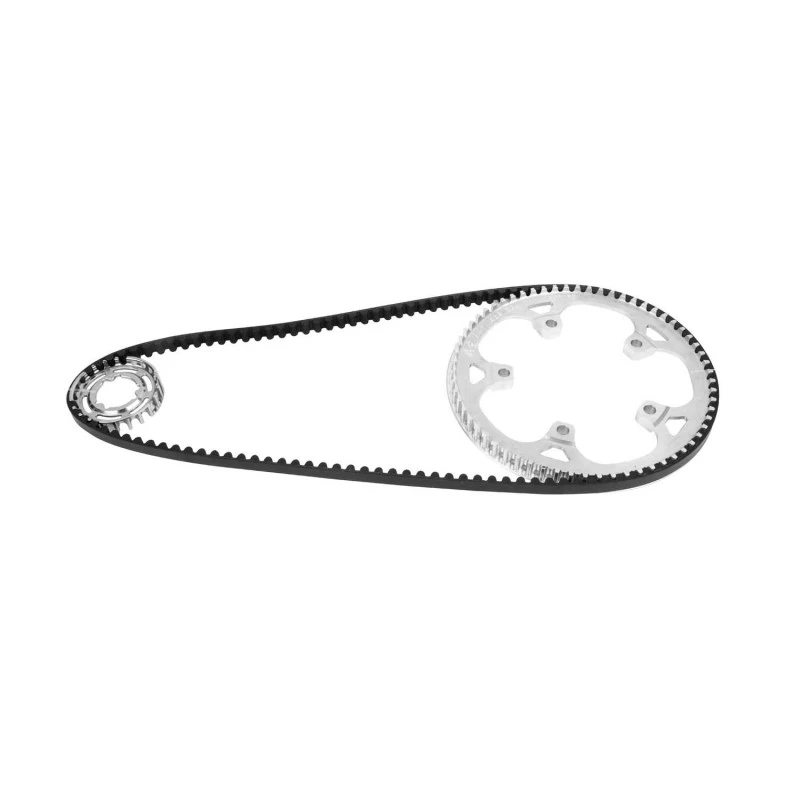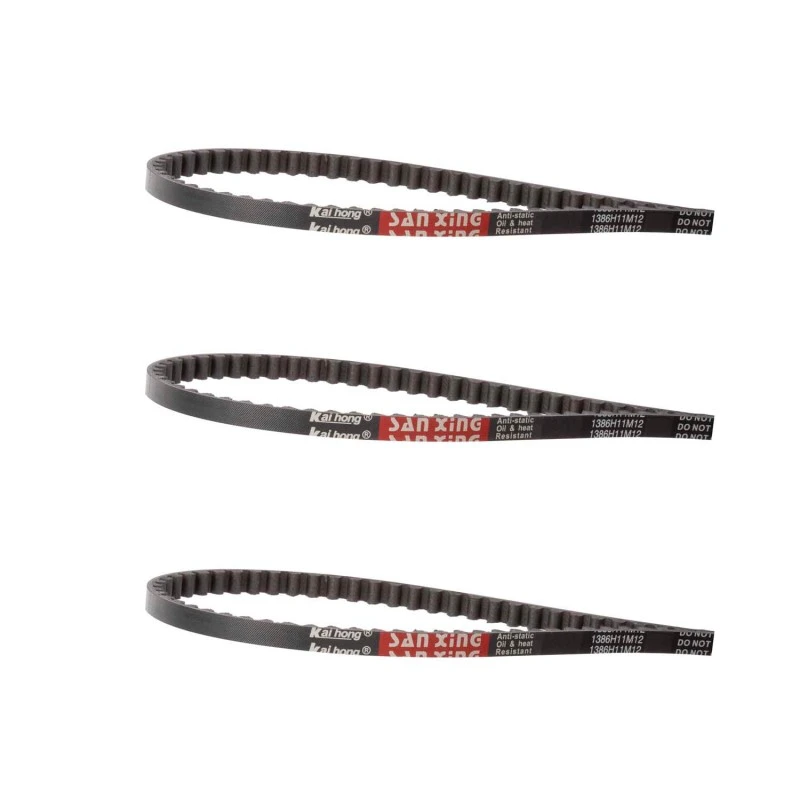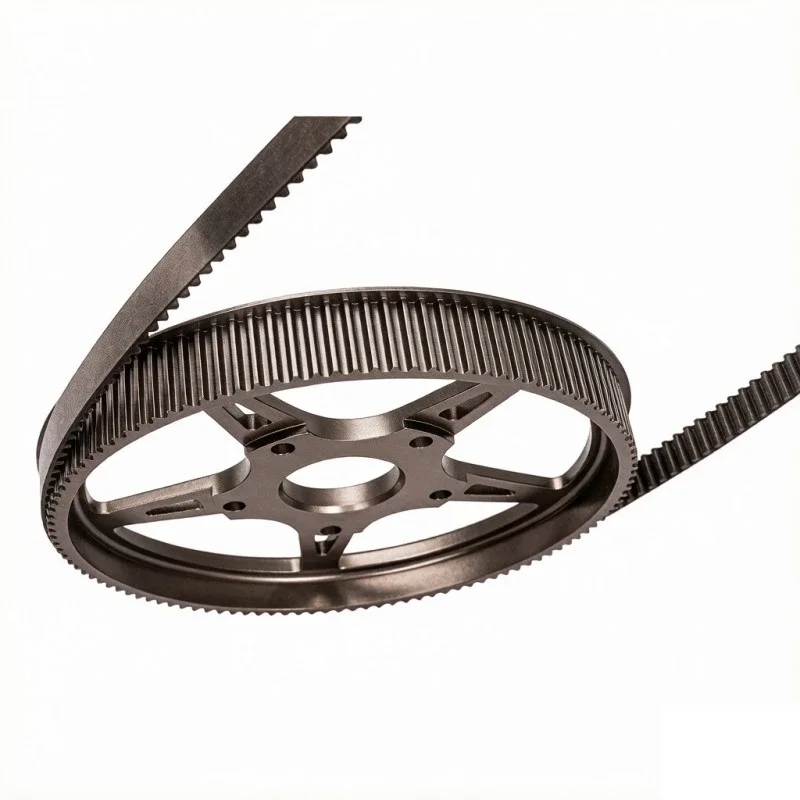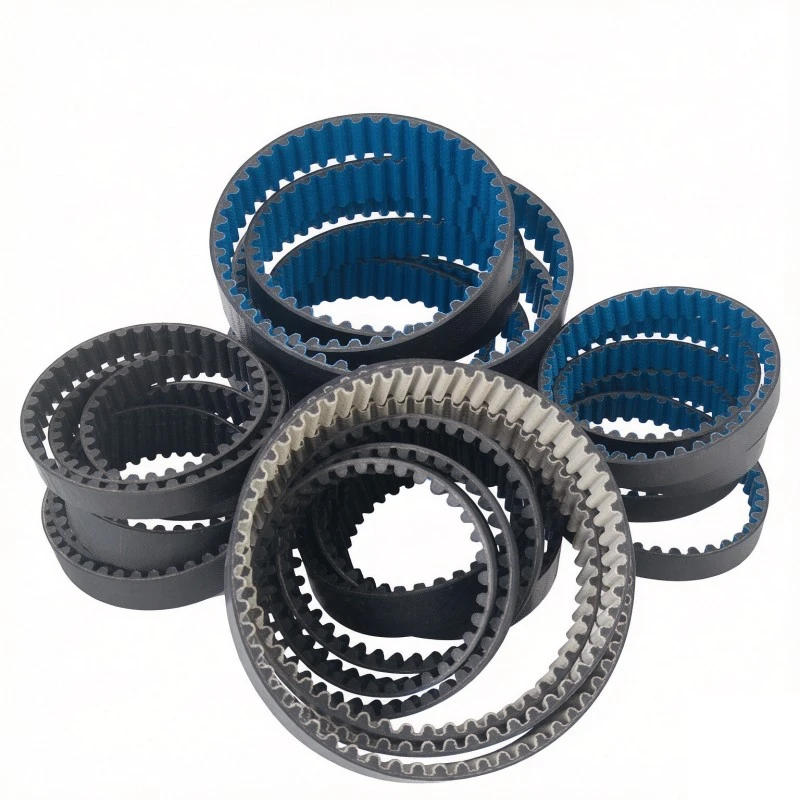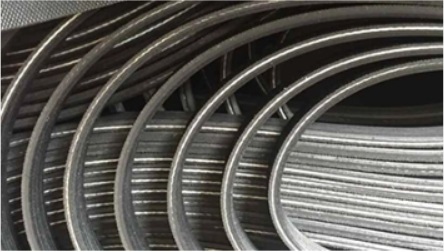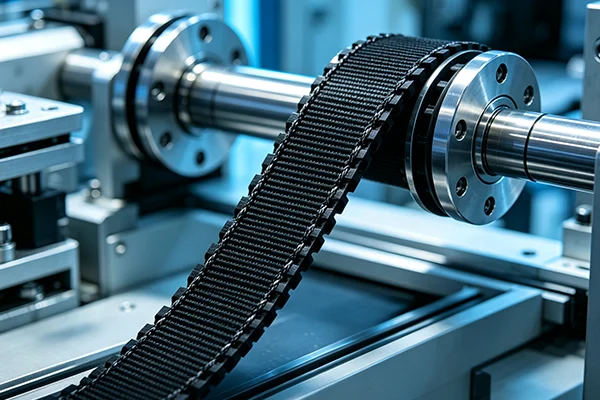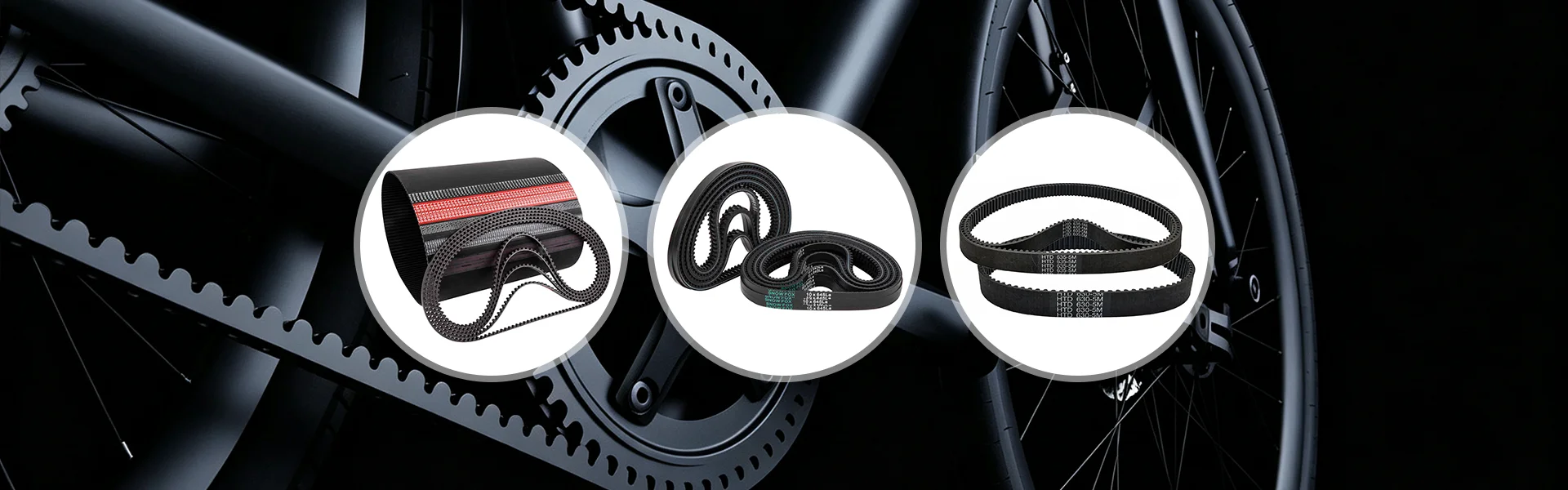
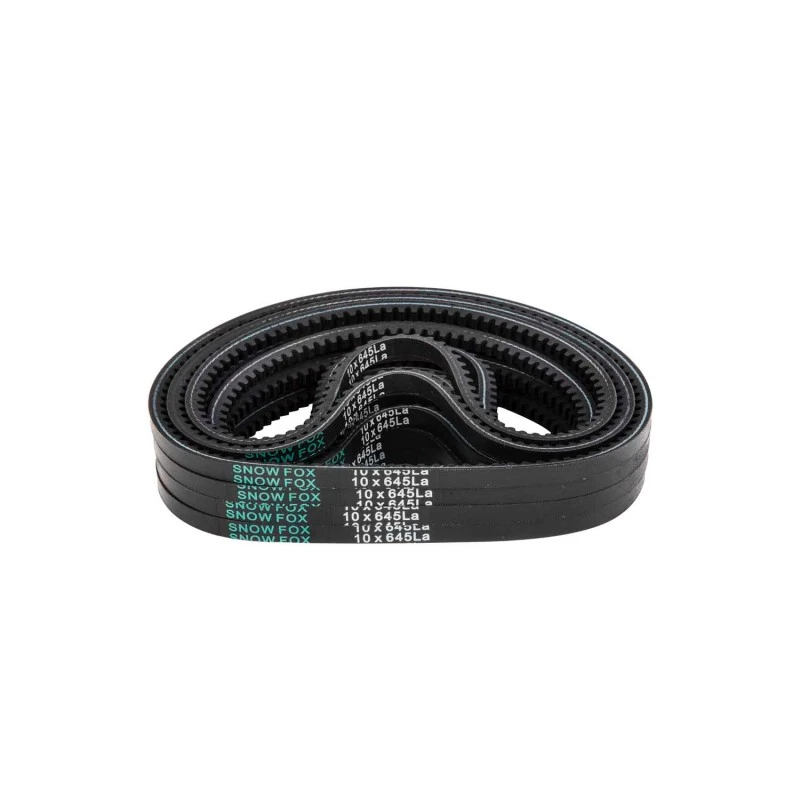
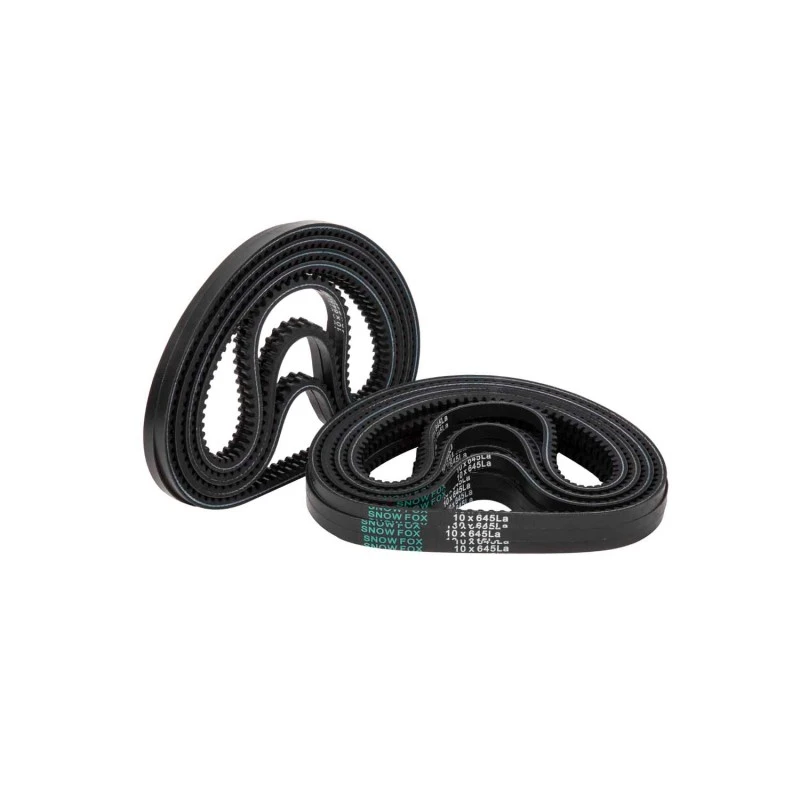
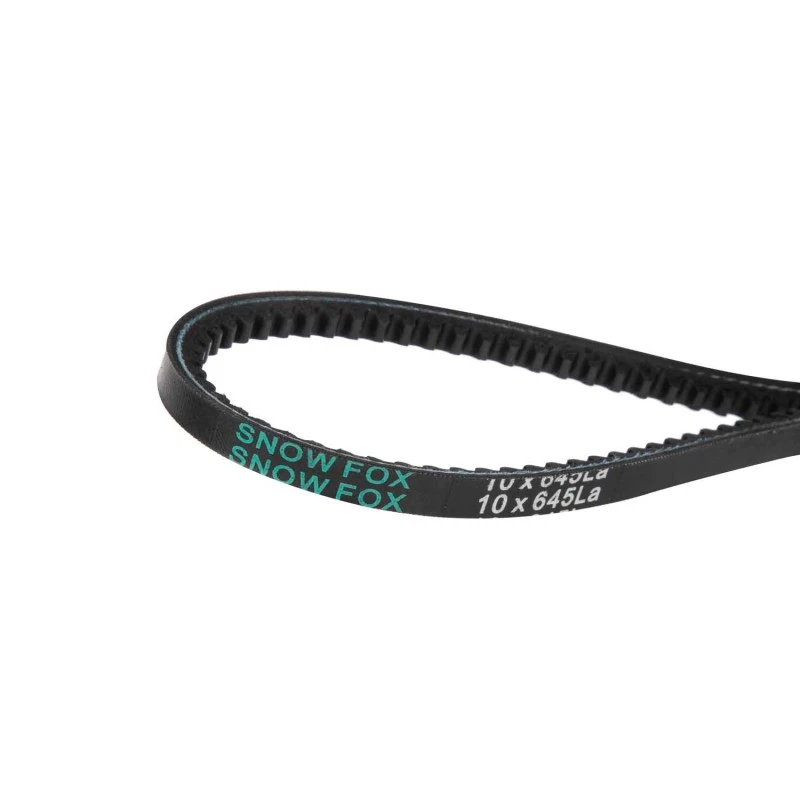
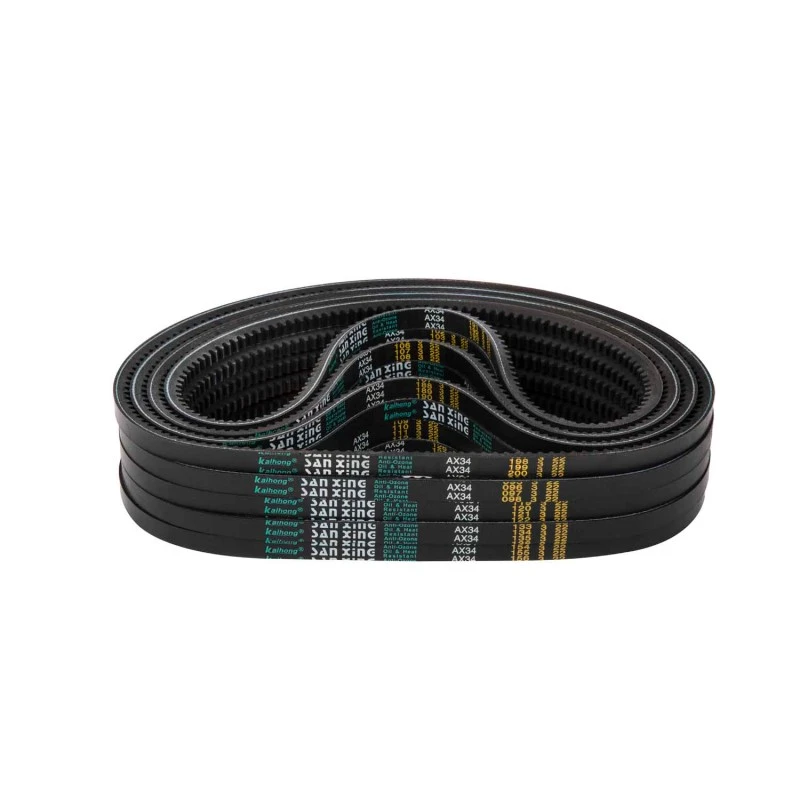
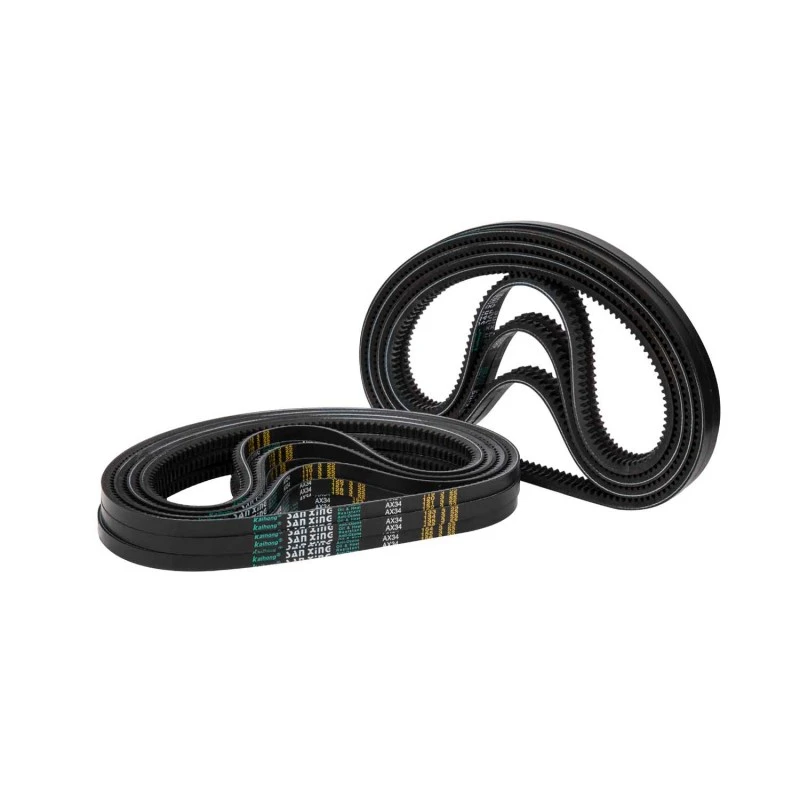
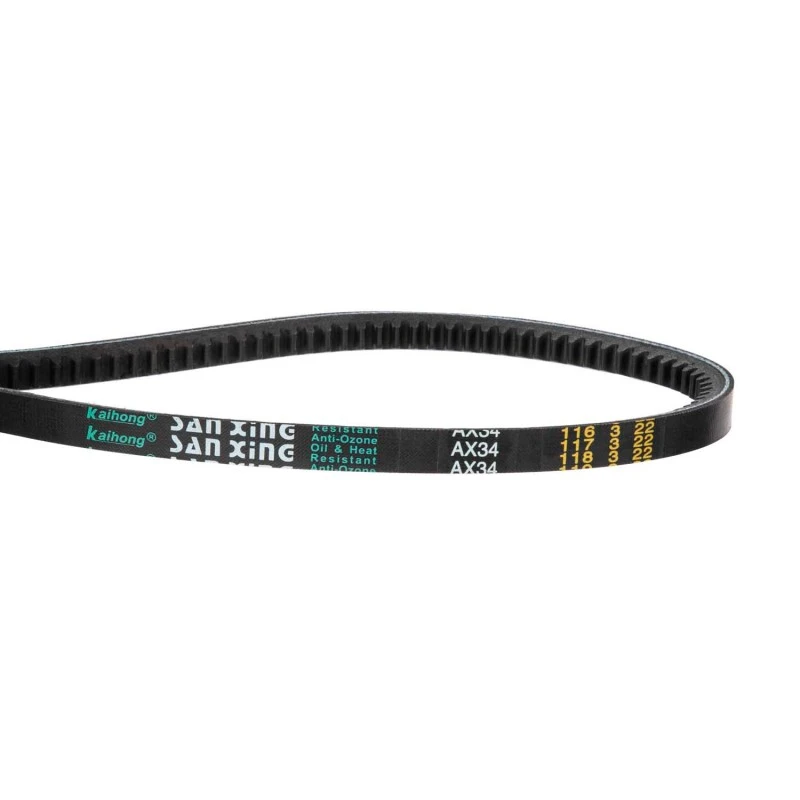
Unlike conventional wrapped belts, this construction does not rely on a full outer fabric jacket around the sidewalls. The exposed vulcanized sidewalls directly contact the pulley grooves, while the molded cogs on the inner circumference reduce bending resistance and improve heat dissipation. This makes the Automotive Raw Edge Cogged V-Belt particularly suitable for compact accessory drives using smaller pulleys and higher operating speeds.
The raw-edge construction allows the belt sidewalls to contact the pulley grooves directly. This increases the effective friction area and supports stable power transfer between the crankshaft and driven accessories.
The design is particularly useful for accessory systems where limited space requires smaller pulleys or where frequent acceleration and deceleration place additional demands on belt traction.
The molded cogs allow the belt to bend more easily around small-diameter pulleys. Compared with a conventional solid-bottom profile, the cogged structure reduces bending resistance and helps distribute mechanical stress through the lower section of the belt.
For compact automotive accessory drives, this can help reduce heat accumulation and improve operating stability.
The tensile member uses high-modulus, low-stretch polyester cords to maintain dimensional stability under changing loads. Aramid or Kevlar reinforcement can also be provided for heavy-duty and high-load applications.
Pre-tensioned cords help limit elongation, supporting consistent pulley speed relationships throughout operation.
The Automotive Raw Edge Cogged V-Belt body can use CR or EPDM compounds according to the operating environment. CR provides a practical balance of flexibility and resistance for general automotive applications, while EPDM offers a wider temperature range and strong resistance to ozone and aging.
The selected material should be matched to the actual engine compartment temperature, fluid exposure, and operating requirements.
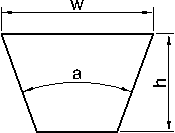
|
Type |
Width W (mm) |
Height H (mm) |
Angle |
|
AV10/9.5 |
10/9.5 |
8 |
40° |
|
AV13/12.5 |
13/12.5 |
9 |
40° |
|
AV15 |
15 |
11 |
40° |
|
AV17 |
17 |
11 |
40° |
|
AV22 |
22 |
13 |
40° |
The correct cross-section and effective length should always be confirmed according to the original belt specification and engine manufacturer's requirements.
Selected models can incorporate polyester-cotton dipped canvas or elastic fabric on the upper surface. This layer provides additional protection against mechanical impact and helps prevent exposure of the internal reinforcement.
High-modulus polyester cords form the main load-bearing structure. For premium or heavy-duty truck applications, Aramid or Kevlar helical cords can be used when higher tensile strength and impact resistance are required.
CR compounds provide reliable performance across a broad range of automotive applications. Selected high-performance EPDM versions can operate approximately from -40°C to +120°C, with enhanced ozone, cracking, and environmental resistance.
The lower rubber section combines fiber reinforcement with CR or EPDM material. Precision-molded cogs reduce bending stress, improve lateral stability, and help minimize uneven wear when the belt operates around small pulleys.
The evenly distributed cogs improve heat release from the lower section of the belt. According to the supplied product data, operation on pulleys with diameters of approximately 50–70 mm can generate around 20%–30% less heat compared with a conventional solid-bottom structure under comparable conditions.
The Automotive Raw Edge Cogged V-Belt is used for accessory systems involving alternators, water pumps, A/C compressors, power steering pumps, and other front-end engine components. It can be supplied for replacement and OEM applications across a wide range of vehicle platforms.
AVX10 and AVX13 configurations are suitable for compact commercial vehicles and light trucks where a belt may drive multiple accessories such as cooling fans and alternators.
AVX17 and AVX22 profiles, as well as banded configurations, are suitable for heavy-duty front-end accessory drives and engine cooling systems where higher mechanical loads are present.
The belt can be used on loaders, road rollers, forklifts, and other diesel-powered construction equipment for cooling systems and auxiliary hydraulic drive applications.
Agricultural and generator engines can use the belts for fan and water-pump drives. They provide an alternative to conventional industrial A/B-section belts where automotive-style accessory-drive performance is required.
Measure the effective length of the existing belt and verify the correct AVX cross-section before ordering a replacement. An automotive AV-type belt should not be replaced with an industrial A or BX belt without confirming dimensional compatibility.
Differences in wedge angle, pitch width, and belt geometry can cause poor pulley contact and premature wear.
Release the tensioner and reduce the center distance where applicable. Position the belt by hand, rotate the pulleys to allow the belt to seat correctly, and then apply tension gradually.
Screwdrivers, pry bars, and similar tools should not be used to force the belt onto the pulley because this can damage the internal tensile cords.
Follow the engine manufacturer's tension specification or the tensioner's built-in reference scale. Excessive tension can increase loads on water-pump and alternator bearings, while insufficient tension may cause slipping, overheating, and edge damage.
For multi-groove or banded accessory drives, all associated belts should generally be replaced together. Mixing new and worn belts can create different effective lengths and load distribution, resulting in belt hopping or premature failure.
Pulley grooves should be inspected for wear, incorrect angles, cracks, corrosion, and deformation. A damaged pulley can rapidly wear a replacement belt even when the belt itself is manufactured correctly.
Spare belts should be kept in a cool, dry location away from direct sunlight, oil, and excessive heat. A recommended storage environment is approximately -15°C to 40°C with 50%–80% relative humidity. Belts should be hung vertically or laid flat without folding.
Missing sections, broken cogs, or longitudinal cracking along the lower rubber indicate significant deterioration and require replacement.
Glossy or excessively worn sidewalls, particularly when reinforcement becomes visible, indicate abnormal pulley contact or advanced belt wear.
Persistent squealing during acceleration or accessory operation may indicate insufficient tension, pulley misalignment, contamination, or belt wear.
Unusual tensioner oscillation can indicate belt vibration, pulley problems, incorrect tension, or deterioration of the belt's structural properties.
Fine cracks associated with EPDM aging should be evaluated carefully. If cracking becomes extensive or is accompanied by structural deterioration, the belt should be replaced.
Conventional wrapped belts use an outer fabric layer around the belt body. While this construction remains suitable for many applications, modern accessory drives increasingly require greater flexibility, improved heat management, and stable operation around smaller pulleys.
Kaihong Automotive Raw Edge Cogged V-Belt combines direct sidewall contact, a cogged bottom profile, and low-stretch tensile reinforcement. The combination reduces bending resistance and supports heat dissipation in compact accessory drives.
According to the supplied application data, standard wrapped belts may experience significant wear or slipping within approximately 3–6 months when subjected to increased loads and intensive stop-and-go operation. Under normal passenger-car conditions, the supplied product information indicates that the raw-edge cogged design can achieve approximately 60,000–100,000 km of service life. For heavy trucks, the supplied data indicates potential operation across 1–2 oil-change cycles.
Actual service life depends on engine design, pulley condition, belt tension, temperature, contamination, driving conditions, and maintenance practices.
It is a V-belt with exposed vulcanized sidewalls and molded cogs on the inner circumference. This construction improves flexibility around small pulleys and supports heat dissipation compared with conventional solid-bottom designs.
It is primarily used for automotive front-end accessory drives, including alternators, water pumps, cooling fans, A/C compressors, power steering pumps, and selected supercharger systems.
The correct designation depends on the specific belt profile and application standard. Buyers should confirm the original belt number, cross-section, effective length, and pulley configuration rather than selecting solely according to the visual appearance.
Yes. AV17 and AV22 profiles and suitable reinforced configurations can be used for heavy-duty accessory drives when the belt dimensions and load capacity match the engine manufacturer's requirements.
CR and EPDM rubber compounds are available, with polyester tensile cords as a common reinforcement. Aramid or Kevlar cords can be selected for certain high-load applications.
Provide the original belt number, effective length, cross-section, width, vehicle or engine model, and application whenever possible. These details allow the supplier to confirm the appropriate specification.
For inquiries about Automotive Raw Edge Cogged V-Belt, OEM replacement specifications, samples, private-label production, or bulk orders, contact Kaihong with your belt number or technical requirements.
With ISO9001 and ISO14001 certified management systems, Kaihong provides automotive accessory drive belts designed for passenger cars, commercial vehicles, trucks, construction machinery, agricultural equipment, and diesel generator systems.
Address
No. 48 Guangming Middle Road, Sanmen County, Taizhou City, Zhejiang Province, China
Tel