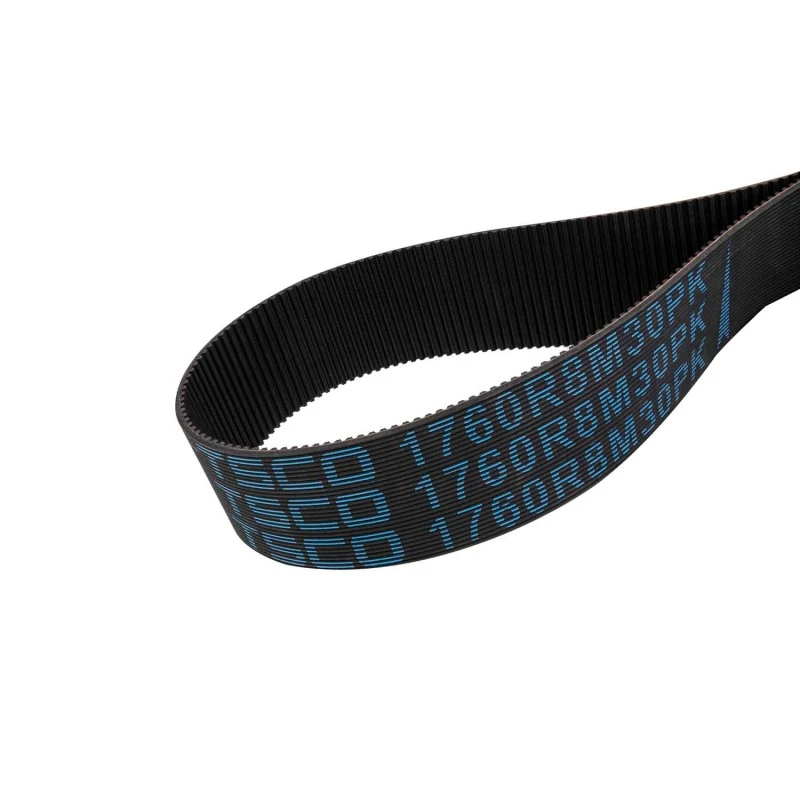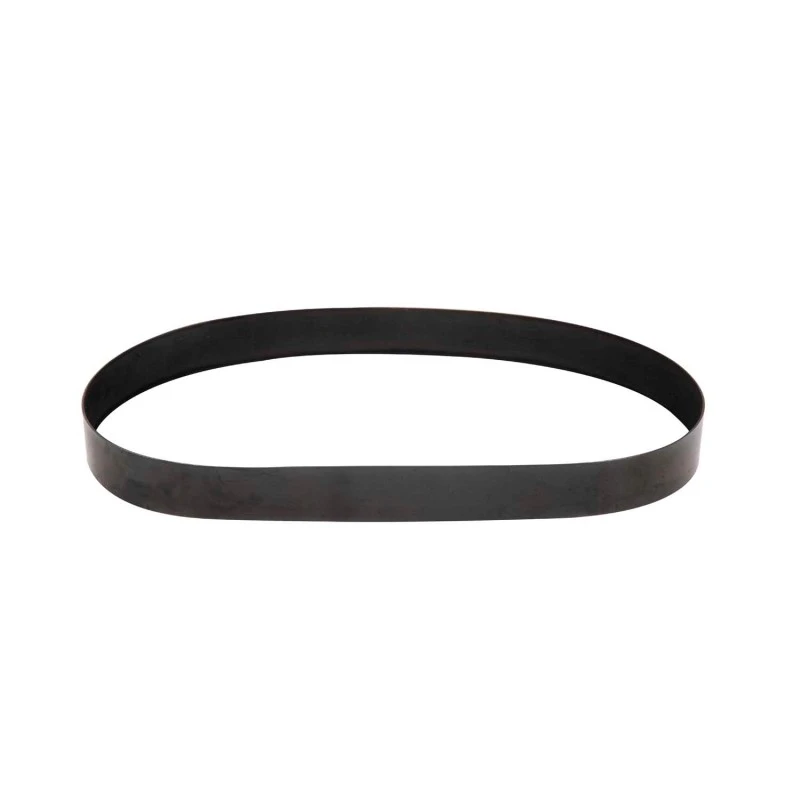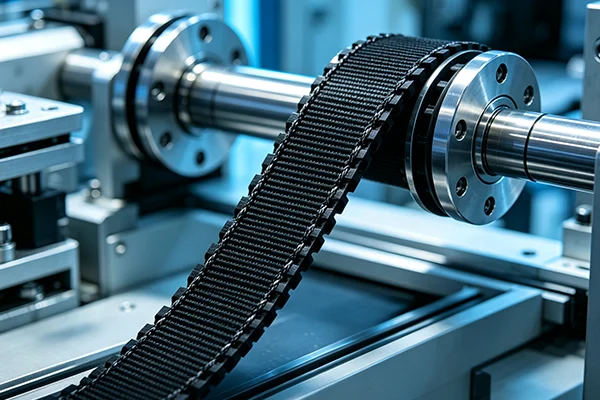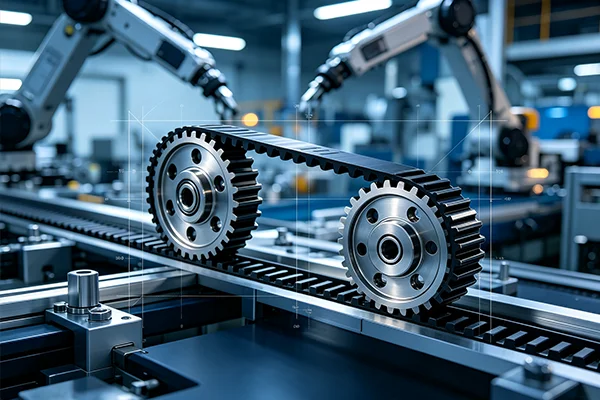


The Cotton Picker Conveyor Belt uses a high-modulus EP polyester carcass and a specialized rubber compound with anti-mildew, abrasion, and puncture resistance. Optional guide ribs and patterned carrying surfaces help improve tracking and traction during continuous harvesting.
Kaihong manufactures agricultural conveyor products under ISO9001 and ISO14001 certified management systems, with OEM and replacement specifications available for different cotton picker models.


Fresh cotton may contain moisture and natural sugars that can cause ordinary rubber to become tacky. The specialized compound helps resist mildew and surface adhesion, reducing cotton hang-up and secondary contamination.
The high-modulus EP polyester carcass provides stable dimensional performance during long operating periods. According to the supplied data, elongation can remain below 1.5% under full load, helping reduce frequent tension adjustments.
Cotton seeds, stalks, and field debris can cause surface cuts and abrasion. The cover rubber is designed for improved wear and puncture resistance, with a typical hardness of Shore A 60±5.
Cotton picker conveyors may operate with frequent vibration and directional changes. Reinforced edges or an integrated V-ridge can be added to help maintain belt alignment and reduce edge wear.
Chevron, diamond, and other carrying-surface patterns can improve grip when cotton moves along inclined conveyor sections. The supplied data indicates that friction can increase by more than 30% compared with standard flat surfaces, depending on the belt design.
The cover rubber is formulated for agricultural harvesting conditions, balancing flexibility with resistance to abrasion, puncture, moisture, and field debris.
The anti-mildew formulation is particularly suitable for cotton conveying environments where moisture and organic material may remain on the belt surface.
High-modulus, low-shrinkage EP polyester fabric provides the main reinforcement. Its low elongation helps maintain belt tension and dimensional stability during extended operation.
The treated fabric structure also provides sufficient longitudinal flexibility for the belt to conform to the roller arrangement.
For equipment with complex conveyor routing, Kaihong can provide an integrated V-ridge or reinforced belt edge. The selected structure should match the machine's pulley and roller configuration.
Different surface patterns can be selected according to the conveying angle and cotton handling requirements. Patterned surfaces help increase contact with lightweight cotton and reduce material slipping during inclined transfer.
The Cotton Picker Conveyor Belt is used in the main conveying section between the picking head and cotton basket. Stable tracking and reliable traction help maintain continuous cotton transfer.
Baler-type machines require continuous conveying during cotton collection, compression, and baling. The reinforced construction is suitable for applications where repeated flexing and fatigue resistance are important.
The belt can be manufactured for small and medium-sized cotton harvesting equipment, with replacement dimensions matched to the original machine.
Kaihong can also manufacture belts for specialized cotton-handling systems based on original samples, drawings, dimensions, or equipment requirements.
Width, length, thickness, and other dimensional parameters can be produced according to the original belt or machine design.
Different EP polyester fabric constructions can be selected according to belt dimensions, conveying load, operating speed, and expected working conditions.
Chevron, diamond, and other surface patterns can be customized to meet different traction and conveying requirements.
V-ridges or reinforced edges can be incorporated when additional tracking control is required.
Kaihong can provide OEM or replacement solutions for mainstream cotton picker equipment, including John Deere, Case IH, Boshiran, and CRCC. Customers can provide an original belt sample, part number, drawing, or dimensional information for matching.
Maintain the recommended belt tension. Excessive tension can increase stress on the carcass and bearings, while insufficient tension may cause slipping and premature wear.
Remove cotton seeds, stalk fragments, and other debris from the belt and pulley system. Accumulated material can accelerate wear and affect tracking.
Inspect pulleys, rollers, and guide components regularly. Misalignment can cause continuous edge loading and premature belt damage.
After harvesting, clean and dry the belt before storage. Keep it in a dry, ventilated location away from direct sunlight, oil, and excessive pressure.
Kaihong operates its manufacturing under ISO9001 quality management and ISO14001 environmental management systems. Production control covers rubber compounding, fabric preparation, carcass construction, vulcanization, dimensional inspection, and finished-product evaluation.
For applicable production orders, X-ray flaw detection and dynamic balance testing can be provided before shipment to identify potential internal defects and verify running stability.
The production process is designed to maintain consistent belt dimensions, carcass quality, surface characteristics, and overall running performance for agricultural machinery applications.
Cotton harvesting presents several challenges that are not typically found in general material conveying. The conveyed material is lightweight, while seeds and stalks can create localized impact. At the same time, harvesting equipment operates in dusty and humid field environments with continuous vibration.
Kaihong addresses these conditions through a combination of anti-mildew rubber, EP polyester reinforcement, high-traction surfaces, and optional tracking structures. This application-specific design helps reduce common problems such as belt slipping, edge wear, surface adhesion, and tracking deviation.
For agricultural machinery manufacturers and replacement-parts distributors, customized specifications can also reduce the need to modify the original conveyor system.
Fresh cotton may contain moisture and natural sugars that can cause ordinary rubber to become tacky. The specialized rubber compound used in this design provides improved resistance to mildew and surface adhesion.
Maintain correct tension, remove cotton seeds and field debris regularly, inspect pulley alignment, and clean and dry the belt before seasonal storage.
Yes. Kaihong can manufacture replacement belts according to original samples, dimensions, drawings, or equipment models, including applications for John Deere, Case IH, Boshiran, and CRCC equipment.
Yes. Belt dimensions, carcass construction, surface pattern, guide ribs, reinforced edges, and OEM branding can be customized according to customer requirements.
Customers can provide the original belt, part number, belt length, width, thickness, guide-rib dimensions, surface pattern, or cotton picker model. Photos and technical drawings can also assist with specification matching.
The specialized rubber formulation is designed for improved resistance to mildew and surface adhesion in humid cotton-handling environments. Final belt selection should be based on the actual operating conditions of the equipment.
For Cotton Picker Conveyor Belt samples, OEM replacement, customized dimensions, or bulk orders, contact Kaihong with your original belt specifications or cotton picker model.
Address
No. 48 Guangming Middle Road, Sanmen County, Taizhou City, Zhejiang Province, China
Tel