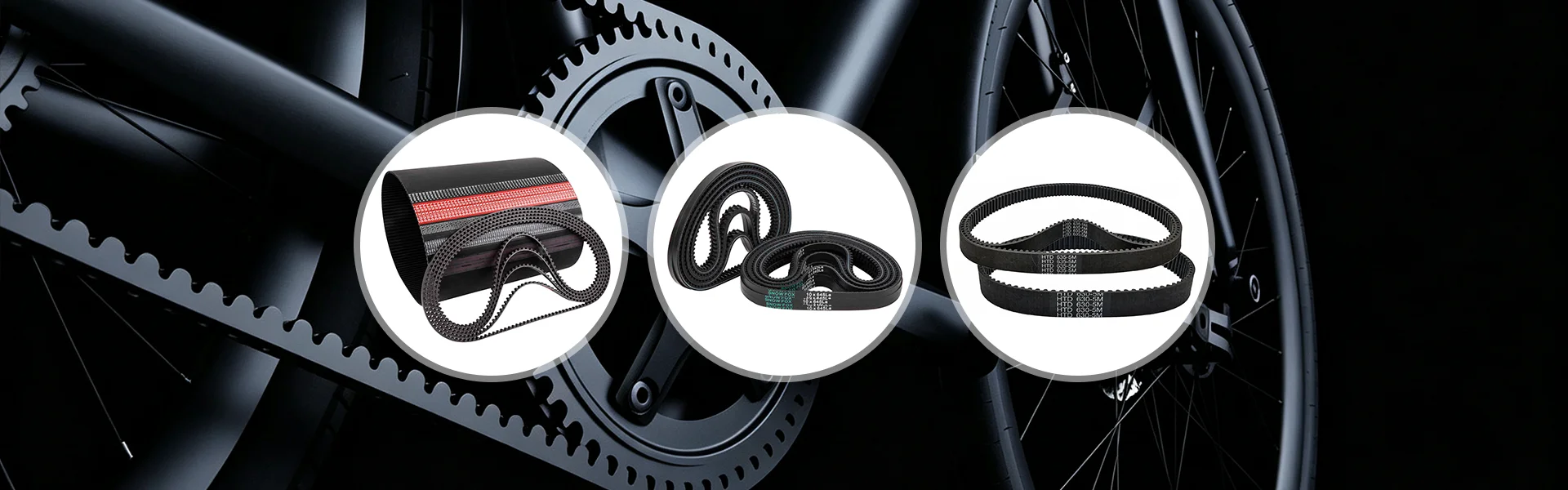
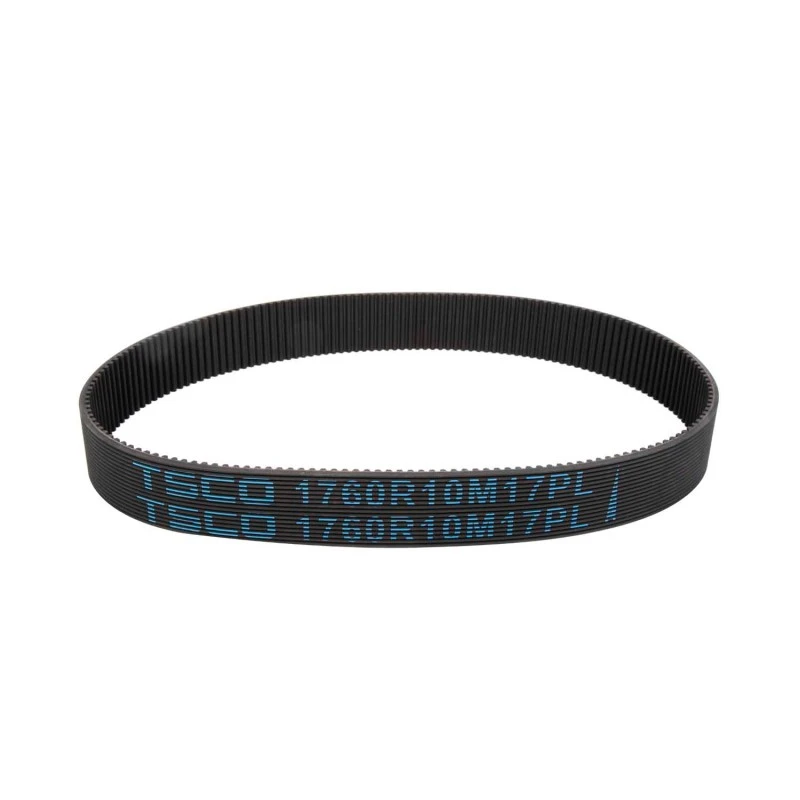
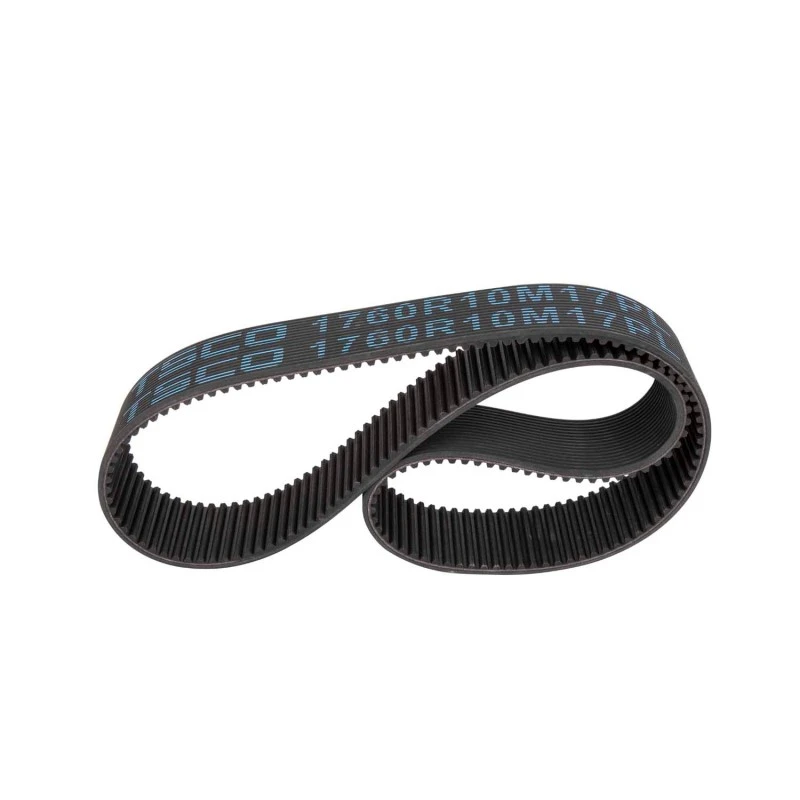
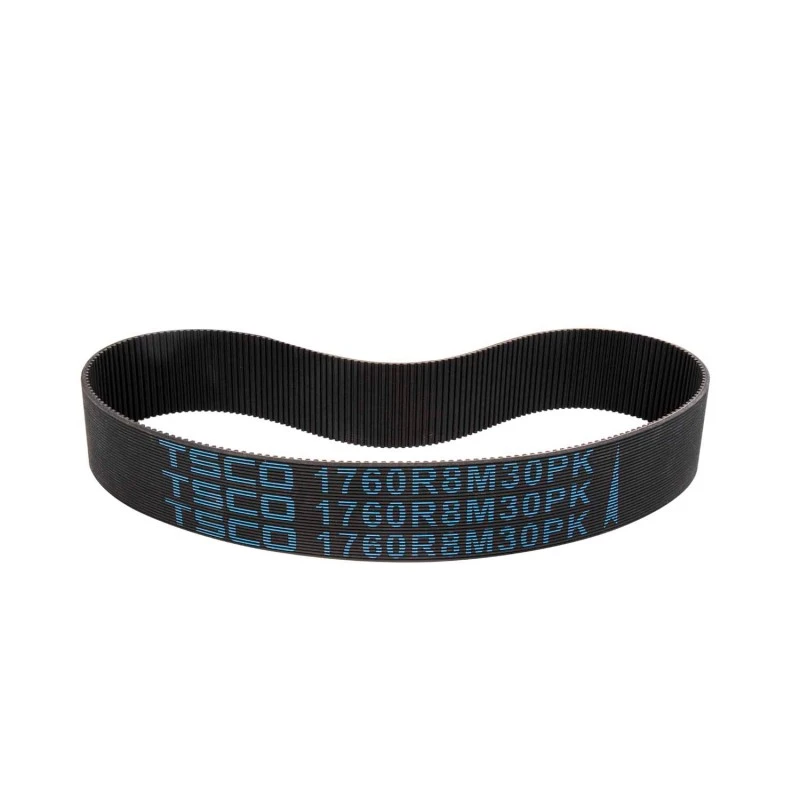
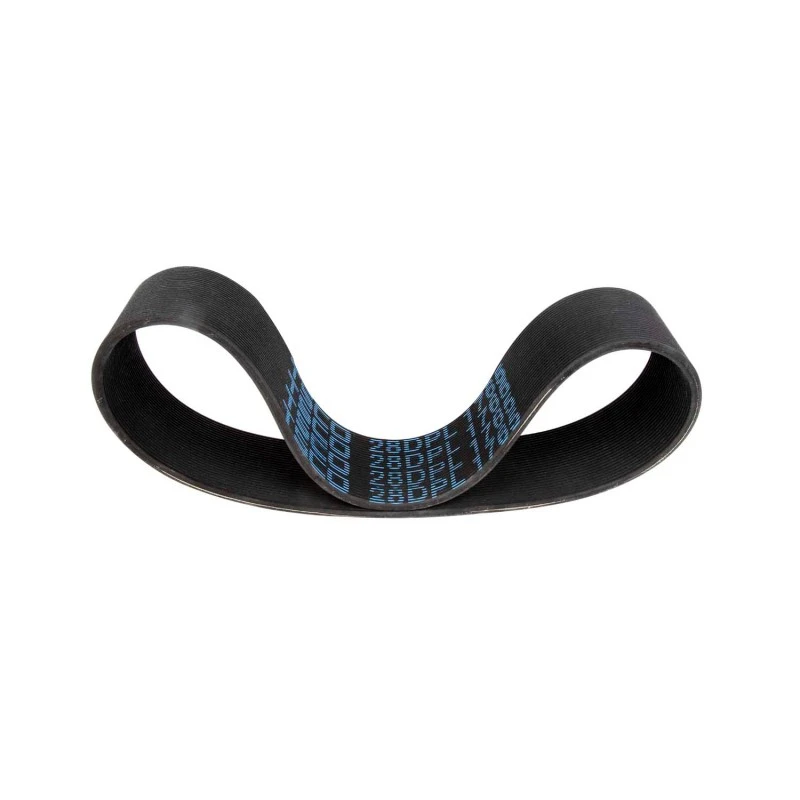
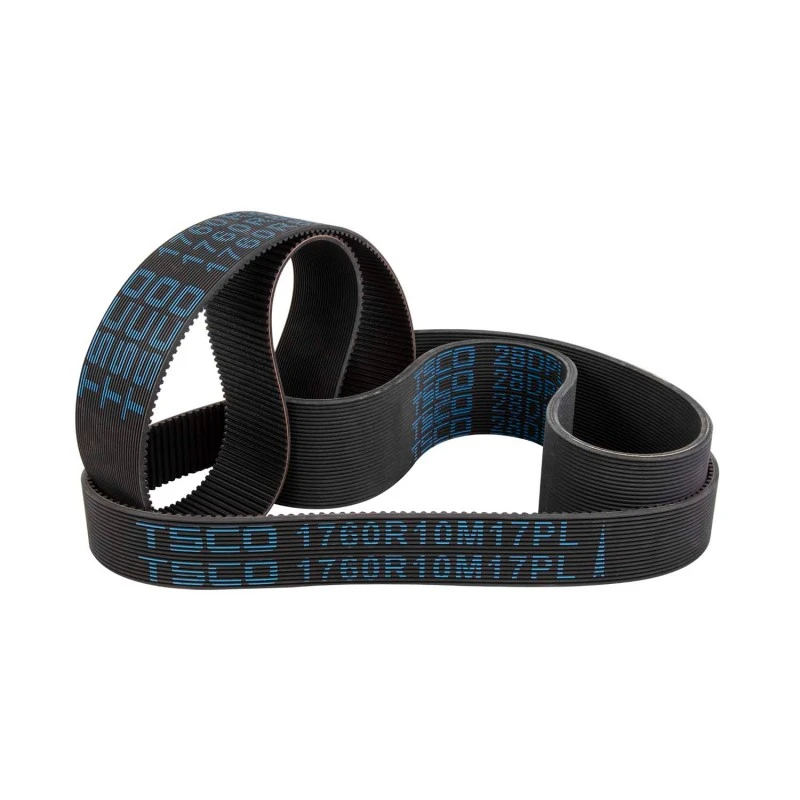
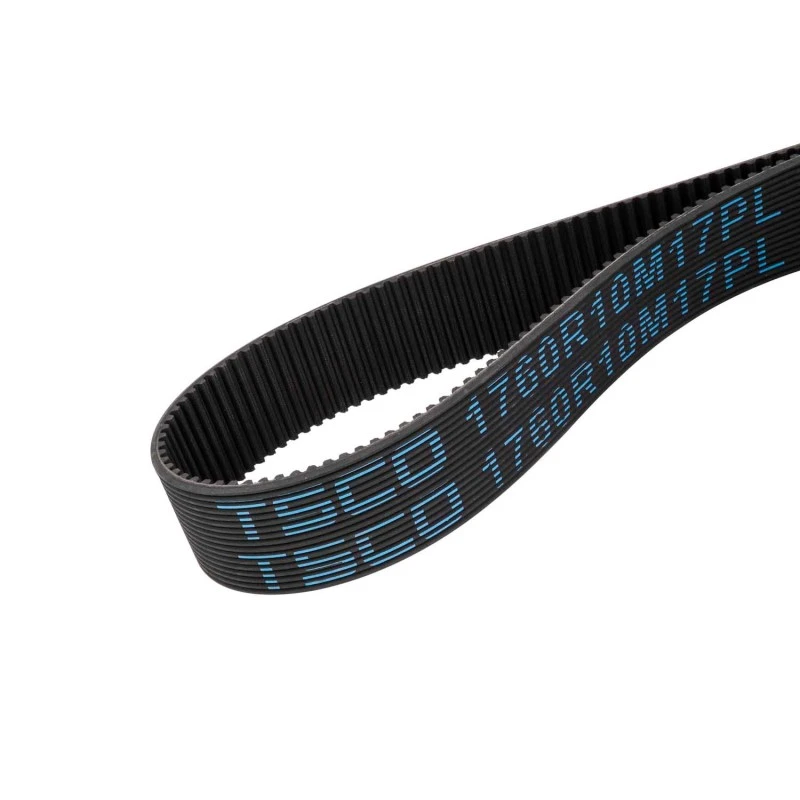
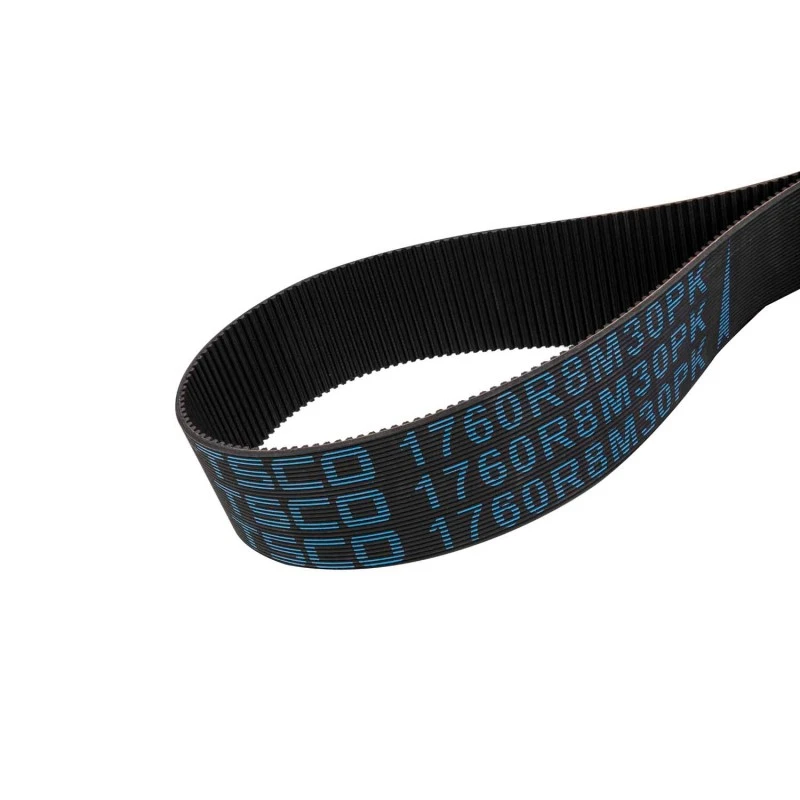
Kaihong Roll Mill Belts are developed for industrial equipment where stable material processing, multi-shaft transmission, and reliable reversing operation are important. The belt combines transverse teeth on the bottom with longitudinal ribs on the top, allowing positive engagement on one side and frictional transmission on the other. This structure is particularly suitable for roll mills, flour processing equipment, papermaking machinery, and other systems requiring multiple pulleys with reversed rotation.
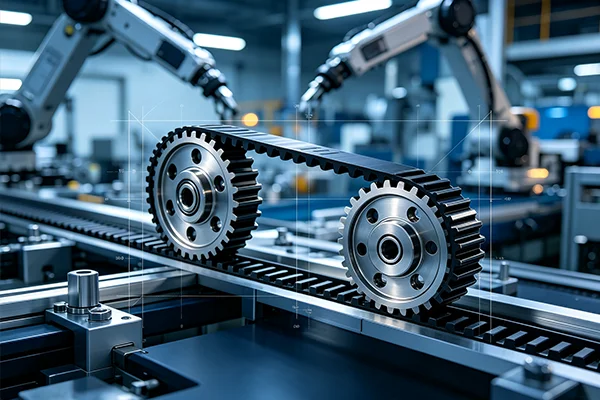
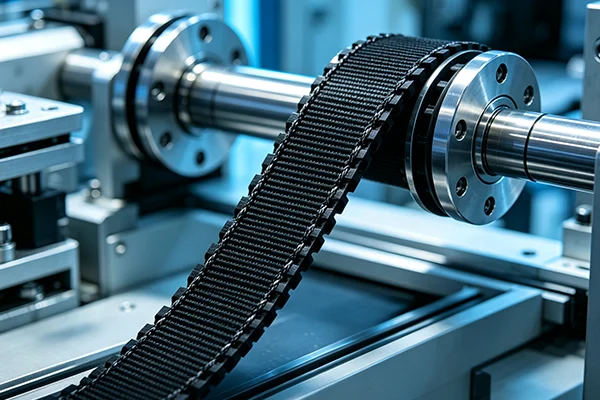
Unlike conventional synchronous or Poly-V belts, this design performs two different transmission functions within one belt. The toothed surface engages positively with the corresponding pulley, helping maintain accurate movement, while the ribbed surface provides friction-based power transfer.
This configuration can simplify multi-shaft layouts and reduce the need for additional transmission components. For roll mill applications, it helps maintain consistent roller movement while accommodating compact equipment structures.
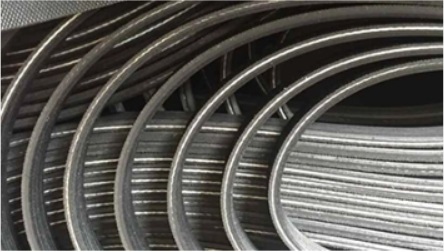
The bottom transverse teeth provide controlled engagement and reduce the possibility of belt slip during loaded operation. The upper longitudinal ribs create multiple friction contact points, allowing effective power transmission through the pulley surface.
High-modulus polyester cords provide dimensional stability, while aramid reinforcement can be selected for applications requiring greater tensile strength. The rubber compound absorbs vibration and shock during continuous operation, helping reduce excessive belt movement.
Kaihong Roll Mill Belts can use CR or EPDM compounds according to operating conditions. EPDM is suitable for environments involving heat, ozone, UV exposure, and long-term aging, while CR provides a balance of flexibility, wear resistance, and mechanical strength.
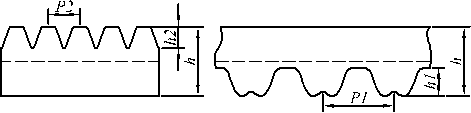
|
Type |
H8M-PK |
R8M-PK |
S8M-PK |
S10M-PK |
R10M-PL |
R12M-PL |
H14M-PL |
|
P1 |
8 |
8 |
8 |
10 |
10 |
12 |
14 |
|
h1 |
3.38 |
3.2 |
3.05 |
3.8 |
4.3 |
4.8 |
6 |
|
P2 |
3.56 |
3.56 |
3.56 |
3.56 |
4.7 |
4.7 |
4.7 |
|
h2 |
2.4 |
2.4 |
2.4 |
2.4 |
3.4 |
3.4 |
3.4 |
|
h |
7.78 |
7.6 |
7.45 |
8.2 |
10.4 |
10.9 |
12.8 |
The structure of Kaihong Roll Mill Belts makes them suitable for transmission layouts where several shafts need to operate within a limited installation space. The ribbed surface can work with multiple contact points, while the toothed side provides positive engagement with the corresponding pulley.
For equipment with reversing pulleys, compact roller arrangements, or limited center distance, this configuration can reduce the number of separate transmission components. Before ordering, buyers should confirm the pulley profile, belt pitch, center distance, rotation direction, and required belt length to ensure proper system compatibility.
Roll mills and processing lines often operate for extended periods with relatively constant production loads. Under these conditions, belt dimensional stability and resistance to fatigue directly influence production continuity.
Kaihong Roll Mill Belts use low-elongation tensile cords and flexible rubber compounds to maintain stable running characteristics during continuous operation. The ribbed transmission surface helps maintain traction, while the toothed section limits relative movement between the belt and pulley. This combination supports consistent roller operation and helps reduce interruptions caused by slippage, excessive vibration, or premature belt wear.
The belt is suitable for flour mills and other roll-based processing equipment where two or more rollers must operate at controlled speeds and opposite rotational directions.
In grain and flour processing lines, the structure supports stable transmission between fast and slow rollers while maintaining a compact drive arrangement.
The flexible construction can be used in transmission systems operating in both wet and dry production areas, where resistance to moisture and continuous operation are required.
The belt can support high-speed multi-shaft transmission in spinning, weaving, and related textile equipment.
It is also suitable for compact machinery where conventional belt combinations would require additional pulleys, tensioners, or reversing mechanisms.
Kaihong Roll Mill Belts can be configured according to the working environment and equipment requirements. Polyester cords provide a practical solution for general industrial transmission, while aramid reinforcement is available for higher-load applications.
The rib and tooth sections can be manufactured with CR or EPDM compounds. Additional options such as oil resistance, heat resistance, and anti-static properties can be considered for specific applications.
Correct belt selection should consider pulley profile, pitch, belt length, transmission speed, operating load, and working temperature. The belt and pulley profiles should always match to avoid premature wear or unstable transmission.
Before installation, inspect the pulley surfaces for excessive wear and confirm proper alignment. Avoid forcing the belt onto the pulley with tools, as this can damage the ribs or tensile cords. During operation, excessive vibration, abnormal noise, rib wear, cracking, or slippage should be investigated promptly.
For long-term storage, keep spare belts in a cool, dry location away from direct sunlight, oil, and heat sources. Avoid folding or compressing the belt.
Kaihong supports OEM and non-standard production for industrial transmission applications. Customers can provide drawings, dimensions, belt samples, or pulley information for product matching.
Available options include customized belt lengths, different rubber compounds, reinforced tensile cords, special surface treatments, and dual-surface transmission structures. These options allow the belt to be adapted to existing roll mill equipment or incorporated into new machinery designs.
With ISO 9001 and ISO 14001 certification, Kaihong applies controlled manufacturing processes from rubber mixing and calendering through molding and vulcanization. Dimensional and performance inspections are carried out to maintain consistency between production batches.
Yes. Its dual-surface structure is particularly suitable for roll mills and other multi-shaft systems requiring reversed pulley rotation.
Yes. Kaihong can manufacture non-standard lengths according to technical drawings, specifications, or physical samples.
Yes. CR and EPDM compounds are available, with additional material options for specific temperature, oil, ozone, or anti-static requirements.
Please provide the existing belt model, length, pulley profile, operating speed, load, and working temperature. Pulley drawings or samples can also help ensure accurate matching.
Address
No. 48 Guangming Middle Road, Sanmen County, Taizhou City, Zhejiang Province, China
Tel